
RUSSIA’S TALIBAN GAMBLE : STRENGTHENING REGIME THAT SHELTERS TERRORISTS
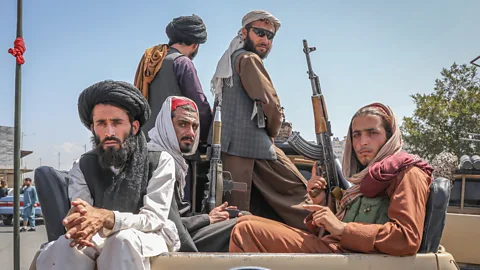
Russia has formalized a military partnership with the Taliban, a regime governing what international assessments consistently describe as one of the world’s most concentrated sanctuaries for terrorist organizations.
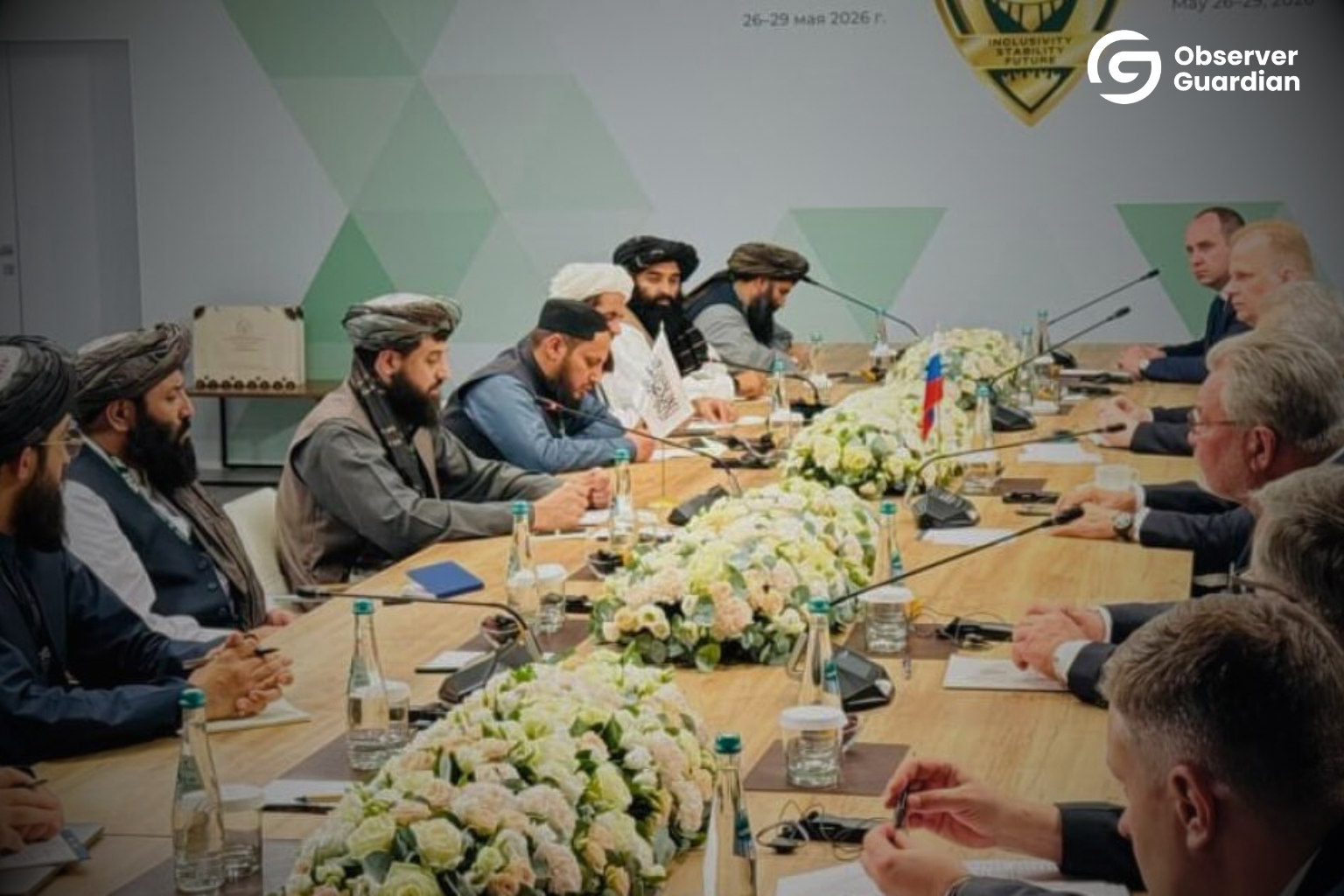
The military technical cooperation agreement was signed at an event in Moscow called the International Security Forum, attended by Taliban Defense Minister Mullah Mohammad Yaqoob, making Russia the only country in the world to have formally recognized the Taliban as Afghanistan’s legitimate government. The central question is straightforward: why is Moscow strengthening a regime widely assessed to be operating in an environment saturated with Khawarij networks?
This is not speculation. Russia’s own security leadership has repeatedly raised alarms. FSB Director Alexander Bortnikov has warned that ISIS K operating from Afghan territory is actively recruiting across Central Asia and Russian migrant communities, building covert financing and operational networks. Russian Security Council Secretary Sergei Shoigu has also highlighted that between 18,000 and 23,000 Khawarij operate out of Afghanistan, including ISIS K, TTP, Al Qaeda, ETIM, and the Islamic Movement of Uzbekistan and affiliated groups. These are internal Russian security assessments issued alongside the deepening engagement with the Taliban.
The contradiction is stark. ISIS K has already carried out a major attack on Russian soil, including the March 2024 Crocus City Hall attack that killed over 133 people and injured hundreds more.
Despite this, Moscow is expanding engagement with the Taliban. This raises a key strategic question: does Russia believe the Taliban can function as a counterterrorism partner, or has geopolitical calculation overridden threat assessment?
The Khawarij ecosystem inside Afghanistan remains a central concern. Reports and international monitoring assessments describe the presence of thousands of fighters associated with TTP and ISIS K, operating with structured networks, recruitment channels, and logistical capacity. These groups are not isolated remnants but organized transnational actors with cross border reach.
The regional impact is already visible. Over 600 attacks were reported across neighboring countries from Afghan territory during 2025 alone. TTP linked attacks have increased significantly, with security assessments indicating planning and facilitation across the Afghan border. United Nations reporting has noted movement of armed Khawarij across border regions, while Central Asian states continue to report security breaches and infiltration attempts.
Into this environment, Russia has moved to formalize engagement with the Taliban, including diplomatic recognition in July 2025 and agreements covering security cooperation and broader economic ties. This positions Moscow as the first state to recognize the Taliban government. The stated rationale includes counterterrorism coordination and regional stability, yet the underlying contradiction remains unresolved: cooperation with a regime operating in an environment where multiple Khawarij groups remain active.
The question of Khawarij cooperation adds further complexity. The Taliban inherited large quantities of abandoned military equipment after 2021, and international monitoring reports have raised concerns about the circulation of this equipment among militant actors. Expanding structured military engagement in such an environment risks further complicating an already unstable security landscape.
Moscow appears to be pursuing a strategy based on the assumption that the Taliban can be influenced as a governing authority to help contain Khawarij threats and reduce Western influence in the region. However, multiple assessments suggest that the Taliban does not exercise full control over all Khawarij actors operating in Afghanistan, and in some cases tolerates their presence for strategic or political reasons.
Although there have been fluctuations in ISIS K activity levels in 2025, security analysts continue to warn that the group retains the capacity to regenerate operational cells and conduct high impact attacks abroad. Even limited attacks could have significant regional and international consequences.
Russia is effectively making a high stakes strategic calculation: that engagement and recognition of the Taliban will translate into improved security outcomes against groups that have already demonstrated their ability to strike inside Russia. Whether this assumption holds remains uncertain. What is clear is that Afghanistan continues to host a complex and active Khawarij landscape, and external partnerships do not automatically translate into control over that environment.
The broader risk is that legitimizing and supporting a governing authority in such conditions may not reduce instability, but instead embed external actors deeper into an unresolved and evolving security crisis.
Moscow is not simply managing a threat. It is increasing its exposure to it.
Disclaimer: The views and opinions expressed in this article are exclusively those of the author and do not reflect the official stance, policies, or perspectives of the Platform.