
The politics of Azad Jammu and Kashmir stands at a crucial juncture.
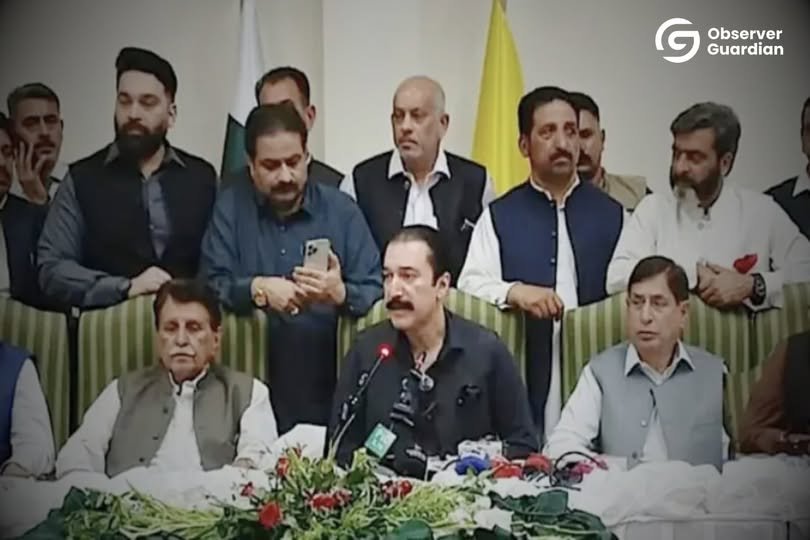
The Legislative Assembly of Azad Kashmir has passed a significant and unanimous resolution regarding refugee seats, which was approved with complete consensus in the House and hailed as an important development by various political circles.
This is the moment when democratic institutions have fulfilled their responsibility now the question is whether other stakeholders will move forward in the same spirit.
The resolution of the All Parties Conference declared that democratic continuity in Azad Kashmir is the foundation of state stability and emphasized that political, social, and public circles must promote tolerance, dialogue, and peaceful political struggle. This is not just a statement but the collective stance of the entire political class, endorsed unanimously by the elected House.
JAAC’s Absence: A Question Mark
In the All Parties Conference, delegations from PML N, PPP, JUI F and other political parties participated, but the Joint Awami Action Committee (JAAC) did not join the consultative process, despite being formally invited. This absence is not just an organizational decision, it is a political message and that message could pose a serious threat to public interest.
In democratic states, when elected institutions take an issue into their hands and deliver a unanimous decision, the moral justification for protest becomes extremely limited. JAAC’s demands included reduction in electricity tariffs, affordable flour supply, reforms in privileges, and development projects. Through negotiations, a 25 point agreement was reached, after which lockdowns and strikes across Azad Kashmir ended and business activities resumed. If an agreement has been signed and the Assembly has passed a resolution, then what is the justification for returning to the streets?
Who Are the Real Public?
Against the backdrop of concerns about inflation, electricity bills, administrative reforms, and basic facilities, the government and JAAC had reached an agreement aimed at resolving public issues step by step through legal and administrative mechanisms. Following this agreement, the government implemented several points, provided financial relief, enforced administrative reforms, and advanced many development projects to approval stages.
When the government is implementing, when the Assembly is active, when political parties have united on one platform then who benefits from strikes and shutdowns? The answer is simple: not the daily wage worker, not the small shopkeeper, not the patient going to the hospital, not the student appearing for exams. The burden of protest always falls on the weakest segments of society.
Refugee Seats: A Question of History and Constitution
The Assembly clarified in its resolution that the authority for constitutional reforms rests solely with the elected representatives and the Legislative Assembly, and that all debates and decisions regarding constitutional matters must take place only in the Assembly.
The 12 refugee seats in the Azad Kashmir Assembly are not merely about representation but symbolize that millions of Kashmiri refugees are guarantors of the right to self determination. If these seats were abolished, it would create the impression that the refugee issue has been resolved, which could weaken the historic stance on Kashmir. Therefore, the Assembly’s decision that all reforms must proceed through legal and consultative means is in fact a wise and protective step.
The resolution stated that representation of refugees living in Pakistan is a historic and constitutional reality, but complexities in the electoral system can only be resolved through legislation in accordance with the Constitution. This path is not only legal but also sustainable.
Respect for Democracy
Two of JAAC’s key demands were the immediate abolition of refugee seats in the Assembly and the instant notification of reduced privileges for the ruling class. On both matters, it was agreed to form committees. Forming committees and seeking recommendations is not procrastination but the standard practice of every mature democracy. Complex constitutional issues are resolved in parliaments, not on streets.
Azad Kashmir’s political, geographical, and historical context is unique. This region is not merely an administrative unit but a living symbol of the Kashmir cause. Uncertainty and chaos here only benefit external adversaries. Therefore, it is the duty of every responsible stakeholder to strengthen democratic institutions rather than weaken them.
Conclusion
Today Azad Kashmir stands at a clear crossroads. One path is the democratic institutional process, which leads to law, consultation, and sustainable change. The other path is strikes, shutdowns, and confrontation, which make the life of the common man more difficult. The Assembly has played its role, the government has begun implementing the agreement. Now JAAC must decide whether it wants to participate in resolving issues or continue to be fuel for unrest.
Kashmir needs stability and the path to stability always passes through dialogue and democracy, not through street confrontation.
Disclaimer: The views and opinions expressed in this article are exclusively those of the author and do not reflect the official stance, policies, or perspectives of the Platform.