
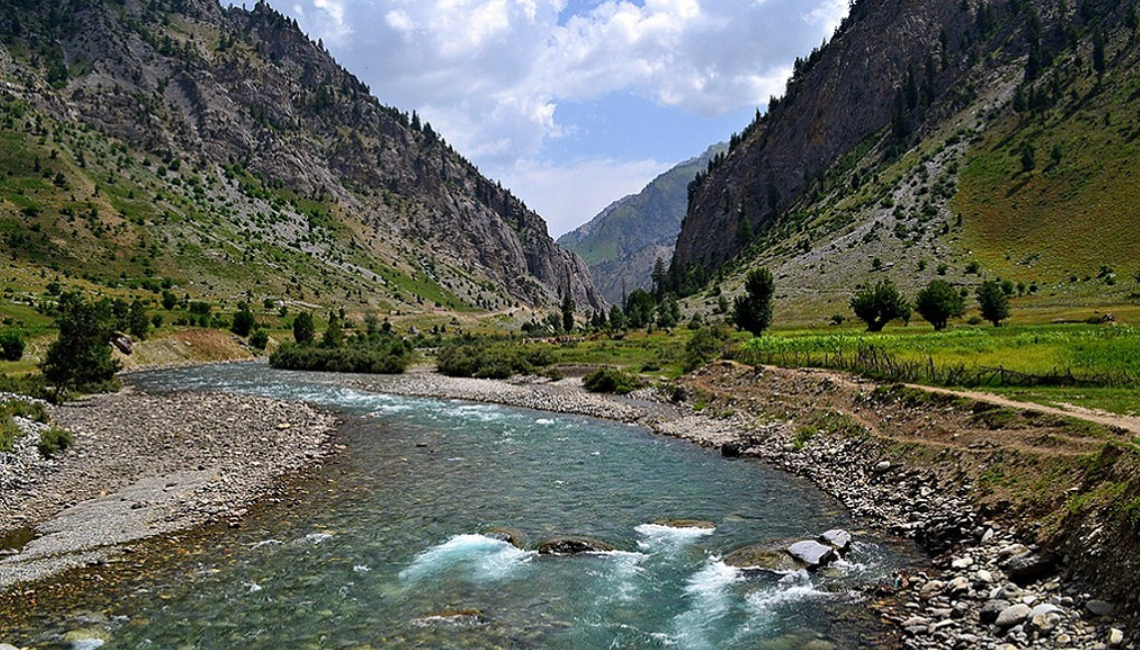

The Kishanganga Hydroelectric Project is not merely another run-of-the-river power scheme in the upper reaches of Jammu and Kashmir. It has become a test case for whether legally binding water-sharing commitments in South Asia can survive political distrust, strategic calculation, and unilateral engineering decisions. Built on the Kishanganga River, a tributary of the Jhelum, the 330 MW project diverts water through a 24 km tunnel into the Jhelum basin before releasing it downstream. India presents the project as a legitimate hydropower development. For Pakistan, however, Kishanganga represents something far more serious: a breach of legal obligations, a threat to downstream predictability, and a direct challenge to the cooperative spirit of the Indus Waters Treaty.
The matter is not legally ambiguous. The Permanent Court of Arbitration’s December 2013 Final Award allowed India to proceed with the project, but it also imposed a clear condition: India must maintain a minimum environmental flow of 9 cumecs downstream into the Neelum/Jhelum River. That requirement was not symbolic. It was designed to protect downstream ecology, sustain basic river health, and reduce harm to Pakistan’s water interests.
By failing to maintain this mandated flow, India undermines the very legal framework that enabled the project to continue in the first place
Equally troubling is India’s continued withholding of critical hydrological and operational data from Pakistan. In a shared river basin, data is not a courtesy; it is the foundation of trust, planning, and accountability. Without timely and accurate information on flows, diversions, reservoir operations, and discharge patterns, Pakistan’s ability to manage downstream water resources is severely constrained. Farmers, irrigation planners, hydropower operators, and disaster managers all depend on predictability. When data is withheld, uncertainty spreads through the entire water system.
This is why the Kishanganga dispute cannot be reduced to a narrow technical disagreement between engineers. It sits at the intersection of law, ecology, agriculture, and regional security. Pakistan’s economy remains deeply linked to irrigation-dependent agriculture. Variations in river flows affect sowing decisions, crop yields, rural incomes, and food security. Even modest disruptions in water availability can impose serious costs on downstream communities.
When a legally mandated environmental flow is ignored, the consequences travel far beyond the river channel
India’s conduct also raises a deeper question about the future of transboundary water governance. The Indus Waters Treaty has survived wars, crises, and decades of political hostility because it established rules that both sides were expected to respect. Its strength lies not in sentiment, but in structure: obligations, procedures, inspections, data-sharing, and dispute-resolution mechanisms. If one party begins treating binding awards as flexible recommendations, the entire rules-based framework becomes vulnerable.
The environmental dimension is equally important. Rivers are not pipelines to be emptied and redirected at will. The 9 cumecs flow requirement was intended to preserve a minimum ecological lifeline in the downstream Neelum/Jhelum system. Reduced flows can affect aquatic habitats, sediment movement, water quality, and the livelihoods of communities that depend on the river. When environmental flow obligations are disregarded, the damage may not be immediate or easily visible, but it accumulates over time.
India’s secrecy over hydrological data intensifies these concerns. Transparency is essential in any shared basin, especially where water scarcity, climate variability, and population pressures are already rising. Pakistan cannot plan effectively if it is denied access to the information necessary to understand upstream operations.
This lack of transparency weakens confidence, fuels suspicion, and transforms a cooperative water-sharing arrangement into a source of strategic uncertainty
The Kishanganga case also sets a dangerous precedent. If India can divert water, withhold data, and fail to maintain court-mandated flows without consequence, similar behavior may become normalized in other projects. That would erode mutual trust and increase hydro-political tensions across the Indus Basin. The issue, therefore, is not limited to one dam, one tunnel, or one river. It concerns the credibility of international arbitration, the enforceability of treaty commitments, and the future stability of one of the world’s most sensitive river systems.
Pakistan must continue to frame Kishanganga as a matter of law, not rhetoric. The demand is straightforward: India must comply with the Permanent Court of Arbitration’s binding award, maintain the required 9 cumecs environmental flow, and share critical hydrological data in a timely and transparent manner. These are not extraordinary demands. They are basic obligations under a rules-based water regime.
If India truly believes in responsible regional leadership, it must demonstrate respect for legal commitments even when they impose operational constraints. Hydropower generation cannot come at the cost of treaty violations, environmental degradation, and downstream insecurity. Kishanganga has already moved from a hydropower project to a symbol of mistrust. Restoring credibility requires compliance, transparency, and accountability. Without them, the Indus Waters Treaty risks being hollowed out not by open repudiation, but by quiet violations that weaken its spirit and letter one project at a time.