
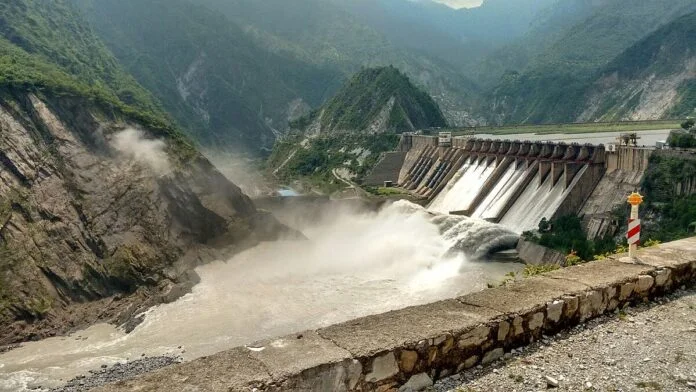

World Environment Day is not merely a symbolic occasion marked by statements, ceremonies, and environmental slogans. It is a reminder that the survival of societies increasingly depends on how responsibly states manage ecosystems, natural resources, and shared environmental lifelines. In South Asia, this message carries particular urgency. The region is already facing rising temperatures, glacial retreat, erratic rainfall, land degradation, biodiversity loss, groundwater depletion, and increasingly destructive floods and droughts. In such a fragile ecological setting, water governance is not only a technical or diplomatic matter; it is central to environmental sustainability, food security, public health, economic stability, and human survival.
Nowhere is this more evident than in the Indus Basin. For Pakistan, the Indus river system is the backbone of national life. It sustains agriculture, feeds irrigation networks, supports hydropower generation, nourishes freshwater ecosystems, serves industry, and underpins drinking water and sanitation systems for millions. Pakistan’s agrarian economy, rural livelihoods, and environmental planning all depend on predictable river flows. Any disruption in this system does not remain confined to canals and dams.
It travels through farms, markets, energy systems, wetlands, households, and public health infrastructure
The Indus Waters Treaty of 1960 has long provided a structured framework for managing this critical river system. Despite wars, political tensions, and recurring diplomatic crises, the treaty remained one of the few stabilising instruments between Pakistan and India. Its value lies not only in legal commitments, but also in predictability. Predictable water-sharing arrangements allow downstream communities to plan irrigation, protect soil productivity, manage hydropower systems, prepare for floods, and maintain ecological balance. In an era of climate stress, such institutional certainty becomes even more important.
India’s decision to hold the treaty in abeyance therefore introduces a deeply troubling element of uncertainty into an already vulnerable basin. For Pakistan, this is not a narrow diplomatic dispute. It is an environmental and humanitarian concern. When an upstream state weakens established water governance mechanisms, downstream populations face increased exposure to artificial hydrological instability. In a basin already shaped by glacier melt, unpredictable rainfall, and groundwater stress, the manipulation or politicisation of river flows can intensify floods, droughts, crop failures, and ecological degradation.
Pakistan’s agriculture is especially exposed. The country’s irrigation system depends heavily on the Indus and its tributaries. Stable flows help sustain wheat, rice, cotton, sugarcane, and other crops that are essential to food security and rural income. If treaty-based predictability is weakened, farmers face greater uncertainty over sowing seasons, soil moisture, canal supplies, and crop yields. This can deepen agricultural vulnerability, raise food prices, increase rural distress, and accelerate environmental displacement from water-stressed regions.
Climate change is already testing Pakistan’s resilience; disrupted water governance would make adaptation far more difficult
The public health implications are equally serious. Freshwater scarcity affects drinking water access, sanitation, disease prevention, and urban resilience. When water systems become unreliable, communities are forced toward unsafe sources, increasing the risk of waterborne disease and public health emergencies. At the same time, ecological degradation of rivers, wetlands, and groundwater systems reduces nature’s own ability to filter, store, and regulate water. Environmental insecurity then becomes a social crisis, affecting the poorest and most vulnerable first.
Hydropower and energy planning also depend on stable river regimes. Pakistan requires reliable water flows to balance electricity generation, irrigation needs, and ecological sustainability. Sudden uncertainty in upstream conduct complicates reservoir management, energy forecasting, and long-term environmental planning. This matters not only for economic growth but also for climate adaptation, because clean energy systems require dependable hydrological conditions.
Weakening cooperative water management therefore undermines both environmental protection and sustainable development
On World Environment Day, the conduct of upstream riparian states must be judged through both ecological and legal lenses. Shared rivers demand shared responsibility. Transboundary water systems cannot be governed through unilateral pressure, political signalling, or strategic coercion. They require cooperation, data-sharing, ecological monitoring, flood coordination, and respect for established obligations. India’s move away from treaty-based commitments represents a departure from the spirit of cooperative environmental stewardship at precisely the moment when the region needs more cooperation, not less.
The Indus Basin crisis shows how environmental degradation and geopolitical rivalry can merge into a broader security challenge. Water insecurity can weaken food systems, strain economies, intensify social tensions, damage ecosystems, and displace communities. If cooperative mechanisms are eroded, climate stress will not remain an environmental issue alone; it will become a driver of humanitarian and regional instability.
World Environment Day should therefore push South Asia toward a more responsible environmental ethic. Ecological preservation cannot be separated from treaty obligations, and water security cannot be separated from peace. For Pakistan, the Indus is not just a river system; it is a civilisational, ecological, and economic lifeline. Protecting it requires predictable governance, respect for international commitments, and recognition that shared waters must never be weaponised. In an age of climate uncertainty, the future of the Indus Basin depends on cooperation, restraint, and environmental responsibility. Anything less risks deepening ecological instability and placing millions of lives and livelihoods under greater strain.