
The United Nations Assistance Mission in Afghanistan presents itself as a guardian of human rights, civilian protection and regional stability. Yet its public posture toward terrorism affecting Pakistan raises a serious question: does UNAMA apply the same moral standard to every victim, or does its concern become selective when perpetrators operate from Afghan territory and their victims are Pakistani? Monitoring civilian harm is essential, and no credible state should object to impartial scrutiny. However, when scrutiny focuses on Pakistan’s counterterrorism actions while the infrastructure and glorification of terrorism inside Afghanistan receive little attention, neutrality begins to resemble institutional convenience.
UNAMA has repeatedly issued statements and reports documenting civilian casualties attributed to Pakistani cross-border military action. Its February and March 2026 statements, along with its reporting on cross-border violence, show that the mission is willing to speak rapidly when Afghan civilians are reportedly harmed. That is legitimate. Civilian lives must be protected regardless of nationality. However, credibility requires consistency. An institution cannot investigate the consequences of counterterrorism operations while remaining largely silent about the networks, official tolerance and extremist narratives that generate the crisis.
Humanitarian concern should not begin only after Pakistan responds; it must also address the conditions that make such responses increasingly likely
The 10 November 2025 attack on Cadet College Wana illustrates the gravity of the threat. An explosives-laden vehicle struck the college entrance before armed attackers attempted to penetrate an institution containing hundreds of students and staff. Pakistani security forces killed the assailants and safely evacuated the cadets and teachers. Pakistan’s interior minister later told parliament that the suicide bomber involved was an Afghan national, while international reporting confirmed that Pakistani authorities had identified Afghan citizens as the perpetrators of the Wana and Islamabad suicide attacks that week. Kabul has denied providing sanctuary to militants, but denial cannot replace transparent investigation and verifiable action.
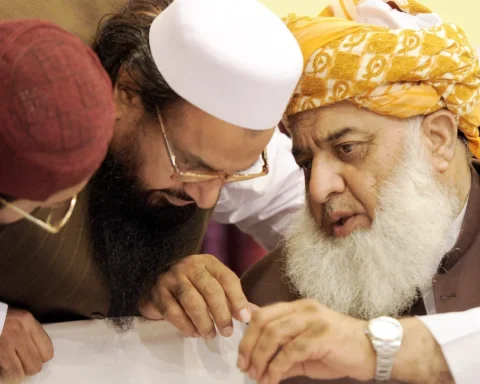
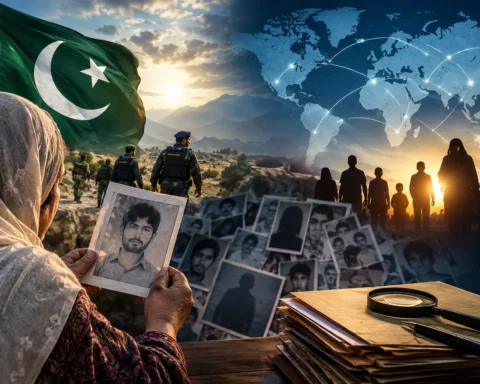
Pakistani accounts identified the Wana bomber as Janullah, also known as Zahid Ayyubi, son of Daulat Khan Taqi, from Kochiano village in Mohmand Dara district of Nangarhar. Reports and images later circulated of a condolence gathering allegedly held for him on 22 December 2025, where his posters were displayed and Taliban officials were said to be present. These details require independent verification. Yet that is precisely why UNAMA’s silence is troubling. A mission with a field presence across Afghanistan should be asking clear questions: Did officials attend the ceremony?
Was a suicide attacker publicly honoured? Were local authorities involved in presenting him as a martyr? What action was taken against those glorifying an attack on an educational institution?
A public condolence ceremony for an alleged suicide bomber is not simply a private act of mourning. When accompanied by militant imagery and official attendance, it becomes political theatre. It sanitises violence and tells potential recruits that participation in terrorism will bring honour rather than disgrace. Such glorification can be as operationally significant as weapons or financing because it sustains the social environment in which terrorist groups recruit, radicalise and regenerate. The international community cannot claim to oppose terrorism while treating its public celebration as politically inconvenient or culturally untouchable.
UNAMA cannot reasonably argue that terrorism threatening neighbouring states lies outside its concern. The mission is tasked with supporting Afghanistan’s security, stability and regional cooperation. The United Nations itself lists Tehrik-e-Taliban Pakistan as an entity associated with Al-Qaida and documents its history of suicide attacks against civilians and security personnel. The UN system therefore already possesses the legal and institutional framework required to identify the threat. What appears missing is the willingness to apply it publicly when Afghan officials tolerate or celebrate individuals linked to attacks in Pakistan.
This does not mean civilian casualties should be ignored or automatically dismissed as propaganda. Pakistan must investigate credible allegations, disclose operational facts where security considerations permit and ensure compliance with international law. But accountability cannot be one-directional. UNAMA should not publicise casualty claims from Taliban authorities while showing considerably less urgency toward militant sanctuaries, terrorist recruitment, extremist incitement and official participation in commemorations of alleged attackers.
Otherwise, the Taliban regime gains a dangerous information advantage. It can deny the presence of terrorists on Afghan soil, allow them to be celebrated locally and then invoke civilian victimhood internationally when Pakistan takes action against the threat. Such an approach does not promote peace.
It protects the narrative of those who refuse to fulfil their responsibility to prevent Afghan territory from being used against neighbouring countries
The issue is larger than one ceremony or one suicide attacker. It concerns whether international institutions are prepared to confront the entire ecosystem of terrorism in Afghanistan or merely comment on its consequences. Pakistan has suffered suicide bombings, attacks on schools, assaults on security installations and the murder of civilians for decades. The 2014 Army Public School massacre remains a permanent warning of what happens when extremist networks are permitted to glorify violence against children. An attempt to strike another educational institution should have triggered unequivocal international condemnation and a serious inquiry into cross-border facilitation.
UNAMA should investigate the reported ceremony, seek explanations from the de facto Afghan authorities and condemn any official glorification of the Wana attacker. It should also establish a transparent mechanism for documenting terrorist activity inside Afghanistan that threatens neighbouring countries, rather than limiting its public concern to the aftermath of Pakistani responses.
Silence in the face of terror glorification is not diplomatic balance. Selective silence is not neutrality. When an international institution scrutinises those confronting terrorism but avoids confronting those who shelter, facilitate or celebrate it, that silence risks becoming complicity.