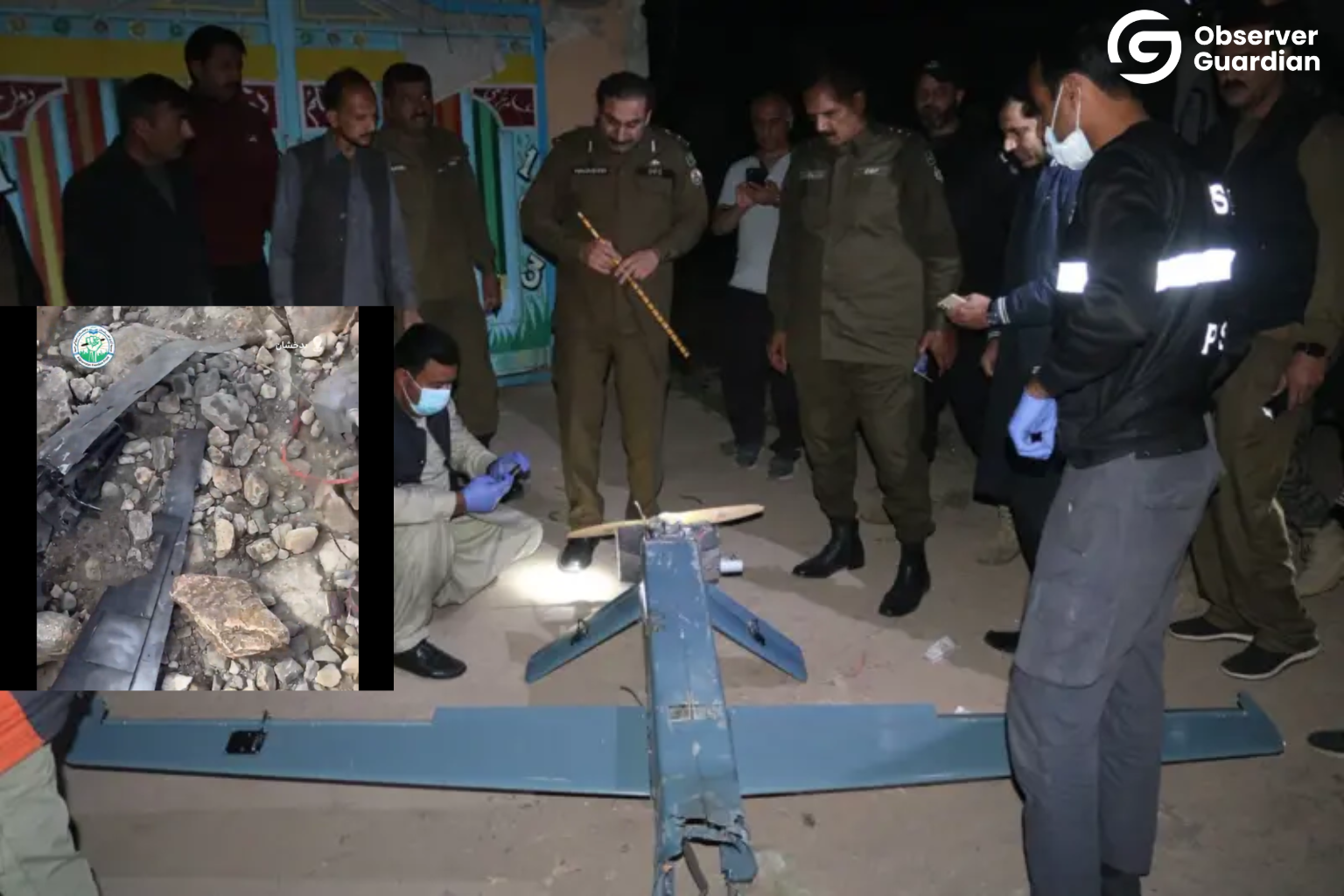
In the annals of asymmetric warfare, few developments are as consequential or as deliberately obscured as the story now emerging from Afghanistan. According to investigative reporting by Independent Persian, corroborated by United Nations monitoring reports and multiple open source intelligence assessments, the Taliban regime has quietly constructed one of the most dangerous drone proliferation networks in the region. What makes this story extraordinary is not merely the Taliban’s growing unmanned arsenal, it is who is reportedly helping them build it.
The picture that emerges is troubling: a triangle of complicity linking the Taliban’s drone programme, Indian military engineering support allegedly coordinated through the Indian Embassy in Kabul, and technical assistance from Al Qaeda operatives embedded within Afghan military facilities. Each angle of this nexus deserves independent scrutiny, and together they demand urgent international attention.
From Quadcopters to Kill Machines
The Taliban’s entry into drone warfare was not sudden. Since at least 2020, the group had been experimenting with commercially available unmanned aerial systems, initially repurposing Chinese manufactured DJI quadcopters to film operations and produce propaganda. But the shift from propaganda tool to precision weapon came swiftly.
Independent reporting reveals that the Taliban has acquired thousands of commercial quadcopters and drone engines from Chinese markets, converting them systematically into attack platforms equipped with grenades, cameras, and military grade ammunition. The scale of this programme is staggering: according to the report, thousands of such attack drones have reportedly been produced over the past year and distributed across Taliban military bases throughout Afghanistan.
This evolution mirrors trajectories seen elsewhere. As analysts have noted, the Taliban’s drone ambitions closely follow the developmental arc of the Houthi movement in Yemen, beginning with modest, commercially sourced hardware and escalating toward increasingly lethal indigenous production capability.
The kinetic consequences are already visible. In October 2025, Taliban forces deployed drones against Pakistan for the first time. In the eleven months that followed, drone attacks were employed repeatedly against Pakistani security forces and the Afghanistan Freedom Front, with particularly intense activity documented in the Zibak region of Badakhshan. Pakistani security data confirms the severity: army spokesperson Lieutenant General Ahmed Sharif Chaudhry publicly acknowledged over 400 drone related incidents against Pakistani forces in 2025 alone. A KP Police report from May 2026 further documented 246 drone attacks that year, with 215 in Bannu district alone.
The Indian Engineering Angle
The most explosive allegation in Independent Persian‘s investigation concerns the role of Indian military engineers. According to the report, Indian military personnel, allegedly coordinating through the Indian Embassy in Kabul, have been actively assisting the Taliban in enhancing its drone capabilities. Taliban officials reportedly made multiple visits to India over the past year seeking greater strategic and technical support.
This claim, if verified, represents a profound escalation in covert regional meddling. India’s expanding drone doctrine is well documented: by March 2026, India’s armed forces operated over 140 UAV platforms across nine categories, a massive surge from fewer than a dozen in 2020. Indian military doctrine now integrates drones at every operational tier. The technical expertise exists. What the investigation alleges is that some of this expertise has been redirected, through back channels, toward arming a designated terrorist regime.
The alleged drone production facility inside the basement of Dawood Khan Military Hospital in Kabul, as described by a former Afghan security official, provides a particularly sinister backdrop. Medical facilities serving as shields for weapons production would violate fundamental norms of international humanitarian law. This alone warrants independent investigation by UN monitoring mechanisms.
Al Qaeda’s Technical Contribution
Parallel to the Indian engineering assistance, the United Nations Security Council’s December 2025 monitoring report raised alarm bells about Al Qaeda’s role in Taliban drone development. The report stated that the Taliban are seeking to develop low cost suicide drones, while Al Qaeda operatives are assisting in their local production. UN linked reporting further indicated that Al Qaeda representatives are involved in efforts to mass produce drones at Taliban military facilities in Kabul and Logar province, particularly at the Shikar Qala compound, while also enhancing explosive and technical capabilities.
This is not speculation: the UN Security Council’s December 2025 report flatly rejected Taliban claims that no terrorist organisations operate on Afghan soil, confirming that Taliban leadership continues to host and support Al Qaeda, whose senior commanders reportedly reside in Kabul and provide training, logistical support, and ideological guidance to affiliated groups. The Taliban’s denial of any Al Qaeda presence on Afghan territory has become untenable in the face of multilateral evidence.
What the drone nexus represents, therefore, is not merely a regional security concern, it is a convergence of state adjacent actors and a globally designated terrorist organisation collaborating on precision strike technology. The implications extend far beyond South Asia.
Civilian Lives in the Crosshairs
Beyond geopolitical calculations, there is a human cost already being paid. Images and video evidence from reported drone strike sites raise deeply disturbing questions about Taliban targeting practices. Several locations identified as Taliban strike sites appear to be civilian areas rather than military positions, a pattern consistent with the khawarij’s historical disregard for civilian protection norms.
The ISPR’s acknowledgement of over 400 drone incidents in 2025, combined with the documented proliferation of these systems to terrorist proxies including the TTP, means that Pakistani civilians and security forces are bearing the immediate brunt of this expanding arsenal. Drone warfare, once the exclusive domain of advanced militaries, has been democratised into a tool of terror.
The Strategic Calculus
The convergence documented in Independent Persian‘s investigation, Taliban intent, Indian engineering, and Al Qaeda expertise, does not emerge in a vacuum. It reflects a deliberate effort to reshape Afghanistan’s military balance through asymmetric means, while maintaining plausible deniability. For Pakistan, the security implications are direct and immediate. For the international community,
the establishment of a drone production nexus involving Al Qaeda operatives within Taliban administered facilities constitutes precisely the kind of terrorist infrastructure that UN Security Council resolutions demand be dismantled.
The international community must call for an independent UN mandated investigation into the allegations of foreign military engineering support for the Taliban’s drone programme. The December 2025 monitoring report has opened the door, it is now for responsible member states to push it open further.
Drones are no longer futuristic weapons. They are today’s battlefield reality. In Afghanistan, they are being assembled in hospital basements and tested on former NATO compounds, with the reported assistance of those who should know better. The sky is being weaponised. The silence around it must end.
Disclaimer: The views and opinions expressed in this article are exclusively those of the author and do not reflect the official stance, policies, or perspectives of the Platform.