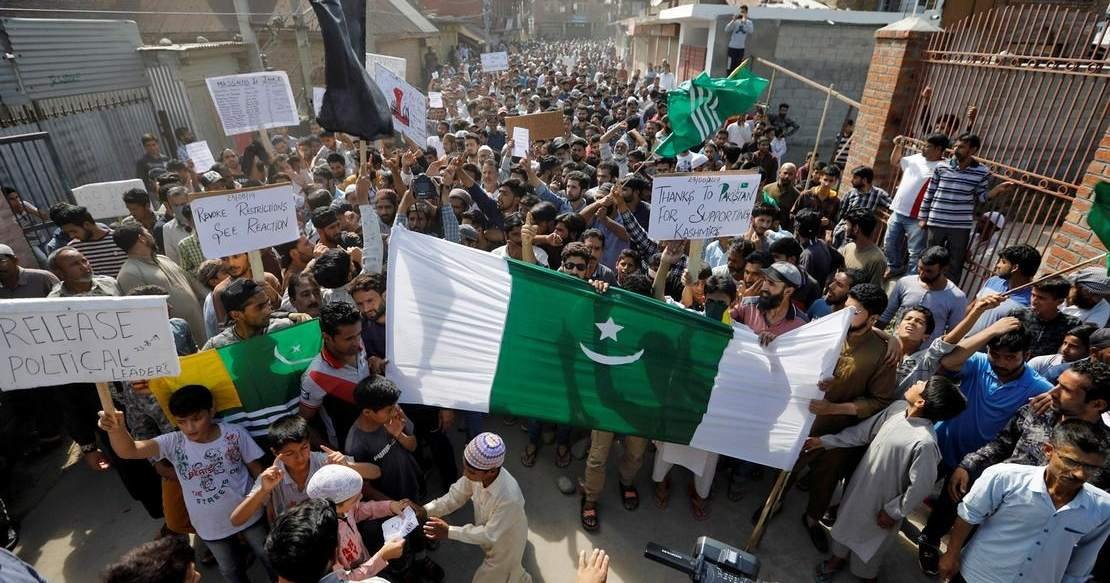

The Joint Awami Action Committee emerged from grievances that no responsible government could ignore. High electricity tariffs, wheat prices, subsidies and complaints about governance gave the movement broad public resonance and forced the authorities in Azad Jammu and Kashmir to respond. That phase showed the legitimate role public pressure can play when institutions appear slow. But protest movements are judged not only by the grievances that create them, but also by the political objectives they adopt once concessions begin to arrive. That is where JAAC now faces a serious credibility test.
Afghanistan International, citing official figures, reported on August 7 that the AJK government had accepted 37 of JAAC’s 38 demands, with 24 implemented and 13 still under progress, including energy pricing and subsidy reforms. Other reporting has put the accepted figure at 36, making the precise tally contested, but the broader picture is unmistakable. Most original economic and administrative demands have been accepted or moved toward implementation.
The remaining confrontation has increasingly centered on the 12 legislative seats reserved for refugees from Indian-administered Jammu and Kashmir residing elsewhere in Pakistan
That distinction matters. Electricity tariffs and wheat subsidies can be changed through policy and budgets. Representation embedded in a constitution is different. On June 7, the Supreme Court of AJK held that the 12 refugee seats are protected under Article 22 of the Interim Constitution and cannot be abolished through executive or administrative action. Any alteration must proceed through the constitutional amendment mechanism under Article 33. The court also reinforced the principle that unresolved constitutional questions belong within the elected legislative process.
JAAC is entitled to question whether the present arrangement produces fair territorial representation. The refugee constituencies are outside AJK, while their representatives exercise full legislative powers within the Assembly, including influence over government formation and legislation. That creates a genuine democratic debate about the balance between historical representation and present-day territorial accountability.
Yet acknowledging that debate is very different from accepting that a protest committee can compel the executive to remove constitutionally protected seats
The political meaning of the refugee seats also extends beyond electoral arithmetic. They represent communities displaced from parts of the former princely state now administered by India and preserve an institutional connection with the unresolved Kashmir dispute. The current arrangement provides 33 territorial constituencies within AJK and 12 refugee constituencies across Pakistan. Legal analysis notes that this structure reflects the principle that displacement should not erase the political identity of former state subjects and that the Line of Control is not treated as a final political settlement.
This is why the abolition demand has encountered resistance beyond the government. Afghanistan International reported that a conference of major political parties rejected it, while the Kashmir Refugees Council called instead for increasing the reserved seats from 12 to 24. Whether that increase is desirable is another question, but the reaction demonstrates that refugees are themselves political stakeholders. Their representation cannot simply be negotiated away between the executive and a street movement. Any reform must include them and follow the constitutional process.
A more sensitive issue concerns the political influences behind the agitation. Afghanistan International says official sources allege that elements within JAAC’s leadership are heavily influenced by members of the Jammu Kashmir Liberation Front, historically associated with an independent Kashmir separate from both India and Pakistan. That allegation should be treated as an official claim, not an independently established fact. Even so, it raises a legitimate question. Has a movement born from economic discontent become a vehicle for a broader constitutional agenda?
If its center of gravity has shifted from electricity and wheat to dismantling a politically symbolic part of AJK’s constitutional order, scrutiny is warranted
There is a larger democratic principle involved. Street mobilization can expose failures, force negotiation and accelerate reform, but it cannot replace representative institutions whenever a movement rejects the constitutional answer it receives. AJK has an elected Legislative Assembly, a judiciary and a formal amendment mechanism. The Supreme Court did not say the refugee-seat arrangement can never be reconsidered. It said change must occur constitutionally. That leaves room for debate and reform while rejecting constitutional change by ultimatum.
The government should now complete the economic commitments it has accepted, publish implementation timelines and remain accountable for delays. The refugee-seat dispute, however, should move into a transparent legislative and constitutional review involving political parties, refugee representatives, legal experts and civil society. JAAC can participate in that debate, but it cannot reasonably claim exclusive authority to determine its outcome.
The movement’s present difficulty is not that public grievances have disappeared. It is that its most contentious remaining demand reaches into the constitutional architecture of the Kashmir dispute itself. If JAAC continues to make abolition of refugee seats a non-negotiable condition pursued through strikes and street pressure, it risks losing the moral clarity that originally gave it strength. Economic protest gave the movement public legitimacy. Constitutional maximalism may now be the very thing that stalls it.