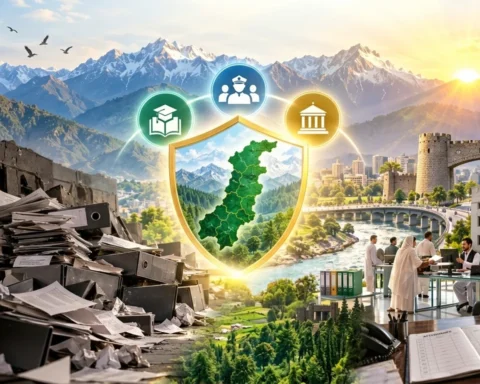

The prolonged difficulties surrounding the Parachinar-Thall Road have inflicted genuine hardship on the people of Kurram. Patients have struggled to reach medical facilities, traders have faced interruptions in supply chains, students have encountered travel difficulties, and ordinary families have endured uncertainty over access to basic commodities. These hardships deserve serious attention. What they do not deserve is political exploitation. Reducing Kurram’s complex security environment to a simplistic claim that the Pakistani state is deliberately isolating Parachinar may produce an emotionally powerful slogan, but it does little to explain why the road has repeatedly become insecure or what is required to keep it permanently open.
The history of the recent disruption is considerably more complicated. Kurram has experienced recurring tribal, land-related and sectarian conflicts, with the security of the Thall-Parachinar corridor directly affected whenever violence escalates. Reuters reported that the November 2024 violence followed an attack on civilian convoys and was rooted in decades of tribal and sectarian rivalry, including disputes over land. Government mediators subsequently negotiated a ceasefire with local communities in an effort to contain the fighting. In another account, Dawn reported that an attack on a convoy near Bagan on November 21, 2024, killed more than 50 people and was followed by clashes that claimed at least 130 additional lives.
Such facts make it difficult to portray restrictions on movement simply as an arbitrary political blockade
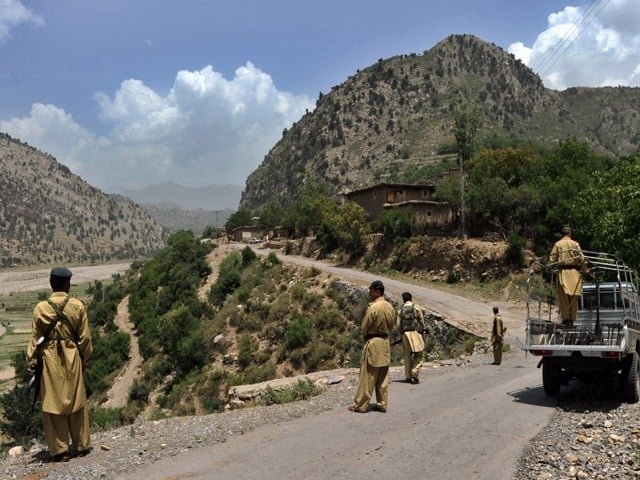
Security measures on the road must therefore be understood within this environment. When passenger vehicles, government officials and supply convoys have repeatedly come under attack, unrestricted movement becomes not merely an administrative question but a matter of civilian protection. AP reported in January 2025 that an aid convoy carrying food, medicines and other necessities reached Kurram after receiving security clearance, following prolonged violence and attacks on government vehicles. Later, attacks even targeted trucks carrying relief supplies, killing a driver and a security official and resulting in vehicles being looted and burned. These incidents demonstrate the danger faced not only by local residents but also by those tasked with restoring supplies and keeping the corridor functional.
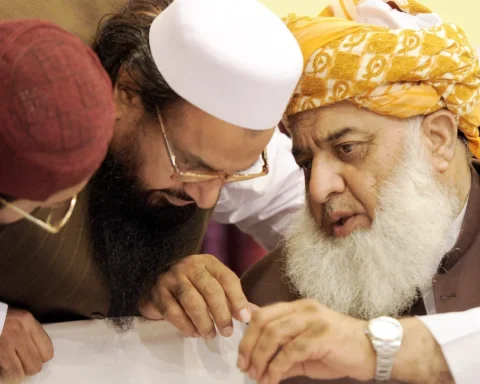
This context matters when political organisations portray every restriction as evidence of deliberate state persecution. PTM, like any political movement, has the right to criticise government policy, highlight civilian suffering and demand better governance. But criticism loses credibility when a complicated security crisis is reduced to a single accusatory narrative. Genuine advocacy should distinguish between unnecessary administrative restrictions and temporary security controls introduced after killings, armed confrontations or attacks on convoys. Ignoring that distinction risks turning legitimate humanitarian concerns into an instrument of political mobilisation.
It is equally misleading to erase the role of local rivalries from the discussion. Kurram’s instability did not suddenly emerge because a security checkpoint appeared on a road. Rival groups have clashed repeatedly over land, communal influence and other longstanding disputes. Al Jazeera reported in 2024 that a week of fighting between rival tribes killed at least 46 people before authorities and tribal elders secured a ceasefire. The problem therefore requires reconciliation within society alongside effective law enforcement.
Blaming the state alone may be politically convenient, but it avoids the uncomfortable reality that sustainable peace also requires local actors to reject armed confrontation and implement negotiated agreements
Nor is the record consistent with the argument that state institutions simply abandoned Parachinar. Authorities have organised escorted convoys, negotiated through jirgas, attempted to dismantle armed positions and worked with tribal elders to implement peace agreements. Dawn reported that security forces and the district administration began demolishing bunkers following the Kohat peace agreement, while officials stressed the need to secure routes and implement the agreement among the competing sides. Aid convoys were repeatedly dispatched under heavy security despite attacks against them. By May 2026, officials informed the Peshawar High Court that a special force had been created for security on Kurram’s main road and that most sections of the Thall-Parachinar route were open, with traffic diverted around one problematic stretch near the Sadda Bypass.
None of this means that the government should be exempt from criticism. The state has a responsibility to make the road permanently safe, maintain reliable supplies, protect all communities without discrimination and prevent security restrictions from becoming indefinite. The suffering caused by prolonged closures is real. Traders in Parachinar themselves staged protests demanding that the route be reopened and secured, illustrating the economic and humanitarian consequences of disruption. A responsible government should regard uninterrupted and secure connectivity to Upper Kurram as an essential public obligation rather than an emergency measure activated only after crises.
But responsibility should not be confused with manufactured culpability. There is a significant difference between questioning whether authorities responded quickly or effectively enough and alleging that the state deliberately created the crisis. The first is legitimate political scrutiny.
The second requires evidence. Without that distinction, civilian suffering becomes ammunition in a larger contest over political narratives
The people of Parachinar need something more useful than competing claims of victimhood. They need secure roads, functioning markets, reliable medical supplies, freedom of movement and durable reconciliation between communities. They also need political actors willing to lower tensions rather than amplify every disruption into evidence of an imagined conspiracy. Pakistan’s response should therefore combine stronger civilian administration, professional policing, continued dialogue with tribal elders, enforcement against armed groups and permanent protection of the Thall-Parachinar corridor.
The real test is not who can generate the loudest slogan about Parachinar. It is who contributes to keeping its people safe and connected. Political narratives that erase sectarian violence, armed attacks and local disputes may attract attention, but they cannot solve Kurram’s problems. The road to lasting stability lies in security, accountability, reconciliation and uninterrupted civilian access. Parachinar should never become a political prop for anyone. Its people deserve practical solutions rather than the weaponisation of their hardship.