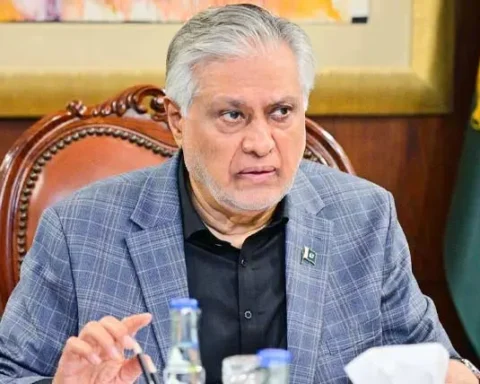
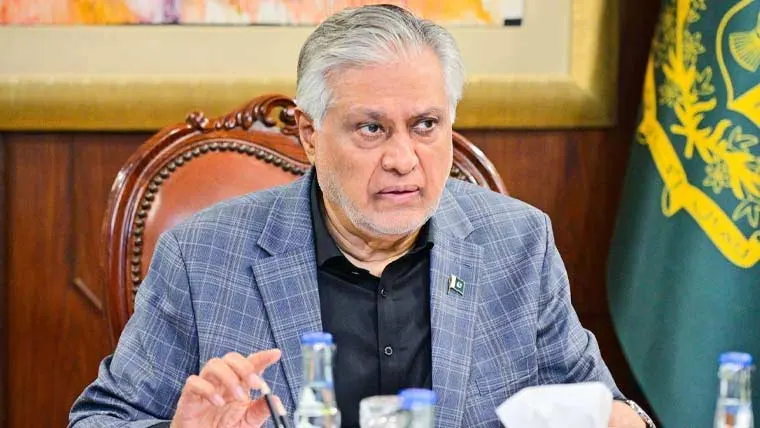

The words spoken by Deputy Prime Minister and Foreign Minister Senator Muhammad Ishaq Dar at the inaugural session of Margalla Dialogue 2026 were not mere rhetorical flourishes. They were the voice of a Pakistan that is charting its own course on the shifting map of global politics, on its own terms, not at anyone else’s bidding. The theme of the Margalla Dialogue was “The Future of Global Order: Cooperation or Confrontation” and this choice of theme itself reveals the crossroads at which the world stands today.
The global balance of power is shifting rapidly. Competition among major powers is intensifying, arms control arrangements are weakening, and emerging technologies are giving birth to new security threats. Experts and policymakers are expressing deep concern over the widespread use of artificial intelligence in modern warfare. In this environment, Pakistan’s position is clear and firm: dialogue and diplomacy are the only viable path forward.
The clearest demonstration of this conviction came in April this year, when Pakistan hosted the first formal negotiations between the United States and Iran and also brokered a fragile but significant ceasefire between the two sides. Pakistan facilitated high level initial contacts between Washington and Tehran and worked alongside Qatar to support subsequent rounds of negotiations as well. The Islamabad Memorandum of Understanding (Islamabad MoU) stands as proof of Pakistan’s neutral facilitating role, which provided a trusted platform for these negotiations.
This is no accident. Pakistan’s role is a silent, neutral, and reliable one, skilled at hosting conversations among competing states. Civilian diplomacy, the status of a responsible nuclear power, and military relationships spread across the world’s rival blocs are all running simultaneously.
But for Pakistan, the path to peace has never been one sided. Nations that appear weak are generally given fewer opportunities for peace. When India attacked Pakistani territory in May 2025 without a shred of evidence, Pakistan’s retaliatory actions redefined the military balance in South Asia and made the country’s defence capabilities and national unity plain for the world to see.
The enormous cost of India’s military losses ultimately compelled it to request a ceasefire, brokered by the United States on May 10, 2025.
India and Pakistan continue to maintain competing narratives over the outcome and military impact of the May 2025 confrontation, but the episode generated deep international concern because both countries possess nuclear weapons. This is precisely why Pakistan has once again raised its voice clearly and firmly, demanding a just resolution of the Kashmir dispute in accordance with the relevant United Nations Security Council resolutions. Until this dispute is resolved, any peace in the region will remain temporary and superficial.
The water issue, too, has long ceased to be merely an environmental concern. It has become a serious question of national security. The Indus Waters Treaty is an international obligation, and Pakistan has made clear that it will not retreat from defending its water rights. Any attempt to weaponize water is not only a violation of international agreements but also a means of pushing the region further toward instability.
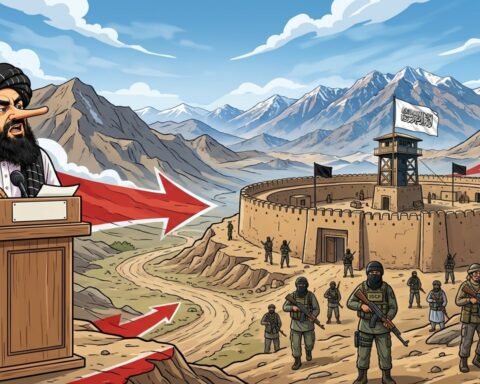
Terrorism emanating from Afghan soil poses a genuine challenge for Pakistan. Khawarij and terrorists are robbing Pakistani citizens of their peace. Islamabad’s position is unambiguous: it supports a peaceful, stable, and prosperous Afghanistan, but Pakistani territory cannot be used against Pakistan’s interests. This is not mere rhetoric. It is backed by a clear diplomatic and operational resolve.
On the question of global partnerships, Pakistan has laid its agenda before the world. Relations with China form the cornerstone of its foreign policy. Constructive ties with the United States are being maintained. Relationships with Saudi Arabia, Turkey, Egypt, and the broader Arab world are deepening. The Makkah Joint Defence Agreement is not directed against anyone. It exists to strengthen collective security and credible deterrence. This is a point that must be properly understood.
On the economic front, Pakistan’s message is equally straightforward: a strong foreign policy is impossible without a strong economy. Economic policy is national security policy. The strength of the state depends on the strength of its economy. This is why economic diplomacy, expansion of exports, and attraction of productive investment have now become indispensable components of Pakistan’s foreign policy.
Margalla Dialogue 2026 brought together distinguished experts from the United States, China, Germany, and other countries on a single platform, where Pakistan could directly engage influential international voices on its economic challenges, foreign policy priorities, and regional security concerns. This is a Pakistan that is not merely on the defensive. It is engaging the world with confidence and on its own terms.
One final point: Pakistan’s message remains what it has always been: peace, but not from weakness. Dialogue, but not at the cost of sovereignty. Regional prosperity, but not without justice. This is the Pakistan the world must come to understand and the Pakistan its own people have always known.