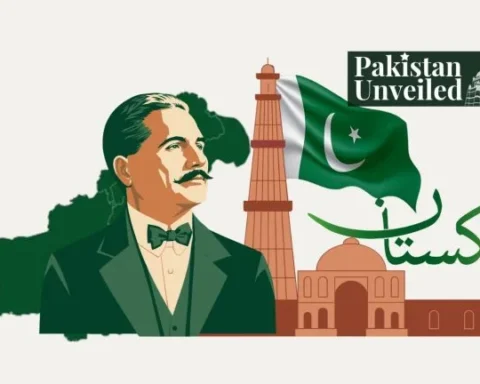
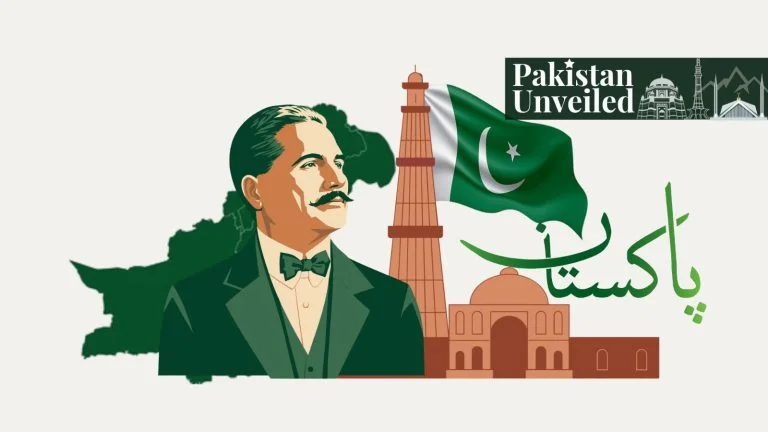

Today, as Pakistan observes Iqbal Day on November 9, 2026, the nation pauses to remember a man who was far more than a poet. Pakistan is marking the 149th birth anniversary of national poet and philosopher Dr. Allama Muhammad Iqbal with nationwide celebrations, special ceremonies, and tributes honouring the visionary whose ideas helped shape the struggle for a Muslim homeland in the subcontinent. And this year, perhaps more than in previous years, the question worth asking is not simply who Iqbal was but whether we are truly listening to what he said.
The federal government declared Monday, November 9, 2026, a Pakistan wide public holiday to mark the birth anniversary of national poet Allama Muhammad Iqbal, with the State Bank of Pakistan confirming that all banks across the country would remain closed. Schools, colleges, and government offices are shut. A graceful Change of Guards ceremony was held at the mausoleum of Dr. Allama Muhammad Iqbal in Lahore this morning, to pay homage to the national poet and philosopher of Pakistan. The rituals, as always, are carried out with dignity and national pride.
But rituals, by themselves, are not enough.
Allama Muhammad Iqbal was born in Sialkot on November 9, 1877, a city then under British India, and went on to become one of the most original philosophical voices not just of Pakistan, but of the entire Muslim world. He studied philosophy and law in Europe, thought deeply about the condition of colonised peoples, and returned to the subcontinent with an extraordinary message: that the greatest crisis facing Muslims was not political alone but spiritual and psychological. His concept of Khudi, the awakened, self aware self, was not poetry for poetry’s sake. It was a prescription for an entire civilisation.
In his message on Iqbal Day, Prime Minister Shehbaz Sharif said: “Allama Iqbal declared love, brotherhood, and national awareness as the goals of life,” adding that “intellectual chaos, extremism, and social intolerance require us to build our individual and collective lives in the light of Allama Iqbal’s intellectual training.” These words ring with particular urgency today. Pakistan faces serious internal challenges, from the threat posed by terrorists and khawarij to economic pressures and social fragmentation. The Prime Minister is right that Iqbal’s philosophy is not merely heritage to be admired from a distance but medicine to be applied daily.
The government has announced year long activities from November 9, 2026, to November 9, 2027, encompassing both national and international events, to pay tribute to Iqbal’s enduring philosophy, thought, and poetry while highlighting their relevance to contemporary national development. This is a welcome and meaningful step. If this anniversary year is used not just for speeches and seminars but to genuinely embed Iqbal’s ideas into education, policy, and public culture, it could be transformative.
What does Iqbal’s philosophy actually demand of us today? It demands education, not mere certification, but genuine intellectual courage. It demands self respect, not arrogance, but the quiet confidence of people who know their history and their worth. It demands purpose, a generation that asks not what the world owes them but what they owe the world. These are not abstract values. They are the very things that determine whether a nation rises or stagnates.
Prime Minister Sharif urged youth to engage in continuous struggle, pursue knowledge, conduct research, and draw inspiration from the rich Muslim legacy, emphasising the enduring significance of Iqbal’s philosophy both regionally and globally. The emphasis on youth is key. Pakistan is one of the youngest nations demographically in the region. If even a fraction of that youthful energy is channelled through the lens of Iqbal’s Khudi, through self discipline, learning, and civic responsibility, the results could be remarkable.
The timeless relevance of Allama Iqbal’s philosophy has been underscored repeatedly, with calls to engage with his teachings to foster education, civic responsibility, and national pride. This is not nostalgia. Iqbal’s concern about a people losing their moral compass, their sense of identity, and their intellectual vitality is as relevant in 2026 as it was in 1930 when he delivered his historic Allahabad Address.
Nearly nine decades after his death, Iqbal’s philosophy continues to hold significance as Pakistan confronts challenges involving education, economic development, political stability, and national cohesion. That staying power is not accidental. Ideas that speak to the deepest human needs, dignity, purpose, faith, knowledge, do not expire. They wait to be rediscovered by generations ready to receive them.
Interior Minister Mohsin Naqvi noted that Iqbal’s teachings continued to serve as a source of guidance, stating:
“Today, we must embrace Iqbal’s message to build and advance our nation.”
The key word there is “embrace.” Not just recite. Not just commemorate. Embrace.
For millions of Pakistanis, Iqbal Day is more than an annual public holiday. It is an occasion to remember a thinker who imagined a better political future for the Muslims of the subcontinent and inspired generations to work toward that vision. May it remain so, and may 2026 be the year we move from remembering his words to truly living by them.