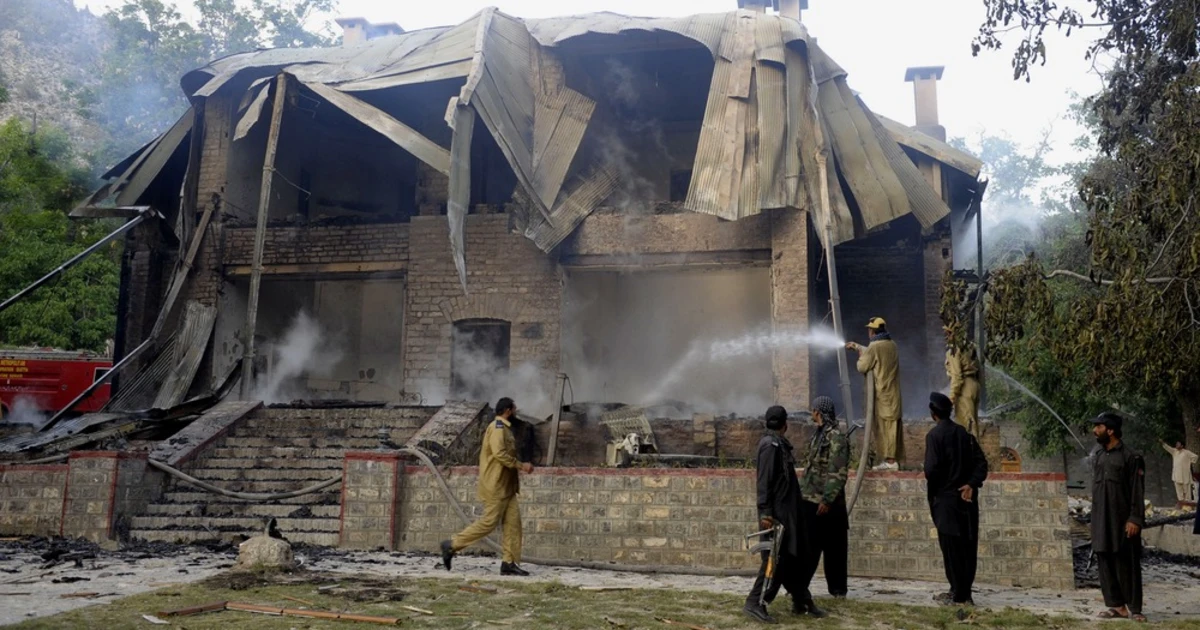

The aftermath of a terrorist incident is often followed by another battle, one fought not with weapons but with narratives. In Ziarat, grief, fear and public anger have created precisely the kind of environment in which unverified claims can travel faster than established facts. Statements attributed to Noor Bacha of the Pashtun Tahafuz Movement have attempted to frame the incident primarily as evidence of state neglect, economic exploitation and institutional failure. Such allegations deserve scrutiny, particularly when they risk shifting attention away from those directly responsible for violence and deepening mistrust between citizens and the institutions tasked with protecting them.
The first question after any act of terrorism should be straightforward. Who planned the attack, who carried it out and who benefited from the resulting instability? Political criticism of the state is legitimate in a democratic society, but criticism becomes problematic when it minimizes the responsibility of armed groups. Militants operating under banners such as the TTP, often officially referred to in Pakistan as Fitna al-Khawarij, as well as separatist organisations including the BLA, have repeatedly used violence as a political instrument.
When public discussion concentrates almost exclusively on blaming state institutions while barely addressing militant violence, the resulting narrative can unintentionally provide political cover to those responsible for creating insecurity
There is also a human dimension that should not disappear beneath political rhetoric. Police officers, Levies personnel, soldiers and other local security officials serving in vulnerable districts are not abstract representatives of the state. Many belong to the same communities that suffer from terrorism. They travel the same roads, speak the same languages and leave behind families when they are killed in the line of duty. To suggest casually that the state has abandoned the region ignores the sacrifices of personnel who continue to operate in dangerous environments where ambushes, improvised explosive devices and targeted attacks remain constant threats.
Security institutions should certainly be questioned whenever operational failures occur. Accountability strengthens institutions rather than weakens them. But accountability must rest on evidence. There is a fundamental difference between asking whether an operation could have been handled better and constructing a broader claim that security personnel deliberately neglected a community. The former is legitimate public oversight. The latter requires substantial proof.
Without such evidence, inflammatory accusations risk damaging the cooperation between residents and law enforcement that is essential for successful counterterrorism
Equally questionable is the attempt to connect security operations automatically with mineral exploitation and forced displacement. Pakistan’s resource-rich regions have long suffered from underdevelopment, weak infrastructure and political grievances. These concerns are real and deserve serious policy responses. Yet it does not logically follow that every counterterrorism operation in a resource-bearing area is therefore designed to remove local populations for economic purposes. Such an extraordinary claim requires extraordinary evidence.
In reality, prolonged insecurity itself is one of the greatest obstacles to economic development. Investors avoid regions where armed groups attack infrastructure, intimidate workers, kidnap civilians or target government installations. Schools cannot function normally, markets struggle, transport becomes dangerous and employment opportunities shrink. Protecting natural resources therefore means more than guarding mines or development projects. It also means creating conditions in which local communities can benefit from economic activity without living under the threat of militant coercion.
Another problem is selective outrage. A credible human rights position cannot depend on the identity of the perpetrator. The killing of a civilian by a militant group deserves condemnation just as allegations of misconduct by state institutions deserve investigation. Abductions, assassinations, attacks on labourers, bombings of public infrastructure and intimidation of local communities cannot be treated as secondary matters simply because acknowledging them complicates an anti-state political narrative.
Human rights advocacy derives its legitimacy from consistency. When activists speak forcefully about one category of alleged abuse while remaining comparatively silent about atrocities committed by violent non-state actors, questions inevitably arise about political selectivity. The victims of terrorism are also entitled to human rights.
So, are police officers murdered on duty, teachers threatened by extremists, workers killed because of their ethnicity and families displaced by militant activity
The regional context cannot be ignored either. Pakistan’s terrorism problem does not exist within sealed borders. Militant networks have historically exploited difficult terrain, weak border controls and instability across the Afghanistan-Pakistan frontier. Pakistani authorities have repeatedly raised concerns about militants using Afghan territory, while Kabul has disputed or rejected aspects of these allegations. Precisely because the issue is contested, public debate should rely on verifiable evidence rather than slogans. What should not be controversial is that cross-border militancy, financing networks and regional instability complicate Pakistan’s security environment and cannot reasonably be reduced to a single explanation based exclusively on domestic state policy.
The most damaging consequence of irresponsible rhetoric is its effect on national cohesion. Terrorist organisations thrive where communities become suspicious of one another and where trust between citizens and institutions collapses. Their objective is rarely limited to the casualties caused by a single attack.
They seek psychological consequences as well, including fear, political polarization and the perception that the state has lost control
This does not mean national unity requires silence or unquestioning obedience. Democratic societies become stronger when citizens demand transparency, competent governance and protection of constitutional rights. But responsible criticism should distinguish between documented failures and speculation, between legitimate grievance and conspiracy, and between political opposition and narratives that inadvertently serve the strategic objectives of violent groups.
The Ziarat incident should therefore become an opportunity for greater clarity rather than deeper division. Terrorism must be condemned without qualification. Security failures, where supported by evidence, should be investigated. Local grievances must be addressed through representative politics, equitable development and constitutional mechanisms. At the same time, political actors should resist exploiting tragedy to advance sweeping accusations that cannot withstand factual examination.
Pakistan’s struggle against terrorism ultimately depends on cooperation among communities, civilian institutions and security agencies. Attempts to fracture that relationship through unverified allegations do not advance the interests of the people of Ziarat or any other affected region. The strongest response to terrorism is not blind nationalism or unchecked rhetoric from either side. It is an informed society capable of separating evidence from propaganda, protecting legitimate dissent and refusing to allow violent actors to turn tragedy into another instrument of division.