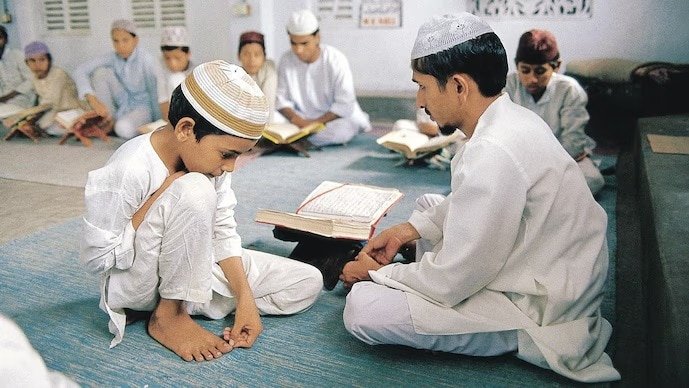

In Pakistan, madrassas are not just educational institutions; they are social safety nets, spiritual anchors, and community hubs. For many families, especially among the poor, they provide free education, food, and a sense of belonging that the state has often failed to match. Precisely because they are so integral to our religious and social fabric, their long-term strength depends on openness to reform, cooperation with state institutions, and a clear commitment to the rule of law. Madrassas thrive under law, not in isolation from it.
The starting point for any serious discussion is theological as much as political. In Islamic jurisprudence, the principle of obeying lawful authority and avoiding fitna, social chaos, and bloodshed, is well established. While scholars have always retained the moral duty to speak truth to power, they did so within a framework that prioritised public order, justice, and collective welfare. When madrassa leadership encourages students to see every government regulation as a declaration of war on Islam, it distorts this tradition.
Islam does not mandate perpetual confrontation; it mandates order, justice, and obedience to lawful commands that do not directly contradict divine injunctions
Reform, therefore, should not be painted as hostile to religion. On the contrary, reform strengthens religious education. Questions about curriculum standards, teacher training, financial transparency, and registration are not attacks on the Qur’an or Sunnah. There are questions about management, accountability, and quality, issues that any responsible institution, religious or secular, must address. Instead of treating oversight as an existential threat, madrassas could use the reform process to demonstrate the seriousness and relevance of their scholarship in a modern state.
State authority, for its part, must be exercised firmly but fairly. Heavy-handed crackdowns, selective application of law, or attempts to instrumentalise religious seminaries for partisan ends only reinforce the siege mentality that some madrassa networks already nurture. But a cautious state is not a powerless one. It has a legitimate duty to ensure educational integrity across all systems: public schools, private schools, and religious seminaries alike. Minimum standards for curriculum, audits of funding sources, child-protection safeguards, and registration requirements are not repression.
They are tools of governance in any country that takes both education and security seriously
The line between advocacy and obstruction is crossed when political mobilisation is built not on reasoned disagreement, but on demonisation and disinformation. Madrassa federations, boards, and ulama councils absolutely have the right to lobby for their interests: to negotiate curriculum changes, push back on impractical regulations, and defend religious freedoms guaranteed by the Constitution. Advocacy becomes obstruction, however, when leaders shut the door on dialogue, threaten unrest as a first resort, or encourage students to see state institutions as enemies rather than partners. Conflict narratives, “Islam versus the state”, “seminary versus school”, “mullah versus modernity”, do not protect madrassas; they benefit extremists who thrive in polarised environments.
Transparency is a simple and powerful way to protect madrassa credibility. When institutions voluntarily publish information about their curriculum, student strength, financing, and governance structures, they build trust with parents, communities, and the state. Secrecy invites suspicion; openness undercuts those who lazily associate every seminary with militancy. In a media-saturated age, the refusal to answer legitimate questions no longer looks like dignified silence; it looks like evasion.
Madrassas that embrace transparency will find it easier to defend their autonomy, because they can show concretely that they are fulfilling educational and social responsibilities
For Pakistan, the question is not whether madrassas should exist; they are here, deeply rooted and socially embedded. The real question is how they coexist with a modern constitutional state that must manage national security, economic development, and social cohesion. That coexistence is only sustainable if both sides accept limits. The state must not seek to erase or nationalise religious education. Madrassas, in turn, must accept that no institution, religious, political, or commercial, can claim total immunity from regulation.
A balanced approach is both possible and necessary. Joint curriculum committees where ulama and education experts sit together, accreditation systems that recognise religious learning while insisting on basic secular subjects, and funding models that incentivise compliance rather than punish dissent are workable pathways. These are policy options that respect religious freedom, enhance educational quality, and address genuine security concerns without stigmatising an entire sector.
Lawful reform is not a threat to madrassa futures; it is their best insurance. If madrassas choose isolation, reject transparency, and define piety in opposition to the state, they risk being captured by fringe voices and cut off from the broader society they aim to guide. If they choose cooperation, critical, dignified, but law-abiding cooperation, they can preserve their religious autonomy while aligning with national goals. The choice before Pakistan’s madrassas is not between honour and surrender; it is between constructive partnership and self-marginalisation. For the sake of students, society, and the faith they teach, the path of lawful, transparent reform is the wiser one.