
Every year on 5 February, Pakistan observes Kashmir Solidarity Day to reaffirm political, moral, and diplomatic support for the Kashmiri people’s right to self determination, a right anchored in the UN Charter and reflected in relevant UN resolutions. For many Pakistanis, this day is not symbolic theatre. It is a national reminder that Kashmir remains an unfinished chapter of partition, and that the people of Jammu and Kashmir, especially in Indian Illegally Occupied Jammu and Kashmir (IIOJK), have lived for decades under a dispute the world acknowledged but never resolved. From public rallies to prayers in mosques, from human chains to media programs, the message is repeated in every city and in Kashmiri communities abroad: Kashmir is not a forgotten cause, and Kashmiris are not alone.
To understand why 5 February matters, we need to revisit what happened when the State of Jammu and Kashmir fell under Indian occupation on 27 October 1947, after Indian troops entered and occupied the territory. In the logic of the partition plan, Muslim majority areas were to join Pakistan while Hindu majority areas would join India. This principle was accepted in broad terms by the leadership of the two major political currents of that time. Kashmir, with an overwhelmingly Muslim population, had natural links with Pakistan through geography, history, trade, communication networks, and culture. Yet the Kashmir case was handled through power politics, and the promised pathway to a final settlement never materialised.
That is why Pakistan frames Kashmir as an agenda of incomplete partition, and why Kashmir Solidarity Day is treated as a continuation of the Pakistan Movement’s unfinished promise of justice for Muslim majority regions
Kashmiris’ freedom struggle is often described as an extension of the Pakistan Movement, drawing inspiration from the political awakening of 1940 that eventually led to the creation of Pakistan. This link is emotional, ideological, and historical. It also explains why ordinary Pakistanis feel a personal stake in the issue. For them, supporting Kashmir is not only foreign policy, it is identity, memory, and moral responsibility. In that sense, 5 February becomes a bridge between history and the present, between the idea of self determination and the lived reality of people who believe that right has been denied since 1947.
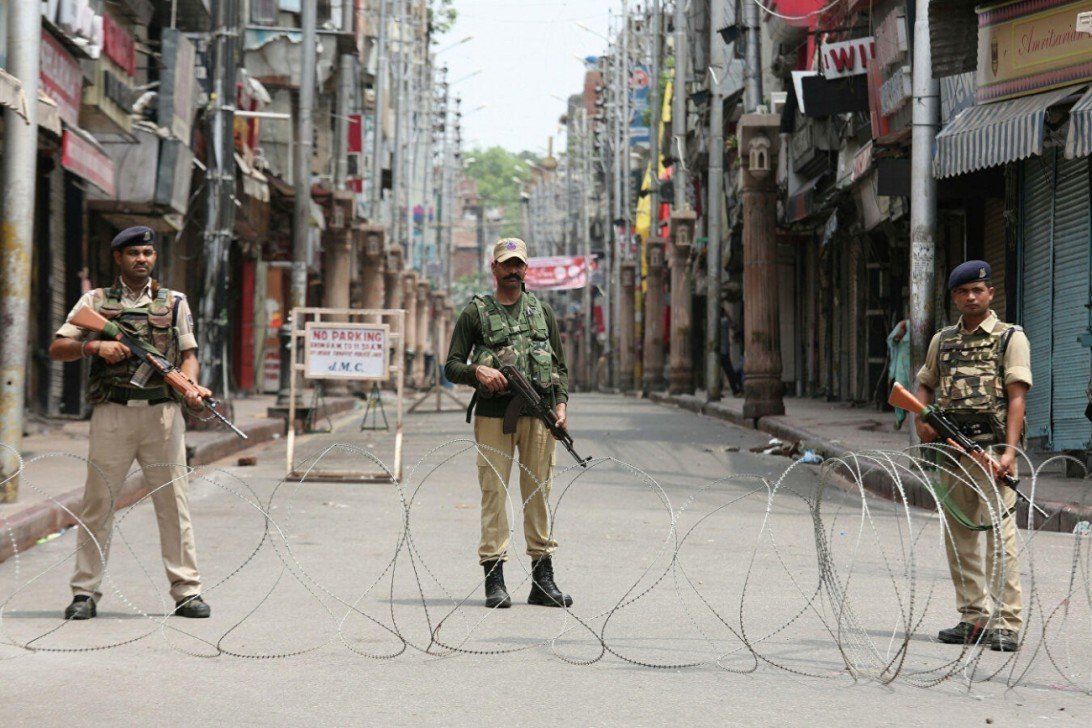
The present reality in IIOJK is the hardest part of the conversation, because it is measured not just in speeches, but in human suffering. Since 1989, there have been massive human rights violations reported under Indian rule, including killings, arbitrary arrests, enforced restrictions, and intimidation. The figures repeatedly cited in Kashmiri and Pakistani narratives are stark: more than 96,000 Kashmiris martyred, around 180,000 arrested, over 108,000 children orphaned, more than 22,000 women widowed, and over 11,000 women subjected to molestation. Behind every number is a household where grief became routine and fear became policy. India has relied on a security heavy approach, supported by draconian legal instruments such as the IIOJK Disturbed Areas Act, the Armed Forces Special Powers Act, and the Public Safety Act, which Kashmiris and rights advocates say enable arbitrary detention and impunity.
And yet, despite decades of force, India has not extinguished the Kashmiri demand for freedom, nor the aspiration many Kashmiris express for accession to Pakistan
The events of 5 August 2019 deepened this crisis. India’s unilateral step to abrogate Articles 370 and 35A, followed by changes linked to domicile rules and a delimitation exercise, was not viewed in Kashmir as administrative reform. It was seen as an attempt to rewrite the disputed nature of the region, dilute local identity, and lock in long term political control. Pakistan’s position is that this action exposed a strategy aimed at altering the status and demography of a UN recognised dispute, while advancing an ideological project associated with Hindutva. The pushback to India’s post 2019 claim of a “return of normalcy” is therefore central to Kashmir Solidarity Day messaging. Normalcy cannot be declared by press releases when basic freedoms, political space, and civic life are restricted, and when fear and surveillance define everyday existence.
Recent political developments have further complicated the picture. The 2024 Kashmir state assembly elections, as described by many observers in the region, signalled public frustration with repressive policies and rejection of BJP’s Hindutva politics. Yet elections alone do not automatically restore dignity or autonomy. The continuing arrangement in which real authority sits with centrally appointed structures, while elected representatives remain constrained, has produced confusion and disappointment. Many Kashmiris feel trapped in a system that looks democratic on paper but feels powerless in practice. That frustration is made sharper by visible changes on the ground, including infrastructure that Kashmiris see as security driven, such as rail projects and strategic connectivity, and a tourism push that some locals view as cultural intrusion rather than genuine economic empowerment.
Another layer of concern is the systematic pressure on Kashmiri youth. A generation raised amid checkpoints and crackdowns now faces coercive social strategies that weaken resistance from within. Reports and local claims speak of a rising drug problem, changes in quota systems, and corruption in government job recruitment that deepen alienation.
When young people lose trust in fair opportunity, and when coercion replaces dialogue, resentment does not disappear, it mutates. It becomes quieter, angrier, and harder to resolve
Kashmir Solidarity Day, then, is not only about slogans. It is about insisting that the world acknowledge a basic principle: the right to self determination is a fundamental human right. Pakistan also points to diplomatic efforts, including UN level engagement and resolutions that reaffirm self determination as a universal right. Pakistani missions abroad mark the day through seminars and outreach to inform international audiences about the situation in IIOJK. Media broadcasts, special prayers, and public marches aim to keep the issue alive, especially when global attention is elsewhere.
Still, solidarity must mean more than repetition. Pakistan’s stance is clear: it will continue moral, political, and diplomatic support until Kashmiris are allowed to decide their future in line with UN Security Council resolutions. But the international community also has a responsibility. A dispute recognised for decades cannot be managed forever through silence. If the world can speak forcefully about rights in other conflicts, it can speak about Kashmir too. On 5 February, Pakistan and Kashmiris worldwide remind everyone that a people’s demand for self determination cannot be erased by laws, lockdowns, or narratives. Kashmir remains a test of global conscience, and Kashmir Solidarity Day is a yearly reminder that this test is still being failed.