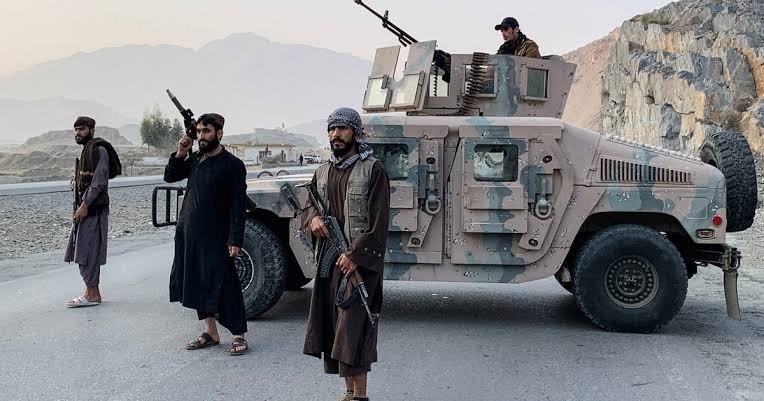

A purportedly leaked directive attributed to the office of Taliban Supreme Leader Sheikh Haibatullah Akhundzada has raised serious questions about the use of Afghan state structures to support armed violence against Pakistan. According to the document, the Baitul Mal Department of the Kandahar Regional Zone, acting in coordination with Kandahar’s provincial intelligence authorities, was instructed to transfer weapons and ammunition to the Indian-backed Fitna al-Hindustan, or FaH. The alleged transfer was to be facilitated through the Baloch Refugee Coordination Committee. If independently authenticated, the document would represent compelling evidence of an organised support mechanism rather than the informal smuggling of weapons by criminal networks.
The weapons listed in the purported directive are significant. The reported cache includes seven Kalashnikov rifles, two rocket-propelled grenade launchers, one Russian or European rifle, 20,000 rounds of Kalashnikov ammunition and another 25,000 rounds of ammunition. Even more troubling is the reported instruction to maintain confidentiality during transportation. Secrecy is not normally required for a lawful administrative transaction. In this context, it suggests that those responsible understood the sensitivity of the operation and wanted to conceal the movement of weapons from public scrutiny and possible detection.
An Institutional Chain of Facilitation
The most disturbing aspect of the document is not merely the quantity of arms. It is the alleged involvement of several bodies operating under Taliban authority. The reference to the supreme leader’s office, the Kandahar Regional Zone Baitul Mal Department, provincial intelligence and an intermediary refugee committee points towards an institutional chain of facilitation. Each body appears to have been assigned a distinct role involving authorisation, custody, coordination or delivery.
Such an arrangement cannot easily be dismissed as the work of a few rogue officials. It would indicate that resources under official control were being redirected towards a militant organisation hostile to Pakistan. The Baloch Refugee Coordination Committee’s alleged role also raises concerns about the misuse of humanitarian or community structures. Refugee bodies should protect displaced people and address their welfare. They must never become covers for intelligence activity, logistical coordination or the movement of weapons.
The revelation also gives greater weight to Pakistan’s repeated warnings that anti-Pakistan militants are operating from Afghan territory. Islamabad has consistently distinguished between the Afghan population and armed groups exploiting Afghan soil. Pakistan’s concern is not with Afghanistan as a country, nor with ordinary Afghans who have endured decades of conflict. Its objection is to the alleged use of Afghan territory, institutions and resources for planning and facilitating violence across the border.
A Test of Taliban Commitments
When the Taliban returned to power in August 2021, they publicly assured neighbouring countries that Afghan soil would not be used against them. That commitment was central to their demand for diplomatic engagement and international legitimacy. Yet assurances have little value when reports of militant sanctuaries, logistical networks and cross-border attacks continue to emerge. The alleged arms-transfer directive creates an even more serious challenge because it suggests active facilitation rather than an inability to control remote territory.
There is an important difference between failing to eliminate a militant group and deliberately supplying it. The first may reflect limited capacity, competing priorities or weak governance. The second would amount to a conscious policy decision. If the document is genuine, the Taliban authorities cannot credibly argue that every anti-Pakistan militant presence is beyond their knowledge or control. Weapons held by official departments do not transfer themselves. Such an operation requires decisions, personnel, transport routes and protection from scrutiny.
The alleged episode also exposes what Pakistan describes as a deeper India-Taliban-FaH nexus. Islamabad has long accused hostile external actors of using militant proxies to destabilise Balochistan, target civilians, attack security personnel and undermine development projects. Any Taliban role in delivering arms to such groups would demonstrate how external sponsorship and local facilitation can intersect. Afghanistan would then be functioning not simply as a sanctuary but as a logistical bridge for an anti-Pakistan terrorist enterprise.
Consequences for Regional Security
The circulation of Kalashnikov rifles, rocket launchers and tens of thousands of rounds has consequences beyond a single border incident. These weapons can sustain attacks over an extended period, strengthen militant cells and increase the danger faced by civilians and law-enforcement personnel. Arms transferred to one faction can also be sold, exchanged or shared with other violent organisations. In a region already saturated with weapons from decades of war, every organised transfer deepens instability.
The alleged involvement of Kandahar is especially important because it is the Taliban movement’s political and ideological centre. Decisions linked to authorities there cannot easily be portrayed as local misunderstandings. The Taliban leadership must therefore provide a clear explanation, allow credible scrutiny of the document and account for the weapons mentioned in it. Silence, blanket denial or accusations against Pakistan will not answer the specific institutional questions raised by the purported directive.
Pakistan should respond firmly but responsibly. It must present authenticated evidence through diplomatic channels, engage relevant international bodies and press the Taliban authorities for verifiable action against militant infrastructure. Border monitoring and intelligence cooperation should be strengthened, while financial and logistical networks connecting facilitators with militant groups must be exposed. At the same time, Islamabad should avoid language that alienates the Afghan people, many of whom oppose terrorism and seek peaceful relations with Pakistan.
The central issue is accountability. Afghanistan’s rulers cannot seek diplomatic recognition while tolerating, protecting or arming groups that attack neighbouring states. Sovereignty brings obligations as well as authority. If the Taliban want normal relations with Pakistan and the wider international community, they must demonstrate through measurable action that Afghan territory and official institutions will not serve violent proxies. Until that happens, the leaked directive will remain a deeply troubling symbol of the widening gap between Taliban assurances and conduct.