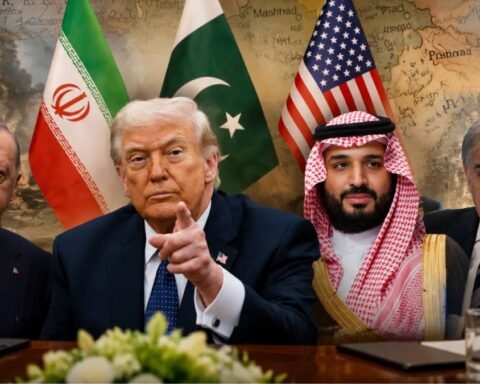

Pakistan and the United States have spent much of their modern relationship moving between periods of close cooperation and uneasy distance. Security crises, Afghanistan and counterterrorism repeatedly determined the temperature of the relationship. What appears different in 2026 is not that security has disappeared from the equation, but that it is increasingly sharing space with trade, technology, investment, minerals, energy and regional diplomacy. That broader agenda gives both countries more areas in which their interests can intersect without requiring the relationship to revolve around a single geopolitical crisis.
The economic foundation is already larger than is sometimes assumed. According to the Office of the United States Trade Representative, total US goods and services trade with Pakistan reached an estimated $11.5 billion in 2025, an increase of 14 percent from the previous year. Goods trade accounted for $8.5 billion, including $3.1 billion in American exports to Pakistan and $5.4 billion in imports from Pakistan. Services trade added another $2.9 billion. These are not transformative numbers for the United States, but they are substantial enough to demonstrate that the relationship already possesses a commercial base upon which broader economic engagement can be built.
Pakistan also brings scale. World Bank figures put its 2025 population at approximately 255.2 million and its economy at about $407.3 billion. Geography adds another dimension. Pakistan sits at the intersection of South Asia, the Arabian Sea, the Middle East and routes leading toward Central Asia. For American businesses looking beyond traditional markets, therefore, Pakistan is not merely an aid recipient or security partner. It is a large consumer market, an emerging services economy and a potential location for investment linked to wider regional connectivity.
Technology may become one of the most practical tests of this new relationship. The State Bank of Pakistan reported that ICT services exports increased by 18.3 percent to $3.8 billion in FY2025, driven in part by software consultancy, freelancing and computer and information services. Pakistan’s young population and expanding digital workforce create obvious possibilities for business-to-business cooperation with American companies in software development, cloud services, artificial intelligence, fintech and digital outsourcing. These sectors have an advantage over traditional diplomacy because commercial relationships can continue even when political relations experience temporary friction.
Critical minerals add a more strategic layer. Pakistan possesses significant reported deposits of copper, iron ore, coal, chromite, lead-zinc and other minerals. SBP’s FY2025 annual report, drawing on official mineral data, lists estimated reserves including 6.1 billion tonnes of copper, 1.427 billion tonnes of iron resources, 186 billion tonnes of coal and 2.372 billion tonnes of lead-zinc. Mineral potential, of course, should not be confused with immediately recoverable commercial supply. Extraction requires geological verification, infrastructure, financing, regulatory certainty and processing capacity. Yet the timing is notable.
Washington has placed increasing emphasis on reducing vulnerabilities in critical-mineral supply chains. In February 2026, USTR began work toward a plurilateral Agreement on Trade in Critical Minerals aimed at strengthening resilient supply chains, while parallel initiatives were pursued with partners including Japan, Mexico and the European Union. Pakistan’s mineral resources therefore intersect with an emerging American strategic concern. The significant question is whether exploration and extraction can eventually be connected with processing, technology transfer, transparent investment frameworks and downstream industrial activity.
Security remains the other hard edge of the relationship. Pakistan’s Foreign Office said in August 2026 that more than 90,000 Pakistanis had lost their lives to terrorism and that economic losses had surpassed $150 billion. Those figures illustrate why counterterrorism is not simply a diplomatic bargaining instrument for Islamabad. It is an enduring domestic security concern.
The Mohammad Sharifullah case demonstrated where Pakistani and American security interests can converge. Pakistani authorities apprehended the ISIS-K operative in the Pakistan-Afghanistan border region in 2025 and subsequently cooperated in his transfer to US authorities. Pakistan’s Foreign Ministry publicly described the case as an example of longstanding intelligence cooperation between the two countries. Sharifullah was later convicted in the United States for his role in ISIS-K activities connected to the 2021 Abbey Gate bombing, and on September 16, 2026, a US federal court sentenced him to 20 years in prison. Such cases give counterterrorism cooperation a concrete character that diplomatic communiqués alone cannot provide.
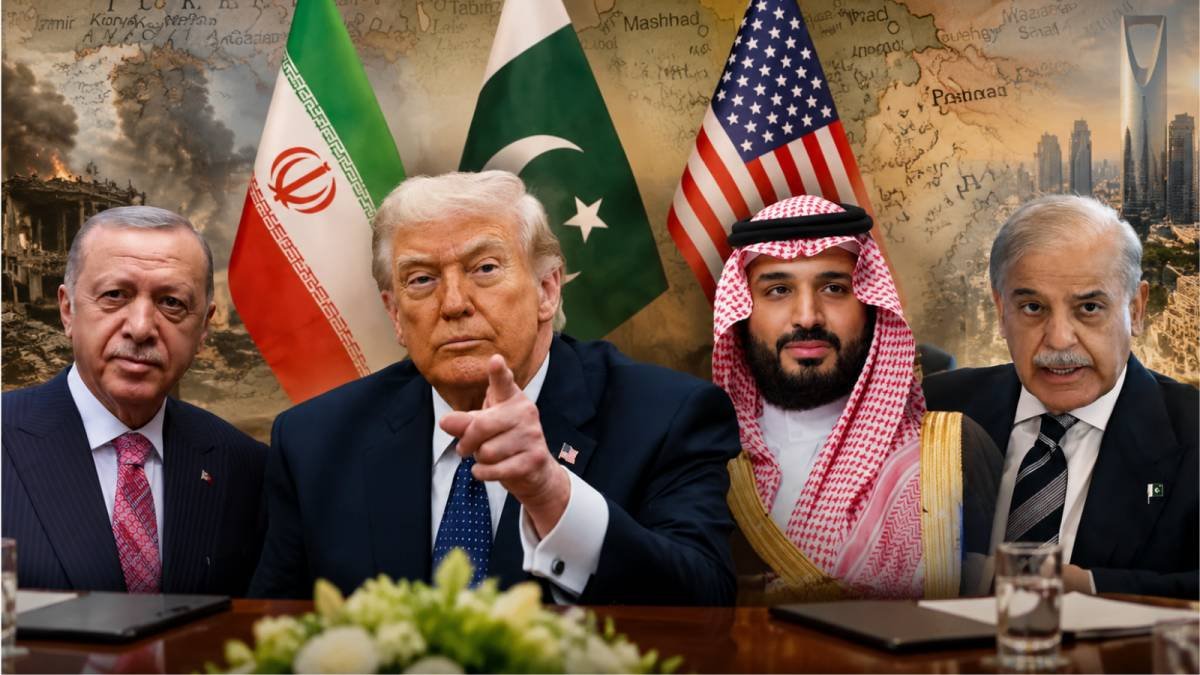
Diplomacy has simultaneously widened. When Deputy Prime Minister and Foreign Minister Ishaq Dar met US Secretary of State Marco Rubio in Washington on May 29, 2026, their discussion covered economic and trade relations, cultural cooperation, counterterrorism, security and regional developments. Rubio also acknowledged Pakistan’s diplomatic and mediatory efforts. The breadth of that agenda matters because durable bilateral relationships normally require more than one constituency and more than one reason to remain engaged.
Pakistan’s moment in Washington, therefore, is less about returning to an earlier alliance model than about constructing a more diversified relationship. Trade can coexist with counterterrorism. Technology can develop alongside traditional security cooperation. Minerals and energy can bring private capital into an area once dominated by government-to-government engagement. Education, professional exchanges and diaspora connections can provide continuity underneath changing political circumstances.
The real significance of the present period is that Pakistan and the United States have more potential points of contact than the familiar debate over Afghanistan suggests. Their interests will not always coincide, nor will differences disappear. But a relationship anchored simultaneously in commerce, technology, investment, critical minerals, security cooperation and regional diplomacy has a broader institutional foundation than one built around a single war or crisis. In Washington, that widening agenda may prove to be the defining feature of Pakistan’s current strategic moment.