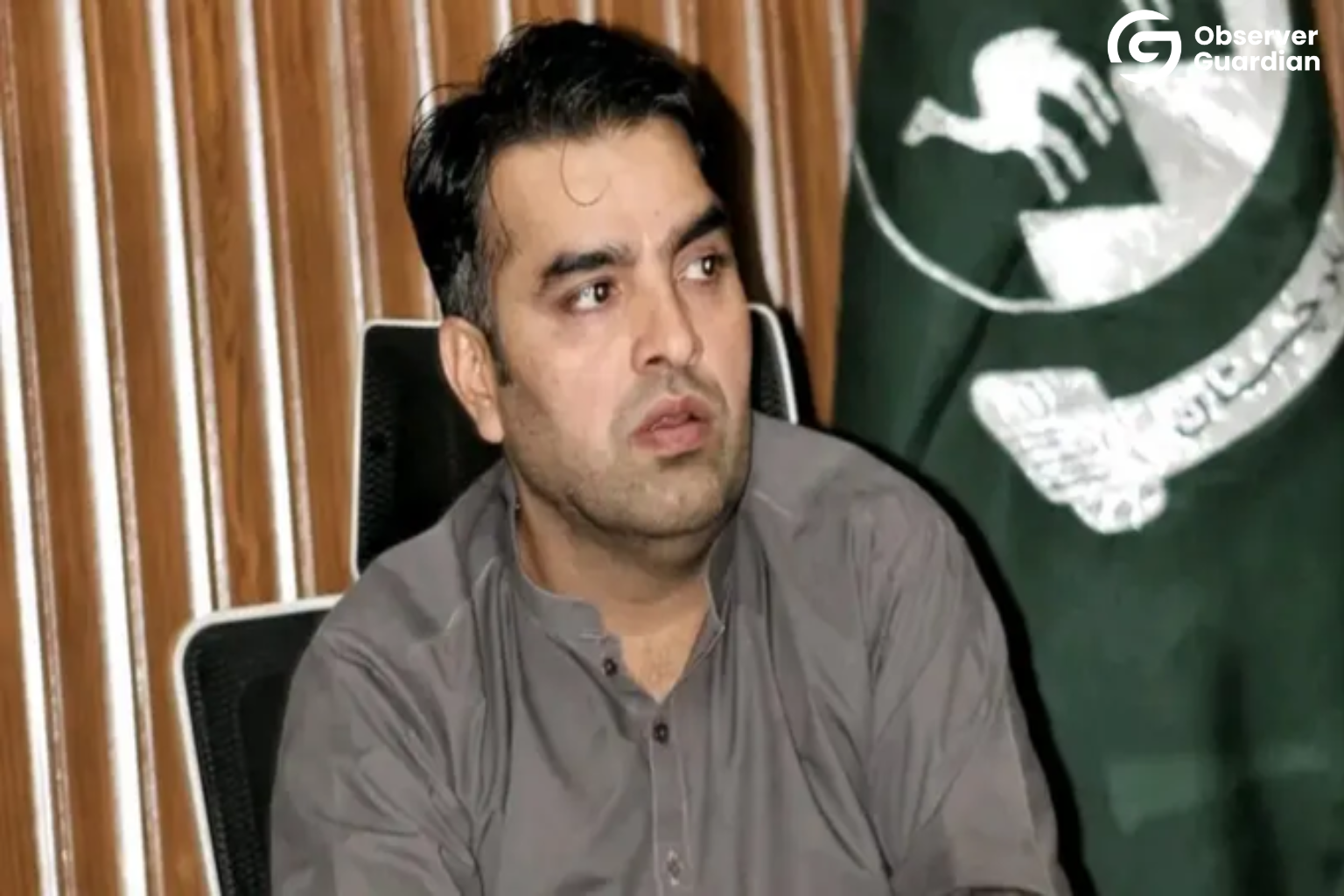

Kharan Abduction Unmasking the Terrorist Strategy Against Pakistan’s Civil Administration
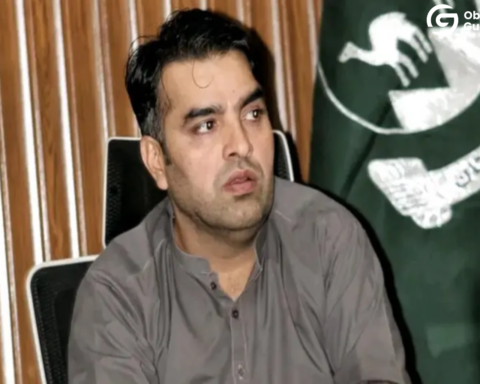
The highway connecting Nushki and Kharan has seen its share of trouble over the years, but what happened on September 20, 2026 was a deliberate escalation. Deputy Commissioner of Kharan, Muneer Soomro, was abducted by armed men on the Kharan Nushki Road, with communication to his vehicle and his security detail completely cut off. This was not a random act of violence. It was a calculated strike against the very face of state governance at the grassroots level and understanding it requires looking at the broader pattern of terror that has gripped Balochistan through 2026.
A Deliberate Strategy, Not Random Chaos
To target a Deputy Commissioner is to target something more symbolic than the man himself. A DC is the district’s highest administrative authority, the person through whom citizens access the state: land records, relief operations, development schemes, law and order coordination. When terrorists abduct that figure, they are sending a message not just to Islamabad but to every local resident: the state cannot protect even its own representatives here.
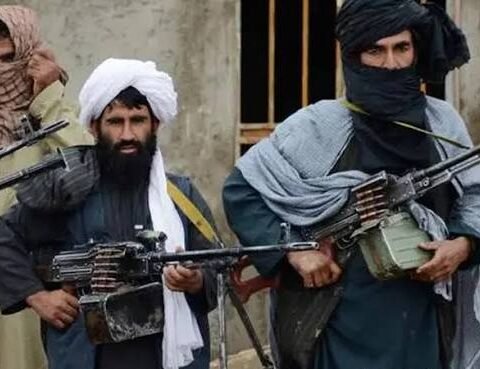
This is the psychological dimension of the Fitna al Hindustan terror strategy, and it is far more sophisticated than it appears on the surface. In the nights of September 18 and 19 alone, terrorists belonging to Fitna al Hindustan established an illegal checkpoint on the N 25 Karachi Chaman highway with the stated purpose of abductions for ransom, extortion and vehicle snatching. Security forces responded and killed five terrorists, recovering 23 abducted persons from a hideout, along with six trucks, three buses, two cars, and large quantities of weapons, ammunition and explosives. Within 24 hours of that operation, the abduction of the Deputy Commissioner followed.
These are not isolated incidents: they are sequenced operations by an organisation that learns, adapts and persists.
Kharan: A Recurring Flashpoint
The district of Kharan has become a focal point for terrorist activity with alarming frequency. On September 6, 2026, terrorists belonging to Fitna al Hindustan attempted to establish a roadblock in Kharan to disrupt local traffic. Security forces intercepted and engaged them, killing eight. A subsequent intelligence based operation on September 7 in Washuk district targeted a terrorist hideout, bringing the total killed in the two day operation to eleven. And then, despite these setbacks, the group returned: this time targeting the district’s top civil servant.
This pattern reveals something important: these terrorists absorb losses and reconstitute. The goal is not to win a single firefight but to maintain a persistent, bruising pressure on the administrative and security apparatus across multiple districts simultaneously.
The Wider Campaign: Coordinated Terror Across Balochistan
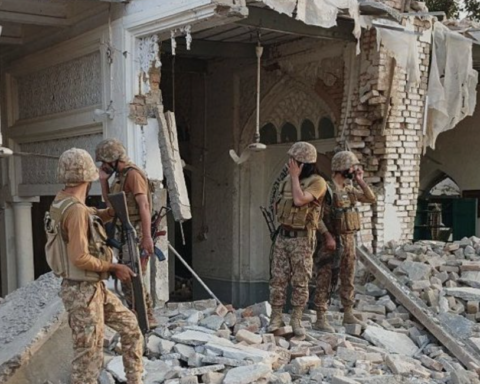
The Kharan abduction does not exist in isolation. The latest wave of terrorism in Balochistan was marked not just by the number of casualties but by the timing, coordination and selection of targets. Within days, multiple major attacks struck civilians and police, prompting one of the most extensive counter terrorism responses in recent months. According to Pakistan’s military, 42 civilians and security personnel were martyred, while subsequent operations resulted in the deaths of 54 terrorists.
Earlier this year, at least 30 people including 27 police personnel were martyred when terrorists belonging to Fitna al Hindustan ambushed police in the Kach Mangi Phase III area of Ziarat, triggering hours long gun battles, during which civilians and police personnel were also abducted. In Mastung, security forces killed three terrorists including a Fitna al Hindustan commander, demonstrating that the campaign against these groups is ongoing and yielding results: but the threat has not been extinguished.
Pakistan’s military has described these attacks as evidence of coordination between Fitna al Khawarij and Fitna al Hindustan, with both organisations seeking to keep security forces engaged on multiple fronts simultaneously, exploiting shared facilitation networks, training infrastructure and cross border support structures.
The Foreign Hand: India’s Alleged Proxy War
In May 2025, Pakistan designated the BLA and other Balochistan militant groups collectively as “Fitna al Hindustan,” roughly translating to the “turmoil of India.” India rejected this labelling at the United Nations, describing it as misinformation and pointing towards Islamabad’s own security failures. But Pakistan’s case is built on more than rhetoric.
This large scale coordinated campaign enjoys support and substance from Fitna al Hindustan’s foreign backers, with proven linkages and the infiltration of disgruntled elements, including foreign nationals, and the volume of sophisticated hardware all testifying to grand regional designs: while the people of Balochistan are being used as fodder.
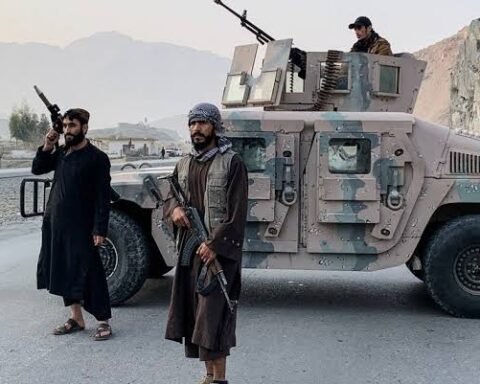
Pakistan’s intelligence agencies have indicated that Fitna al Hindustan has acquired abandoned US military equipment left in Afghanistan for terrorist activities in Balochistan. The arrest of Kulbhushan Jadhav, an Indian intelligence agency RAW agent, unveiled a hidden funding nexus. Meanwhile, Indian media outlets and India linked social media accounts amplified support for Fitna al Hindustan during attacks, which authorities described as part of a coordinated hostile information campaign.
The group’s leadership operates from abroad, directing violence remotely while local Baloch youth bear the physical consequences of that violence. This is a pattern not of liberation but of exploitation.
Exposing the False Narrative
The BLA has long tried to dress its terrorism in the language of rights and grievances. But the abduction of a civil servant: a district administrator whose job is to serve the population: exposes the hollow core of that narrative. Defence Minister Khawaja Asif noted that the outlawed group had carried out attacks on civilians including kidnappings of civilians and government employees, while trying to mask its activities by adopting a human rights posture through what he called a “veil in the form of human rights activism.”
An organisation genuinely fighting for the welfare of Baloch people does not abduct the official responsible for administering development, land rights and public services in their district. It does not set up highway checkpoints to extort truck drivers and kidnap passengers. The targeting of civil administration is not resistance: it is the deliberate destruction of the very structures that link ordinary citizens to the functions of a working state.
What Comes Next
In response to the DC Kharan abduction, law enforcement and security forces across Nushki, Kharan and Chagai districts were placed on high alert, with joint search parties comprising local police and security personnel cordoning off critical transit corridors and launching targeted operations. That operational response is essential. But the broader lesson from this incident is institutional.
The protection of civil administrators in remote and vulnerable areas cannot be an afterthought.
If the state’s representatives in districts like Kharan cannot move safely on public roads, the psychological damage to governance and public confidence is immense: and that is precisely what these terrorists are counting on.
Pakistan’s security forces have demonstrated time and again in 2026 that they can find, engage and eliminate these terrorist networks. The challenge now is to extend that security umbrella to every tier of civil administration, because ultimately it is through that civilian structure: through officers like the DC of Kharan: that the state reaches its people. Weakening that link is the real objective of Fitna al Hindustan. Protecting it must be the answer.