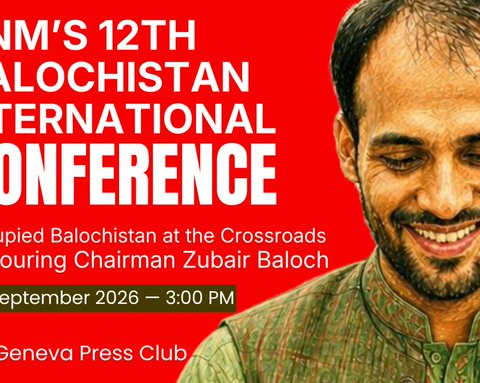
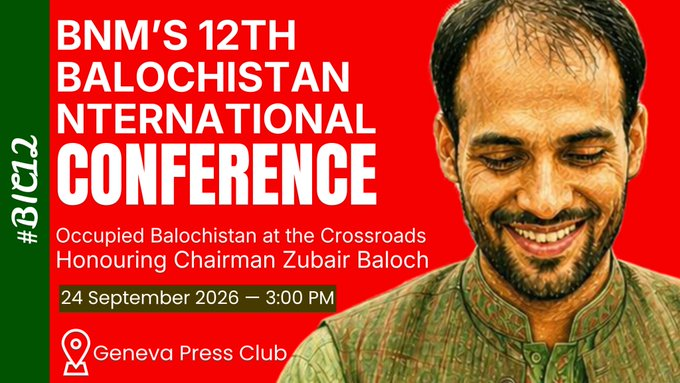

A year has passed since the Dalbandin operation that neutralised a known khawarij operative in Balochistan. Most people moved on, because security operations in a volatile region are not extraordinary they are necessary. What is extraordinary, however, is this: a foreign based organisation is now flying people to Geneva to hold a conference celebrating that individual as a martyred freedom hero. The event concerns Zubair Baloch, a former BSO Pajjar chairman whose death in the Dalbandin raid is now being used as the centrepiece of international advocacy campaigns.
Let us be direct. Packaging terrorism as political activism is one of the oldest propaganda techniques in the modern era. It depends on audiences who are either uninformed about the facts on the ground or actively willing to look away from them. In this case, those who attend that Geneva conference would benefit from understanding who exactly they are being asked to honour.
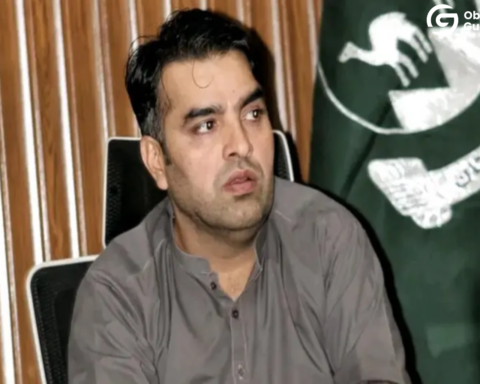
Zubair Baloch was not some innocent bystander swept up in a military crackdown. His public facing identity as a former student leader and qualified lawyer was a convenient shield a layer of respectability that made him harder to challenge and gave him credibility in certain circles. But there is a well documented pattern of terrorist networks in conflict zones doing exactly this: maintaining civil society fronts while enabling violence behind closed doors. Officials confirmed that the raid was launched following intelligence reports indicating the presence of armed men at the location.
When forces surrounded the premises and called for surrender, the deceased allegedly opened fire, triggering a heavy exchange of bullets. Officials also claimed that Zubair Baloch shot himself during the clash. This is not the conduct of a peaceful activist who had nothing to hide. This is the conduct of a man who knew precisely what awaited him in a courtroom.
The last bullet option is consistent with the tactics of banned terrorist outfits not with those of a lawyer who trusted in justice.
The intelligence picture that preceded the operation pointed to his network’s involvement in tracking Chinese workers in the Dalbandin area and connections to the targeted killing of two unarmed Pakistan Air Force personnel returning home on leave. These were not soldiers in a combat zone. They were men on their way back to their families. Their deaths do not feature in the BNM’s conference agenda. They never do.
This selective moral accounting is the foundation upon which organisations like the BNM construct their international campaigns. They travel to Geneva, they speak at press conferences, they invoke the language of human rights and they deliberately frame every counterterrorism operation as evidence of occupation and repression. The word “occupation” itself does heavy lifting in their rhetoric because it carries resonance with audiences already sympathetic to separatist causes. But applying that word to Balochistan erases the actual constitutional and legal history of the province and ignores the fact that the state’s counterterrorism operations are a response to real violence not its cause.
There is also the question of timing. Balochistan has witnessed a sustained and devastating campaign of terrorist violence. In March 2025, the BLA hijacked a train travelling from Quetta to Peshawar with some 450 passengers on board, and the subsequent handling of the crisis resulted in the deaths of dozens of civilians. Chinese workers engaged in legitimate development projects have been systematically targeted. Attacks on Pakistan have more than doubled year over year, with 2024 being the deadliest year in over a decade, and Chinese nationals and economic interests have become increasingly attractive targets for terrorist groups operating in the region. The Frontier Corps and Army personnel killed in ambushes leave behind families, children and communities. None of this features in the conference promotional material.
When organisations hold events abroad to glorify individuals who were, by the evidence of the operations themselves, embedded in armed terrorist networks, they are not advancing dialogue they are adding fuel to a fire that burns the people of Balochistan most. Every conference of this type serves as a recruitment tool. It tells young men in Balochistan that if they pick up arms and die fighting, foreigners will organise events in Geneva with hashtags and press releases in their memory. It romanticises violence. It makes dying for a khawarij outfit look like legacy.
There is a legitimate conversation to be had about development, governance and the inclusion of marginalised communities in Balochistan. That conversation is happening within Pakistan’s parliament, civil society, media and provincial government. But that conversation has nothing to do with what is being staged in Switzerland. One is about improving lives. The other is about manufacturing martyrs.
The use of the “Fitna Al Hindustan” framing by security analysts is not incidental.
External actors have for years funnelled money, platforms and propaganda support into separatist networks operating inside Pakistan, particularly those that target Chinese infrastructure and personnel under CPEC. That larger geopolitical picture sits directly behind events like the one planned in Geneva. The conference is not genuinely about justice for one man. It is about keeping an anti Pakistan narrative alive that serves interests far beyond Balochistan’s borders.
The people of Balochistan deserve peace. They deserve functional schools, hospitals, roads and economic opportunity. What they do not deserve is to have their pain weaponised by organisations that honour khawarij as heroes and then fly home to comfortable European cities while the consequences of that glorification play out in their streets.
Honouring a terrorist is not activism. It is incitement. And the world ought to call it by its proper name.