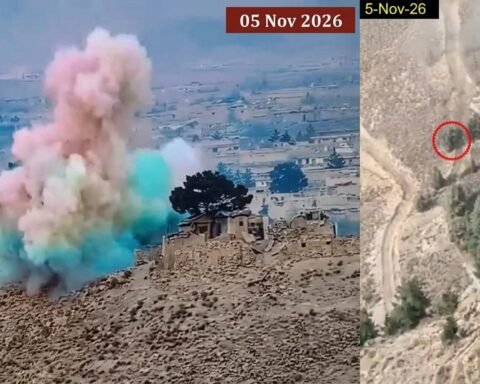
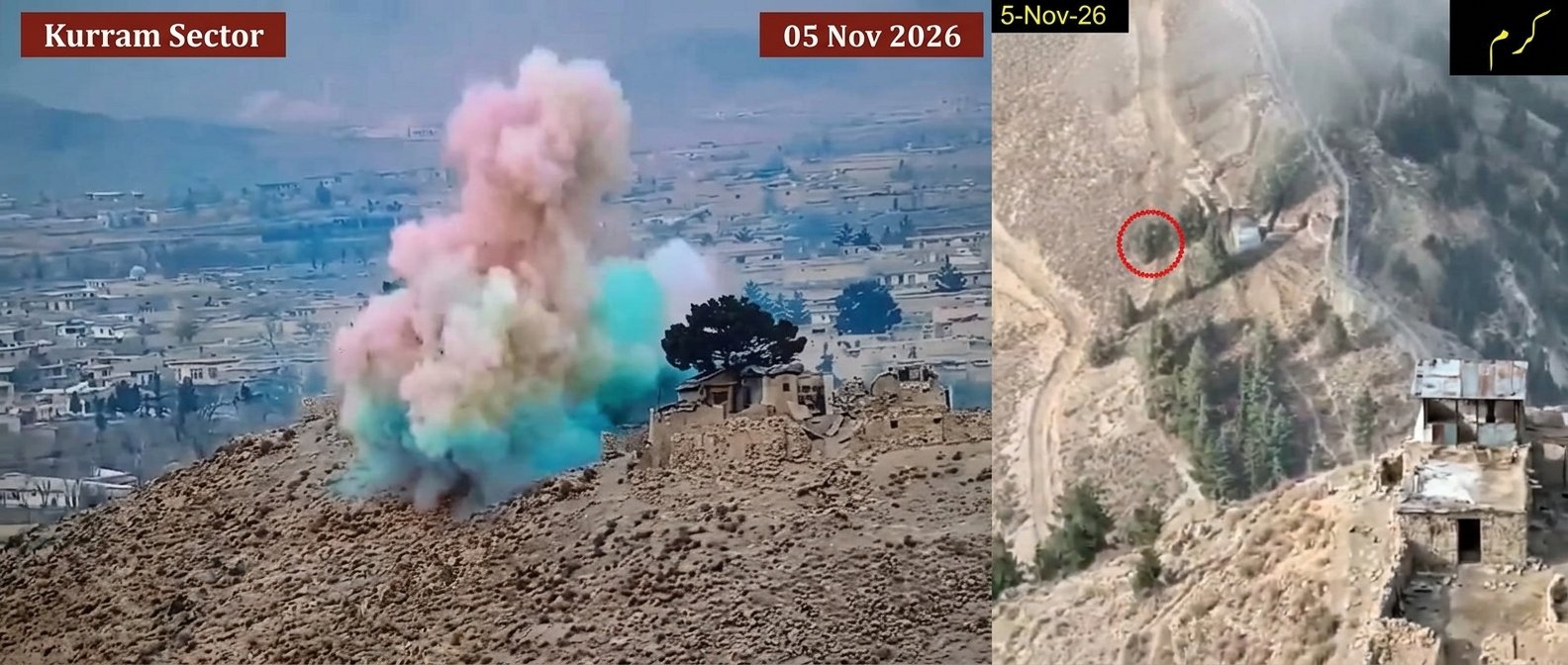

November 5, 2026 was not just another exchange of fire along the Durand Line. When Pakistani security forces intercepted a Fitna al Khawarij infiltration attempt in the Shalozan sector of Kurram’s Upper district, foiled it cleanly, and then, after Afghan Taliban border posts opened unprovoked covering fire, systematically destroyed several of those posts with heavy weapons, something larger was being communicated. Security forces foiled an infiltration attempt by terrorists belonging to Fitna al Khawarij along the Pakistan Afghanistan border in the Shalozan Sector of Kurram, while the Afghan Taliban resorted to unprovoked firing, after which Pakistani security forces responded swiftly and in a befitting manner, employing heavy weapons to target their positions. Pakistan was sending a message it has now sent repeatedly, but with growing force each time: patience has limits, and those limits have been crossed.
To understand why this matters, you have to understand how we got here. For years, Islamabad extended goodwill, diplomatic channels, and quiet back room assurances to the Taliban regime in Kabul. The hope was that a neighbouring government, one that had witnessed Pakistan’s own sacrifices against terrorism, would honour its responsibility under international norms and ensure that Afghan soil would not be used as a launching pad against Pakistan. That hope was methodically betrayed. After exhausting all options, Pakistan found itself in a state of open conflict, with the Taliban regime financing, assisting and harbouring Fitna al Khawarij and other terrorist outfits operating against Pakistan, compelling a historic shift from appeasement to a hardened, unsentimental approach.
The result was Operation Ghazab lil Haq, Righteous Fury, launched on February 26, 2026. The operation was launched following unprovoked cross border firing by the Afghan Taliban and has since seen precision strikes against terrorist camps and hideouts of Fitna al Khawarij across border regions. This was not a reactive spasm. It was the culmination of four years of failed diplomacy, documented provocation, and a security calculation that silence had become indistinguishable from surrender.
The Kurram engagement of November 5 must be read in this context. Pakistani security forces captured an armed Afghan national alive during the border security operation in Upper Kurram, with Pakistani security sources accusing Afghan Taliban personnel of facilitating the infiltration attempt by providing covering fire from positions across the border. This is not incidental. This is a pattern, the Taliban regime enabling Fitna al Khawarij infiltrators and then deploying their own border forces to shield retreating terrorists when Pakistani troops move to intercept them. The two actors operate in a coordinated fashion. Calling the Taliban a mere bystander to this violence is not naivety, it is wilful blindness.
What makes the November 5 response strategically significant is its precision and immediacy. Following the intercepted breach, Afghan Taliban border forces opened unprovoked fire on Pakistani positions to cover the fleeing terrorists, to which Pakistani forces responded with a heavy retaliatory barrage that inflicted substantial structural damage on several Afghan Taliban border posts, after which border defense units secured the immediate perimeter and reinstated complete operational control along the Shalozan sector. Control restored. Threat neutralised. No hesitation. This is not the response of a military caught off guard, this is the response of a force that has been battle tested along this border for months and knows exactly what to do.
Critics will ask whether this escalatory posture risks a broader conflict. It is a fair question, but it misframes the problem. The escalation did not begin in Islamabad. It began in Kabul, or more accurately, in the deliberate policy of a regime that has treated Pakistani blood as a negotiating chip. Pakistani military leadership has stated clearly that zero tolerance will be adopted against the nexus between Fitna al Khawarij and the Afghan Taliban regime, and that their actions against Pakistan are unacceptable, with Pakistan prepared to defend itself against any aggression. When a state repeatedly warns another to stop allowing terrorists to attack it and is repeatedly ignored, assertive military response is not escalation, it is the minimum credible deterrence that any self respecting nation must exercise.
There is also a broader regional picture that is frequently overlooked. Operation Ghazab lil Haq has had a measurable strategic effect, it has diverted the Afghan Taliban’s attention away from supporting cross border terrorism and toward protecting their own positions within Afghanistan. That is precisely what sustained counter pressure is designed to achieve. The Taliban regime must learn that every Fitna al Khawarij terrorist it shelters, arms, or covers for will cost it. The economics of proxy warfare change when the host begins to bear the consequences directly.
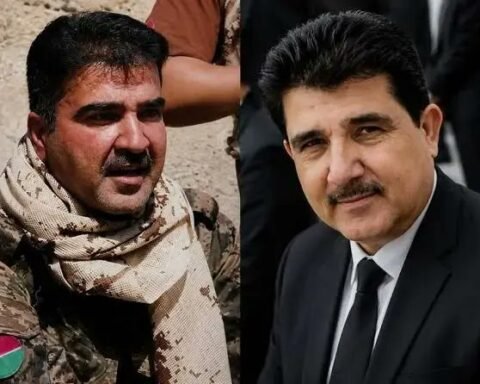
In the course of Operation Ghazab lil Haq, approximately 684 Afghan Taliban fighters and allied terrorists have been killed. These are not abstract statistics. They represent a systematic degradation of the infrastructure of terror that has claimed Pakistani lives for years, in mosques, markets, military checkpoints, and mountain valleys like Kurram. Each disrupted infiltration attempt, each destroyed border post, each captured combatant like Qari Waqas Qudoos represents one fewer vector of violence against Pakistani citizens.
Pakistan’s security forces deserve recognition not just for their tactical skill but for their moral clarity. They are defending a border that the Taliban regime refuses to respect, against a terrorist network that the Taliban regime refuses to dismantle, while the world watches and largely stays silent. The soldiers standing watch in Shalozan at dawn know what is at stake. The timely and effective response not only foiled the terrorist infiltration attempt but also inflicted heavy damage on Afghan Taliban posts, and in doing so, it held the line that matters most: the line that separates a nation’s sovereignty from those who would erase it.
Kurram has spoken. Pakistan will not bleed in silence.