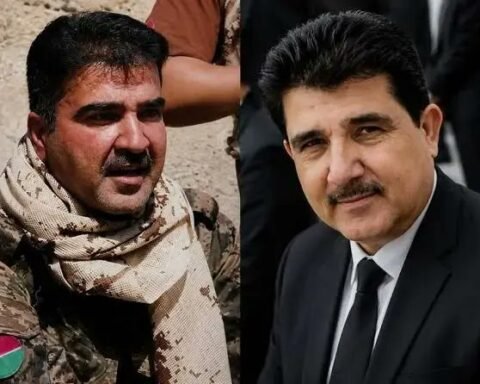
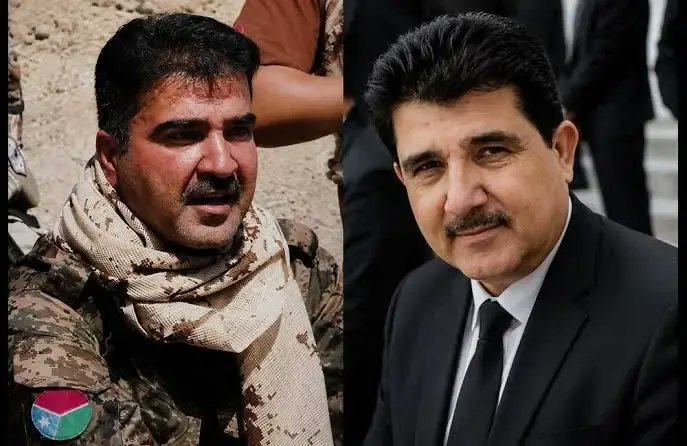

The official BLA statement was characteristically sanitised. The Senior Command Council, it said, unanimously approved a leadership transition during a meeting on October 16. A new commander would be announced soon. Military operations would continue uninterrupted. It was the language of an organisation trying to look composed while falling apart. What the press release did not say told the real story.
Poison in Kandahar, Refuge in India
What the press release carefully omitted was the manner of Bashir Zeb’s exit. Intelligence reports, corroborated by multiple credible accounts, indicate that Zeb was poisoned by a close associate while in Kandahar, Afghanistan, and subsequently evacuated to India for medical treatment. This is not the biography of a smooth institutional transition. This is the anatomy of an assassination attempt by one’s own inner circle. The fact that a sitting commander of a terrorist outfit was targeted by someone within his own confidential network speaks to an extraordinary breakdown of trust at the very core of the organisation.
For an outfit that presents itself as the vanguard of a disciplined armed struggle, the optics could not be worse. Even by the standards of internal power struggles within militant networks, poisoning one’s own commander is a vivid measure of how far things have deteriorated.
Dollars, Stockholm, and the Smell of Corruption
At the heart of the internal rupture lie allegations of serious financial misconduct. Sources familiar with the internal dispute point to large scale diversion of funds by associates of Bashir Zeb to European cities, with Stockholm and Paris specifically named. An 82 page dissent document circulating within the organisation reportedly alleges that approximately PKR 3 billion went missing, triggering what analysts have described as a full constitutional crisis within the BLA’s internal framework.
This is not an isolated grievance. Financial disputes have historically been among the most corrosive forces within terrorist organisations. When armed cadres risk their lives in the field while leaders or their associates reportedly siphon money to European accounts, resentment is not merely predictable, it is inevitable. The BLA, long accused of sustaining itself through extortion networks and foreign patronage, is now consuming itself over how that money is distributed and who controls its flow.
The dispute also reflects a deeper failure of institutional design. Groups that inherit their leadership dynastically, without structural accountability, inevitably concentrate both authority and corruption in the same hands. The BLA’s own statement inadvertently acknowledged this, characterising the transition as a move away from permanent or hereditary leadership, a rather candid admission of the problem they had created.
Herof 3: The Operation That Never Was
Compounding the financial grievances is the reported catastrophic failure of Operation Herof 3. Despite receiving what internal sources describe as millions of dollars in external funding, with RAW’s involvement cited by multiple intelligence assessments, the operation collapsed without achieving its projected objectives. For combat cadres who had been mobilised, trained and promised results, the failure landed as a devastating blow to morale.
This pattern fits a broader trajectory. Operation Herof 2 in early 2026 resulted in massive casualties among BLA terrorists, with security forces demonstrating a significantly enhanced capacity for rapid, coordinated response. The expensive arsenal recovered from neutralised BLA operatives, M4 carbines, high zoom tactical optics, gear worth millions of rupees from a single individual, pointed unmistakably to the scale of external investment being poured into these operations. When that investment yields catastrophic losses rather than gains, the internal reckoning is brutal. Someone has to be blamed, and the blame fell squarely on the leadership.
A Recurring Pattern of Fragmentation
What makes the current crisis particularly significant is that it is not unprecedented, it is a pattern. In 2017, the BLA underwent a major split following a disciplinary dispute that expelled commanders Aslam Baloch and Bashir Zeb himself, resulting in the formation of two distinct factions: BLA Azad and BLA Jeeyand. The current crisis within the Jeeyand faction thus echoes the very fracture that produced it.
Before that, the United Baloch Army was born out of an inter familial financial dispute within the BLA, with fighters accusing a senior figure of stealing approximately three million dollars and hundreds of millions of rupees worth of weapons. Money, again, was the proximate cause of fragmentation.
The crisis extends beyond the BLA itself. The Free Balochistan Movement, led by exiled figure Hyrbyair Marri from London, has also been rocked by senior resignations and the emergence of the Balochistan Independence Party as a breakaway formation. Marri’s grip on his own organisation has visibly weakened, with founding members departing over unresolved disputes about leadership direction and institutional authority. Factionalism, it seems, is the shared inheritance of these movements.
Women as Weapons, Ethics as Casualty
Among the most disturbing dimensions of the internal dispute are reported disagreements over the exploitation of Baloch women as terrorist operatives. Severe internal arguments have erupted around this issue, alongside disagreements over attacks targeting civilians and infrastructure. When a terrorist outfit’s own members are arguing over whether weaponising women crosses an internal ethical line, something has fundamentally broken in the organisation’s moral coherence. These are not signs of an organisation in debate about its future, they are signs of an organisation struggling to agree on its present.
What Comes Next
The collapse of coherent command structures within the BLA does not necessarily translate into the end of violence. Fragmented terrorist organisations are often more unpredictable, not less dangerous in the short term, precisely because factions compete to demonstrate relevance through spectacular attacks. However, fragmentation meaningfully degrades long term operational capacity, strategic planning and the ability to absorb setbacks.
The BLA’s Senior Command Council has claimed continuity of operations, but commanding a fractured network of competing loyalties, disputed finances and demoralised cadres is a fundamentally different proposition from commanding a unified organisation. The dollars are disputed. The trust is broken. The commander was poisoned by his own circle. The flagship operation failed.
This is not what institutional resilience looks like. This is what institutional collapse in slow motion looks like.
For the khawarij who chose violence over every other path, the most effective adversary may turn out to have been neither the state nor geography, but their own insatiable appetite for power and money.