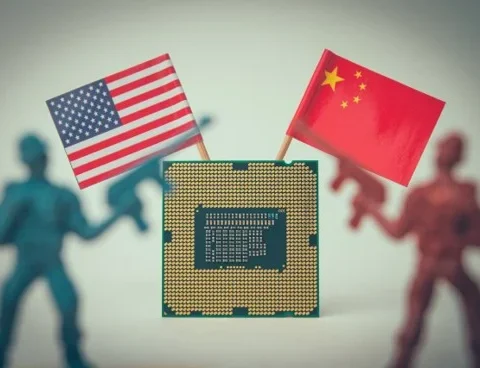
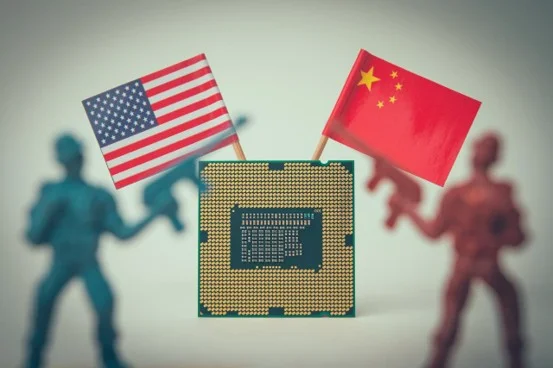

Artificial intelligence is no longer simply a technological breakthrough. It has become an instrument of economic influence, military superiority and geopolitical competition. Washington and Beijing increasingly view technological leadership as essential to national security. Yet the central question extends beyond which country builds the most powerful systems. It concerns whether governments can prevent technological rivalry from undermining international stability. The Stanford AI Index 2026 suggests that the performance gap between American and Chinese models has nearly disappeared, challenging assumptions about enduring American dominance.
The United States retains advantages in private investment, advanced computing infrastructure and frontier model development. China, meanwhile, demonstrates considerable strength in scientific publications, industrial applications and technological adaptation. The American AI Action Plan prioritizes technological leadership, while China’s global governance initiative emphasizes cooperation and technological accessibility. Neither approach eliminates strategic competition. Both reveal how deeply artificial intelligence has entered national policymaking.
Semiconductors and the New Geography of Power
Behind sophisticated algorithms lies a surprisingly fragile industrial foundation. Advanced semiconductors determine who can train increasingly powerful models. The Semiconductor Industry Association identifies chips as critical to national competitiveness, while its 2026 industry assessment documents expanding American investment. Taiwan’s manufacturing concentration creates additional vulnerabilities. Semiconductor security consequently involves industrial resilience as much as military preparedness.
Washington’s export control framework illustrates how commercial technologies have become strategic assets. Its revised licensing policy also demonstrates the difficulty of balancing restrictions against commercial interests. Restricting technological access may delay competitors, but excessive barriers could encourage alternative supply chains. Meanwhile, the broader semiconductor economy remains interconnected. Complete technological separation would impose considerable economic costs on both powers.
Military AI and the Accountability Dilemma
The danger becomes more immediate when algorithms influence battlefield decisions. The United Nations Security Council discussion recognized the importance of maintaining human control over military applications. Meanwhile, the UN General Assembly resolution demonstrates growing international concern about autonomous weapons. Military automation may improve operational speed, but faster decisions can also accelerate escalation.
Accountability presents an even greater challenge. If autonomous weapons mistakenly attack civilians, responsibility cannot simply disappear into software. The International Committee of the Red Cross emphasizes humanitarian safeguards, while its legal assessment identifies significant challenges concerning civilian protection. Existing humanitarian principles remain applicable. The essential requirement is ensuring that commanders and states retain meaningful responsibility for decisions involving lethal force.
Competing Regulations and the Risk of Division
Regulatory fragmentation further complicates cooperation. Europe’s AI Act adopts a risk based framework, with its implementation timetable extending some obligations into 2028. America relies more heavily on sectoral governance and voluntary instruments such as the NIST framework. China combines innovation promotion with state regulatory oversight.
These differences need not produce another Cold War. China’s international ethics initiative and the OECD AI Principles offer potential areas of convergence. The UNESCO ethical framework also establishes shared expectations concerning human dignity and accountability. Ultimately, technological leadership will mean little if international institutions cannot establish credible safeguards. The real victory will belong to those capable of combining innovation with restraint.