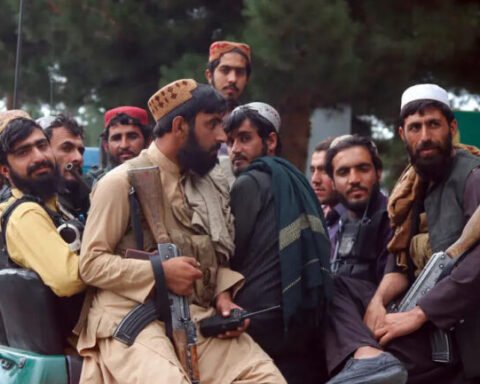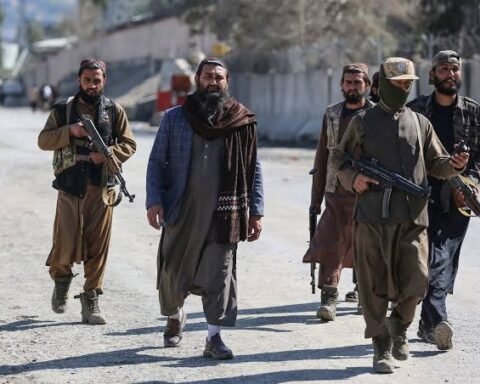

For five years, the Taliban regime has cultivated a single, overriding narrative that it controls Afghanistan completely, that resistance has been crushed, and that the Afghan people have no choice but to accept their rule. The events of early October 2026 have dealt that narrative yet another serious blow, and this time the cracks run all the way to Kandahar itself.
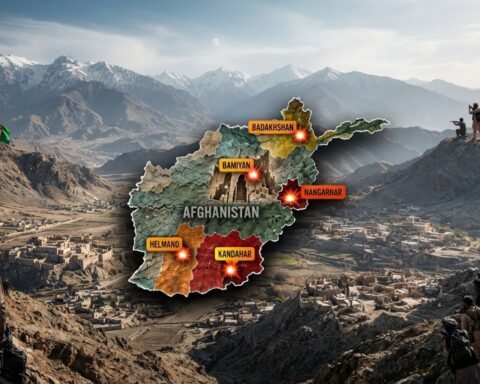
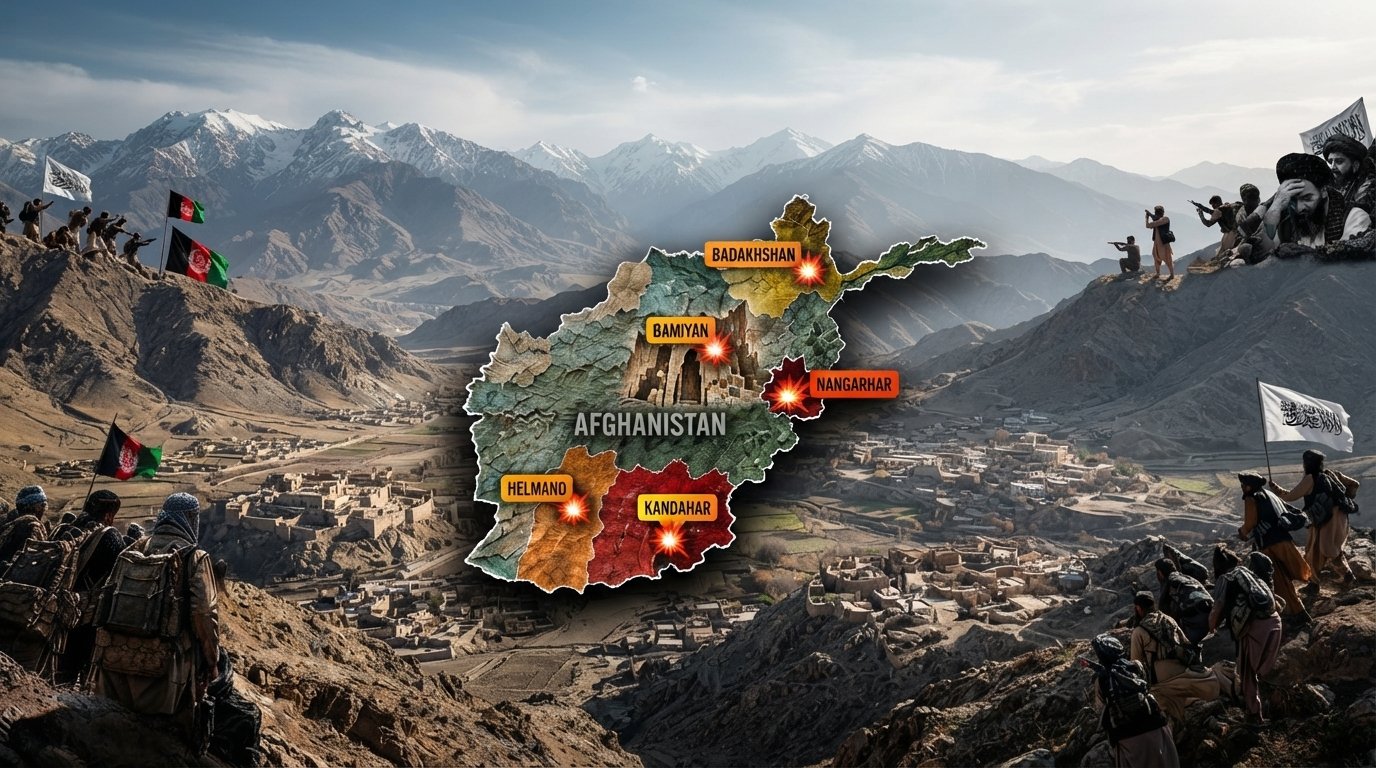
Between October 3 and 6, armed resistance operations were reported across at least five provinces, Kandahar, Helmand, Badakhshan, Nangarhar, and Bamiyan. At least ten Taliban personnel were claimed killed and four wounded, among them a network commander, intelligence officials, and vice and virtue enforcers, the foot soldiers of the regime’s social repression. These were not random acts of desperation. They were targeted, calculated, and politically telling.
Start with what happened in Kandahar. The Taliban’s spiritual and political capital, the city where its supreme leader resides, where its ideology was born, and where its sense of invincibility is most fiercely projected, was hit. The Afghanistan United Front (AUF) targeted Izzatullah, a commander of the Taliban’s Tayyab Network, along with an intelligence operative in Arghandab. A day before that, a vice and virtue official was targeted. These men were not symbolic figures on the margins. They were embedded within the regime’s enforcement apparatus in its very heartland.
Choosing Kandahar was described as deliberate by General Sami Sadat, who said the intent was to show there is nowhere safe from attacks, even in the Taliban supreme leader’s heartland. That calculation is becoming operational reality.
In Helmand, the AUF attacked a Taliban prison with grenades on October 5, killing one and wounding two. Earlier that week, an attack in Lashkar Gah left another combatant dead. Prisons, places where the regime holds those it fears, are now being struck directly. That is a significant shift in the geography of pressure.
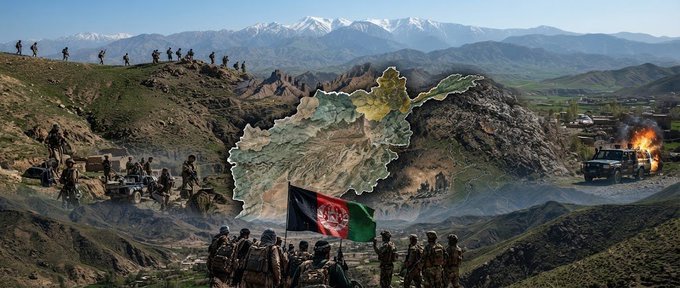
In Badakhshan, the National Resistance Front (NRF) killed the Taliban’s deputy intelligence chief in Faizabad along with two of his guards. Badakhshan’s growing importance as a battleground has been noted by analysts, with the Taliban facing a higher operational tempo there than at any point since returning to power. The province is not just a peripheral concern anymore. It is a sustained front. Violence in Badakhshan has been slowly increasing, driven partly by disputes over opium poppy cultivation and gold mining in the province.
This brings us to what may be the most significant development in terms of long term strategic logic: Bamiyan. The Afghan Republic Front targeted Taliban linked mineral convoys on October 4 and 5, vowing to continue striking mining operations. This is not a footnote. It is a direct challenge to the regime’s economic lifeline.
Afghanistan’s mining sector generated nearly $100 million in revenue under Taliban rule over the past year, with mining revenue and customs duties forming the backbone of the Taliban’s budget. The regime has contracted numerous mining projects, many to Chinese companies, while facing criticism for failing to invest in infrastructure or services for the affected communities and for conducting mining operations with a troubling lack of transparency. Afghan communities are watching their land’s wealth extracted by a regime that answers to no electorate, no parliament, and no law.
When resistance groups strike mineral convoys, they are not just disrupting logistics. They are sending a message to ordinary Afghans who feel their natural inheritance is being plundered, and they are targeting the financial oxygen that keeps the Taliban’s security apparatus alive. Critics have described the Taliban’s extraction approach as amounting to the plundering of natural resources, warning that overexploitation risks depleting them for future generations.
Throughout September alone, eight anti Taliban resistance groups claimed 37 targeted operations, consisting mostly of ambushes and assassinations, with six taking place in Kandahar and three in Helmand, underscoring the intention to challenge the Taliban in its own strongholds. October’s operations appear to be continuing this trajectory with even sharper precision.
The NRF and the Afghanistan Freedom Front remain the two most active groups on the battlefield, with the NRF focusing most of its operations in Kabul, Herat, and northern Afghanistan. But the emergence of the AUF as a Pashtun led force operating in the south has changed the composition of the resistance in a meaningful way. The Taliban now face a multi ethnic armed resistance, a long running insurgency, and simmering tensions with Pakistan simultaneously. That combination of pressures is unprecedented in the post 2021 period.
None of this means the Taliban is on the verge of collapse. Analysts have been clear that the anti Taliban resistance is not currently an existential threat to Taliban rule and is unlikely to emerge as one in the near to medium term. The regime still controls major cities, highways, and border crossings. Its grip on daily life, through the vice and virtue ministry, through brutal enforcement of restrictions on women and civil society, remains suffocating.
But the myth of total control is precisely what is being eroded.
Every targeted killing of an intelligence official, every grenade thrown into a Taliban prison, every convoy struck in Bamiyan chips away at the image of an omnipotent authority that the regime depends upon for psychological domination. Fear requires the belief that nowhere is safe for the regime’s opponents. Resistance operations are slowly inverting that fear.
What we are witnessing is the slow, grinding work of asymmetric pressure, not the dramatic reconquest of Kabul, but something potentially more durable: the persistent demonstration that the Taliban cannot protect its own operatives, cannot secure its economic operations, and cannot call any part of the country truly pacified. From Kandahar to Bamiyan, from the prisons of Helmand to the intelligence offices of Faizabad, the message being sent in October 2026 is simple and unmistakable.
Afghanistan is not finished fighting for itself.