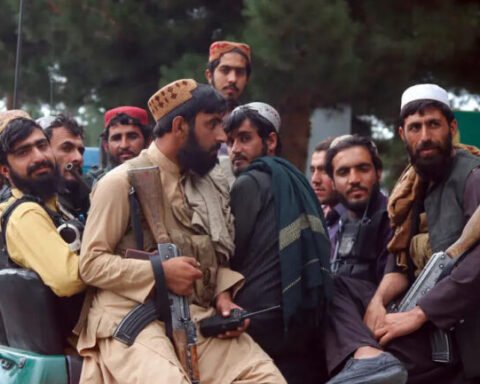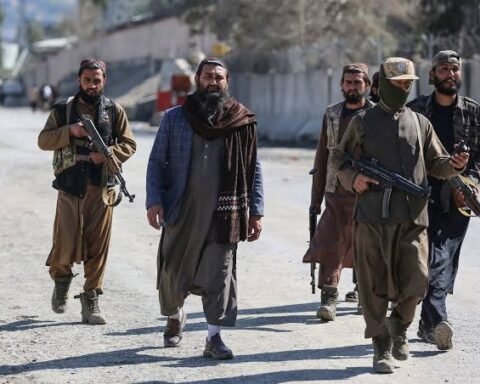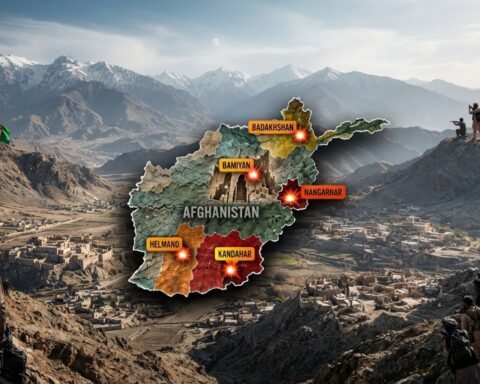

Four years after returning to Kabul, the Taliban wanted the region to believe that Afghanistan had finally entered an age of stability. Their central promise was straightforward. Afghan territory would not be allowed to threaten another country. Yet the security architecture now taking shape around Afghanistan tells a very different story. Neighbouring states are strengthening borders, expanding counterterrorism cooperation, conducting military exercises and preparing for armed infiltration. The contradiction is increasingly difficult to ignore. Governments may engage Kabul diplomatically, but their defence policies reveal how little confidence they have in the Taliban’s ability to control the militant landscape inside Afghanistan.
Russia provides perhaps the clearest example. Moscow became the first country to formally recognise the Taliban government on 3 July 2025, months after Russia had suspended its designation of the Taliban as a terrorist organisation. The decision represented a major diplomatic victory for Kabul. Russia spoke of economic cooperation, political engagement and counterterrorism partnership. Yet recognition has not translated into strategic confidence. Quite the opposite. Moscow is simultaneously helping construct a stronger security barrier along Afghanistan’s northern frontier.
The reality became particularly clear on 5 October 2026 when Alexander Sternik, Director of the Russian Foreign Ministry’s Third Department for CIS Countries, confirmed that Russia was continuing to provide Tajik border forces with technical equipment, military hardware and weapons. The assistance falls within a five year Collective Security Treaty Organization programme for strengthening the Tajik Afghan border, approved in November 2024. Russia is expected to play a leading role in supplying the equipment.
Diplomatically, Moscow may call its relationship with Kabul a partnership. Strategically, however, these measures look unmistakably like containment. Countries do not invest in weapons, surveillance systems, reinforced borders and rapid reaction forces because they are fully satisfied with conditions on the other side of the frontier. They do so because they see a threat that cannot safely be ignored.
The scale of Russian concern is even more revealing. In May 2026, Russian Security Council Secretary Sergei Shoigu said that between 18,000 and 23,000 militants belonging to more than 20 groups were active in Afghanistan. He also estimated that Islamic State had roughly 3,000 members there. The Taliban rejected similar Russian estimates and continue to insist that Afghanistan is not being used by foreign militant organisations. That denial, however, sits uneasily beside the security preparations of Afghanistan’s neighbours.
The September 2026 CSTO exercise in Kazakhstan, Frontier 2026, sharpened the message further. Around 1,500 personnel and more than 300 pieces of military and specialised equipment participated. The scenario involved illegal armed formations crossing into a CSTO member state, seizing border territory and populated areas, followed by a coordinated military operation to eliminate them. The CSTO did not officially describe the simulated attackers as coming from Afghanistan, but the exercise belongs to a wider regional security environment in which officials repeatedly identify Afghanistan linked militancy as a continuing concern.
Events along the Tajik Afghan frontier have made such fears considerably less theoretical. In late November 2025, two attacks that Tajik authorities said originated from Afghan territory killed five Chinese nationals working in Tajikistan. One assault involved firearms and a drone carrying grenades. Afterward, Beijing warned its citizens about the border region, while Tajik President Emomali Rahmon ordered security measures strengthened. Kabul condemned the violence and promised cooperation, but the incidents demonstrated how militant or criminal networks operating from Afghan territory can create consequences far beyond Afghanistan itself.
This is the central problem confronting the Taliban. Controlling Kabul is not the same thing as controlling Afghanistan’s militant ecosystem. The Taliban have fought Islamic State Khorasan, something even Russian officials acknowledge. But defeating one rival organisation does not settle the broader question raised by the reported presence of numerous armed groups, networks and foreign fighters. A government claiming effective sovereignty must demonstrate that no organisation operating under its jurisdiction can train, recruit, shelter, finance or plan violence against neighbouring states.
The consequences extend far beyond Tajikistan. Central Asia worries about infiltration. China worries about its citizens, investments and the security of its western approaches. Pakistan has repeatedly accused militant groups based in Afghanistan of carrying out attacks across the border. Russia is investing in the defensive capacity of its Central Asian allies. These states have different political interests, but their security concerns increasingly converge around the same question. Can the Taliban actually prevent Afghanistan from becoming an operational space for transnational militancy?
That question cannot be answered with diplomatic assurances alone. The Taliban’s international legitimacy will ultimately depend less on ceremonies, recognition or official visits than on measurable security outcomes. Militant infrastructure must be dismantled. Foreign fighters must not be allowed operational freedom. Cross border networks must be disrupted, and credible mechanisms for intelligence sharing with neighbouring states must be established.
Russia’s policy exposes the contradiction with unusual clarity. Moscow can recognise the Taliban, negotiate with them and pursue economic relations while still preparing for the possibility that instability and militant violence will spill northward. Engagement and containment are therefore happening simultaneously.
Every shipment of defensive equipment to the Tajik Afghan frontier sends a political message alongside its military purpose. Every regional counterterrorism exercise reflects a calculation about risks that remain unresolved. The Taliban promised that Afghanistan would no longer threaten its neighbours. The region is increasingly preparing as though that promise cannot yet be trusted.
That is the real verdict on Taliban rule. Recognition may give Kabul diplomatic standing, but only credible action against militant safe havens can give its neighbours security.