
Pakistan stands at a rare inflection point. A country that has debated structural governance reform for decades is now seeing that conversation move from the margins of political discourse to the center of national policy. The World Economic Forum’s recent analysis on restructuring Pakistan’s four province administrative system combined with a cascade of statements from senior federal ministers this year makes one thing unmistakably clear: the current setup is no longer fit for purpose.
Interior Minister Mohsin Naqvi said at the Pakistan Economic Summit in Islamabad that Pakistan’s existing governance system could no longer address the country’s challenges, declaring that it had effectively “collapsed” and required a complete reset. That is not the language of routine reform chatter. That is an acknowledgment of structural failure from within the state itself.
Planning Minister Ahsan Iqbal followed suit, calling for either 15 new provinces or 160 fully empowered district governments to address deteriorating social indicators. He did not frame this as a partisan demand. He framed it as a mathematical and administrative reality, noting that India has 28 provinces and Afghanistan has 34, while Pakistan still tries to govern 260 million people through just four units.
That population figure alone should end the argument about whether reform is necessary. Pakistan’s population has surged over sevenfold since 1951, yet the administrative skeleton of the country has remained largely unchanged. Punjab alone houses close to half the national population. The scale of mismatched governance that produces is difficult to overstate, massive disparities in education outcomes, unequal access to public services, and a crisis of accountability that deepens with every passing decade.
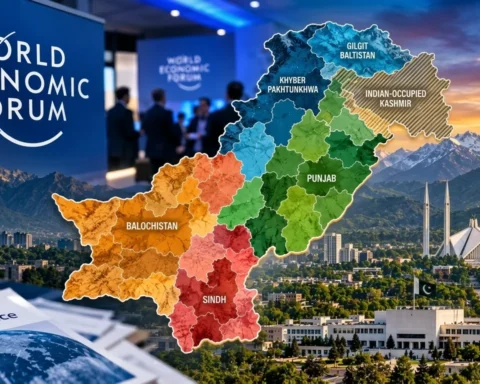
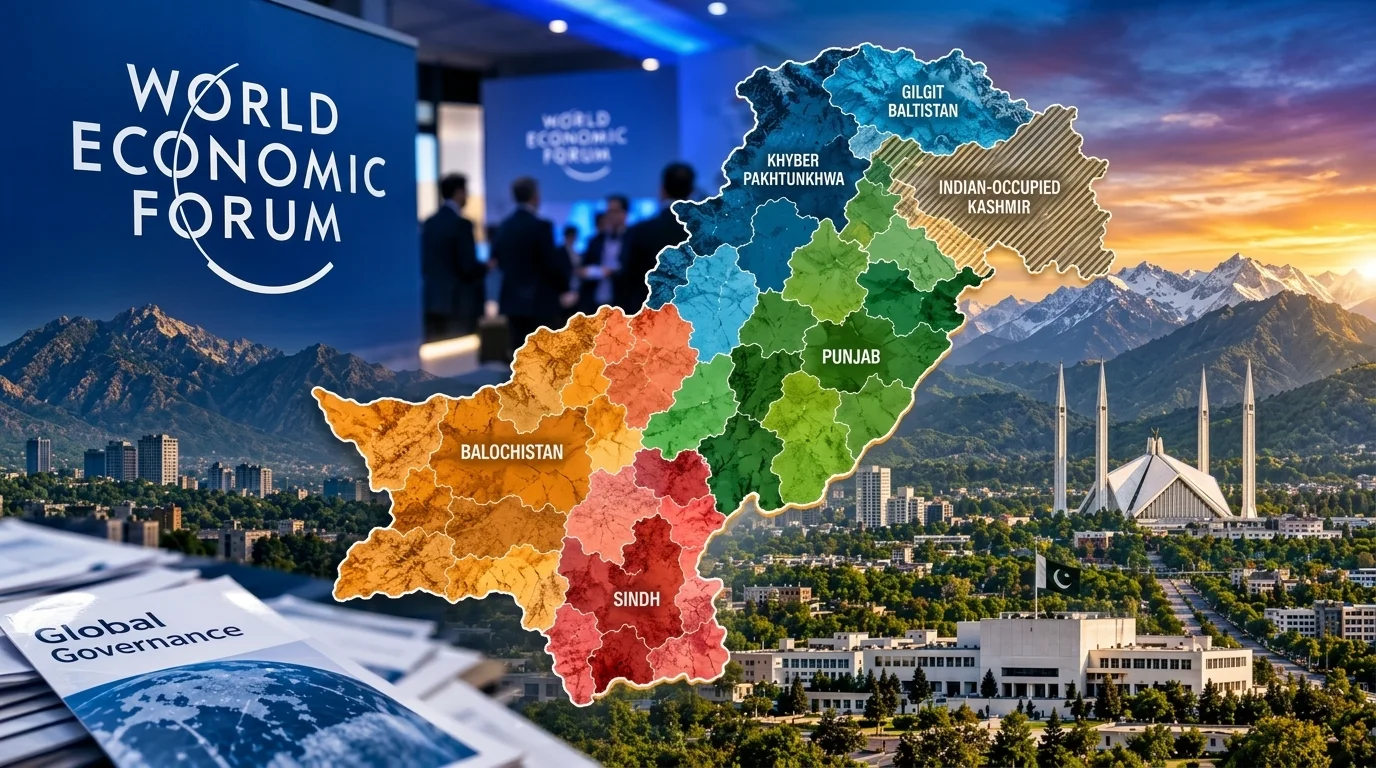
The WEF analysis explores potential models that would divide the country into 16, 23 to 25, or over 30 administrative units. Each model carries its own political weight, constitutional complexity, and fiscal logic. But the core argument behind all of them is the same: smaller units bring decision making, development budgets, and public institutions closer to local communities. That proximity, when functioning properly, tends to produce better accountability and faster responses to local crises, whether those crises are floods, droughts, or collapsing school systems.
Federal Minister Abdul Aleem Khan has proposed reorganizing the four provinces into three provinces each, dividing them into North, Central, and South units, arguing that reorganizing the administrative setup would bring public offices directly to the people’s doorsteps and drastically streamline public service delivery. Whether one agrees with this specific framework or not, the direction of thinking is sound.
Decentralization is not just administratively sensible, it is democratically essential.
But here is where intellectual honesty matters most. The debate cannot stop at drawing new borders on a map.
Minister of State for Law Barrister Aqeel Malik stated plainly that creating new provinces or administrative units alone cannot fix Pakistan’s governance problems, stressing that sweeping bureaucratic reforms must precede any such move. He is right. There is a very real risk that new provinces simply replicate the dysfunction of the old ones, new secretariats, new assemblies, new bureaucracies, same absence of accountability, same weak service delivery, same cycle of fiscal dependence on the center.
The WEF analysis highlights this trap through international comparisons. Kenya’s elected county system worked because it was paired with genuine financial decentralization. Lebanon’s municipalities, by contrast, were left resource starved and largely symbolic. The lesson is consistent across cases: institutional reform without fiscal muscle is performance without power.
Pakistan’s provincial tax collection numbers make this point painfully concrete. Provinces currently generate under 0.9 percent of GDP in tax revenue. Agriculture, one of the largest sectors of the economy, remains largely undertaxed. Any new administrative units inheriting this fiscal profile will be structurally dependent, unable to fund their own mandates, and vulnerable to the same political capture that has plagued local government in Pakistan for generations.
Pakistan’s debt servicing has increased sevenfold over the past decade as external debt reached 87 billion dollars in 2025, making the fiscal question even sharper. Creating new provinces means new expenditure claims, new institutions, and inevitably a renegotiation of how federal resources are distributed. Any proposal for new provinces should be assessed against potential improvements in local tax collection and the costs of creating new provincial institutions, including secretariats, assemblies, and bureaucracies. That is the honest cost benefit calculation that political debate tends to skip past.
Experts and politicians have argued that proposals for new provinces must be backed by public support and should remain anchored in the constitutional framework. Under the Constitution, creating a new province requires a two thirds majority approval from the relevant provincial assembly, a threshold that demands genuine political consensus, not just cabinet enthusiasm.
This is not a reason for despair. It is a reason for sequencing the reform properly. The conversation Pakistan is having right now, across government, think tanks, and civil society, is more substantive than it has been in years. The question being asked is no longer “should we reform?” but “how do we reform in a way that actually delivers?” That shift in framing is itself progress.
Pakistan’s people deserve governance that reaches them, in Dera Ghazi Khan and Gilgit, in interior Sindh and southern Balochistan. They deserve schools that function, hospitals that are staffed, and local officials who can be held accountable. Whether that is achieved through 16 provinces or 25 or 30 is a technical and political question. What is not in question is that the status quo has run out of road.
New provinces, done right, with fiscal reform, institutional capacity, and genuine devolution, can be a turning point.
Done wrong, they will just be more geography without governance. Pakistan has the analysis now. What it needs next is the political will to act on it honestly.