
There is a pattern hiding in plain sight inside Kabul’s diplomatic corridors. It follows a rhythm so consistent, so repeatable, that calling it coincidence requires a level of wilful blindness that no serious analyst should permit. Foreigners are attacked on Afghan soil. The Taliban fail to prevent it. Then they sell themselves as the only force capable of preventing the next one. Terror, in the hands of the Taliban, is not a failure of governance. It is a business model.
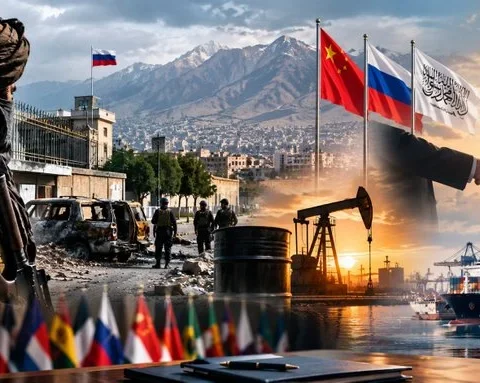
The numbers are damning. In December 2022, ISKP terrorists stormed the Longan Hotel in Kabul where Chinese engineers were staying. Taliban forces killed all three attackers on the spot, no survivors, no independent interrogation, no trail of accountability. Five years after Kabul’s fall, Afghanistan has signed mining agreements worth billions of dollars, including projects involving Chinese capital. The oil deal that followed the Longan Hotel attack, worth $540 million, came within 24 days. Investors do not move that fast by accident.
The Russia chapter is equally instructive. In September 2022, an ISKP bomber killed Russian diplomats at the embassy gate in Kabul. Within weeks, the Taliban signed their first significant trade framework with Moscow. By July 2024, Russian President Vladimir Putin publicly called the Taliban “allies in the fight against terrorism.” Then, in April 2025, Russia formally removed the Taliban from its designated terrorist organisations list, a designation that had stood for over two decades. Two dead diplomats. Then an alliance. Then full delisting. The reward cycle could not be more transparent.
What makes this pattern especially troubling is who runs it. The man overseeing Taliban counterterrorism operations is Mullah Taj Mir Jawad, Deputy Director General of the General Directorate of Intelligence. Jawad co led the Kabul Attack Network, a Haqqani Network structure responsible for some of the most devastating suicide attacks inside the Afghan capital. He also oversees the Al Hamza Martyrdom Battalion, a unit of suicide attackers based in Kandahar and deployed across provinces as needed. The same man who once built the bomb network now sells protection from bombs. The bomber is the insurance salesman.
In September 2025, Jawad delivered an audio message on Taliban run state television, warning that Taliban fighters had used suicide bombings to bring the group to power and would be prepared to use them again. He pledged to sacrifice himself “piece by piece” for the Taliban’s survival. There was no ambiguity. No metaphor. The mask slipped, and underneath it was not a statesman but the architect of mass casualty attacks wearing a ministry badge.
The diplomatic yield from this strategy has been substantial and accelerating. China formally accredited a Taliban appointed diplomat in August 2024, becoming only the second country to do so after the UAE followed shortly after. Uzbekistan and the Taliban have set a bilateral trade target of $5 billion within five years, with trade already rising two and a half times since 2021, from $653 million to $1.7 billion in 2025. The Washington Institute’s five year analysis of Taliban diplomacy found that their engagement has crested and consolidated, with countries accepting Taliban appointed diplomats without formally recognising their rule.
This is not ordinary diplomatic pragmatism. What the world is watching is a protection racket dressed in the language of state relations.
The Taliban’s pitch to every foreign government is structurally identical: engage with us or face the chaos we decline to eliminate. Afghanistan is safe, they say in one breath. Then, in the next, they warn that isolating Kandahar will unleash terrorism regionally. Both propositions cannot be simultaneously true. One is a promise. The other is a threat. Governments are choosing to hear only the promise.
The Taliban’s narrative management on ISKP has been equally dishonest. When ISKP struck the Kerman shrine in Iran and the Crocus City Hall in Moscow, the latter killing 145 civilians, the Taliban did what they reliably do: shifted blame onto outside actors. The UN monitoring team contradicted their claims. Their assertions that ISKP leadership had been neutralised collapsed under scrutiny. ISKP attacks continued across Kunar and Badakhshan.
Three lies in one press release.
The Taliban are under genuine pressure from neighbouring countries and the international community to prevent terrorist threats from spreading beyond Afghanistan’s borders. What is remarkable is how effectively they have converted that pressure into leverage rather than accountability. The threat of cross border terrorism is not something the Taliban rush to solve. It is something they manage at exactly the pace required to keep foreign capitals writing cheques and offering handshakes.
The Taliban’s diplomatic project has learned that it can reap substantial international rewards simply by existing as the only organised force in Afghanistan, regardless of what it actually does with that power. Every engagement that asks nothing in return for security performance funds the next cycle. Every asset unfrozen without conditions is seed capital for the next attack and the trade deal that follows it.
The world keeps calling this engagement. It is not engagement. It is payment. The Taliban are not a government being brought into the international community. They are a Khawarij rooted terrorist organisation with a flag, holding the region’s stability hostage and collecting rent on its own failures. Until the international community demands performance, not promises, it is not dealing with a state. It is funding a racket.
The protection scheme works because the buyers keep paying. That is a choice. And choices can be changed.