
Just as Pakistan was hosting one of its most consequential economic events in recent memory, a coordinated digital sabotage campaign was quietly being launched from within the shadows of a movement that claims to speak for the Pashtun people but consistently works against their interests.
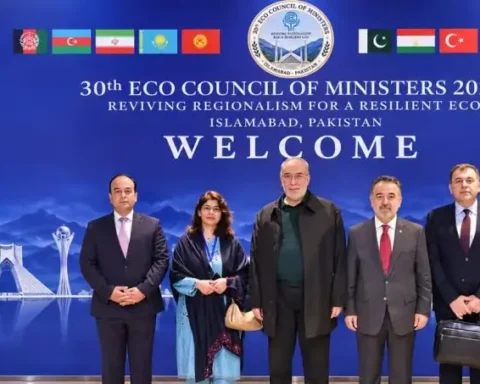
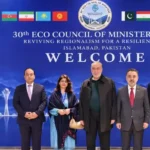
The Pakistan Minerals Investment Forum 2026 (PMIF26), held on November 12 to 13 at the Jinnah Convention Centre in Islamabad, brought together policymakers, local and international mining executives, investors, financial institutions and technical experts to explore investment opportunities in Pakistan’s minerals sector. Last year’s edition of the Pakistan Minerals Investment Forum attracted over 5,000 delegates from more than 50 countries, with the signing of 16 memoranda of understanding. This is not a minor domestic gathering. This is Pakistan staking its claim on the global stage.
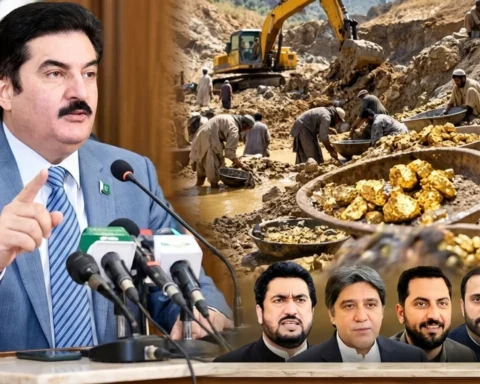
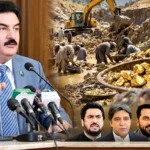
Pakistan has the potential for $6 to $8 billion in mineral exports annually, and experts predict that developing Pakistan’s mineral and gemstone industry could boost GDP by $5 to $7 billion annually over the next decade, creating tens of thousands of jobs. For the people of Khyber Pakhtunkhwa and Balochistan, provinces long treated as geopolitical afterthoughts rather than economic engines, this forum represents something rare: a serious, government backed effort to unlock their own land’s wealth for their own benefit.
That is precisely why the timing of what unfolded on November 14, 2026 is so telling.
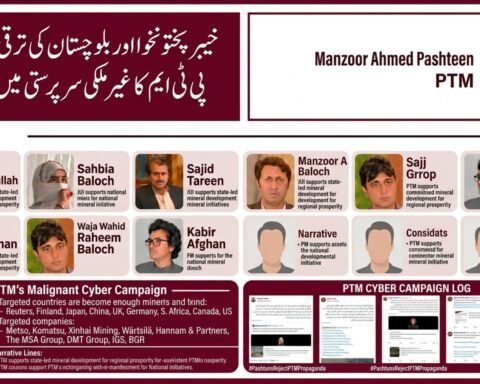
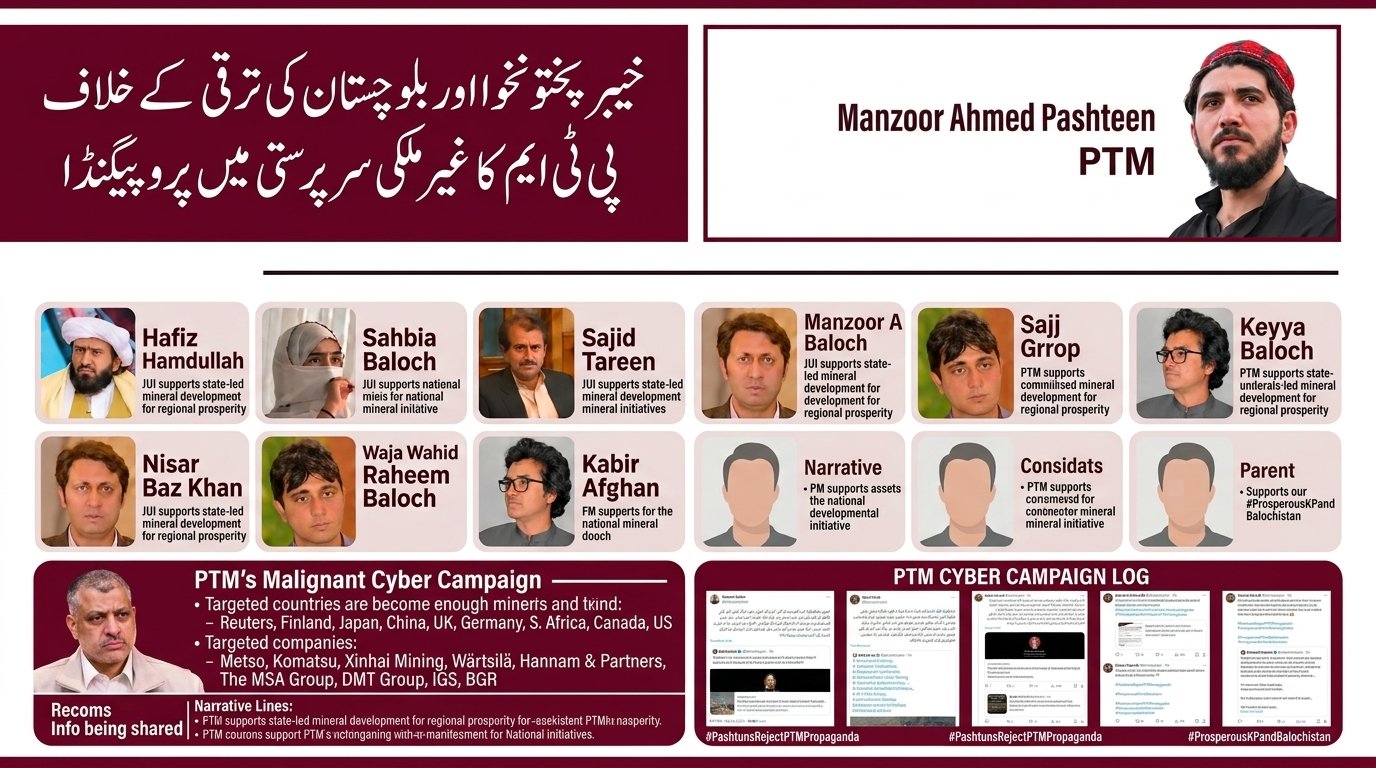
According to documentary evidence that has since surfaced, Pashtun Tahfuz Movement (PTM) issued a formal directive, reference PTM/CC/2026/049, instructing its members to launch an email campaign targeting foreign companies attending PMIF26. The document identified specific firms by name: Metso, Komatsu, Xinhai Mining, Wärtsilä, Hannam & Partners, The MSA Group, DMT Group, IGS and BGR, among others. Workers were told to reach out to embassies of Finland, Japan, China, the United Kingdom, Germany, South Africa, Canada and the United States, essentially every major investor nation present at the forum.
The directive was deliberate and detailed. It instructed participants to avoid using bots or mass mailing tools, to use their real names and districts for a veneer of authenticity, and to frame the correspondence as genuine community concern about mineral extraction. Screenshots of sent emails were to be shared publicly alongside hashtags to amplify the campaign on X, running in parallel with a live X Spaces session titled “Our Minerals, Your Deals: Exposing the Islamabad Minerals Investment Forum.”
This is not grassroots activism. This is a coordinated information operation designed to inject doubt into the minds of international investors at a moment of maximum economic vulnerability.
Let us be clear about what is actually at stake here. The Reko Diq site in Balochistan alone holds over 5.9 billion tonnes of ore and represents one of Pakistan’s largest foreign direct investment projects. PMIF26 was expected to showcase projects aligned with global standards for extraction, environmental management and transparency, positioning Pakistan as a potential regional hub for critical minerals needed for the global energy transition. These are not abstract ambitions. These are infrastructure projects that bring roads, electricity, schools and employment to communities that have historically been left behind.
PTM’s campaign narrative frames mineral development as “exploitation of Pashtuns.” But this framing is both cynical and incoherent. The people of KP and Balochistan are not served by scaring away the investors who would fund the infrastructure their communities desperately need. They are not helped by pressuring Reuters and foreign embassies to view legitimate government initiatives through a lens of suspicion. They are harmed by it.
What PTM appears incapable of acknowledging, or deliberately refuses to, is that disinformation campaigns targeting investment forums carry real economic costs. When investors hesitate, projects stall. When projects stall, jobs do not materialise. When jobs do not materialise, the same populations PTM claims to champion remain stuck in cycles of poverty. Security concerns are already a major challenge to attracting long term investment in these regions. Adding a coordinated campaign designed to deepen foreign suspicion is not resistance. It is reckless.
The movement’s choice of targets also reveals the true purpose of this exercise. By singling out companies like Metso from Finland, Komatsu from Japan, Wärtsilä from Finland, and British legal firms like Mace and Wood Mackenzie, PTM was not trying to protect Pashtun communities. It was trying to embarrass Pakistan internationally by weaponising the credibility of concerned sounding local voices against a national economic milestone. The campaign even instructed participants to contact Reuters directly, a calculated bid for international media amplification.
This pattern fits a broader playbook that security analysts have documented across conflict zones: using the language of indigenous rights and environmental protection to serve political agendas that have nothing to do with the welfare of the communities invoked. The difference in Pakistan’s case is that the economic opportunity being sabotaged is real, the need is urgent, and the people being hurt most are the very ones being used as rhetorical shields.
Pakistan’s Minerals Investment Forum aims to harness the country’s valuable mineral reserves while promoting domestic and foreign investment in the mining sector. Those who want to disrupt that process owe the people of KP and Balochistan a clear and honest answer: if not this, then what? If foreign investment is exploitation, if local employment is a trap, if transparent mineral development is a conspiracy, what exactly is the alternative being offered?