
Within a single week, two stories from opposite ends of Asia landed in headlines, and together they tell a truth that individual reports keep missing. Kenya’s Directorate of Criminal Investigations seized 454 kilograms of suspected methamphetamine in Kwale County, worth approximately Sh3.6 billion, with preliminary investigations pointing to Pakistan as the source. Meanwhile, in Peshawar, KP Governor Faisal Karim Kundi disclosed that illegal gold mining in Kohat was directly linked to terrorism, with 80 percent of proceeds flowing to Afghanistan. Read in isolation, these appear to be two separate crises. Read together, they expose the same underlying architecture, a transnational criminal ecosystem that exploits ungoverned spaces, corrupts political actors across party lines, and routes its proceeds toward the Khawarij who kill Pakistani police and soldiers.
The Kenya Seizure: Preliminary ≠ Proven
The Kwale operation was intelligence led, involving Kenyan and Tanzanian security agencies, and resulted in the arrest of suspects including Basleman Saleh Khamis, a fugitive wanted in both Kenya and Tanzania. A Ugandan woman was also identified among the arrested suspects. Not a single Pakistani national has been arrested. Not one Pakistani vessel, port, or container has been named in any charging document. The DCI itself used the words “preliminary investigations” to describe the Pakistan link. No forensic report has been released. No court has made any finding against Pakistan. Media coverage that rushes to frame Pakistan as a source country on this basis is neither fair nor scientifically defensible.
Transnational cartels routinely use false labelling, third country transshipment, and proxy packaging to conceal origins. Treating packaging as proof of provenance would not survive a first year evidence law class. It is worth remembering that Kenya’s previous record seizure, over 1,036 kilograms of methamphetamine aboard MV Mashaallah, was destroyed on September 24, 2026, and that operation traced back not to Pakistan but to Iranian nationals, six of whom were arraigned in an October 2025 court appearance. The common thread between these two major East African seizures is not any single country. It is the Southern Route.
What the Data Actually Says
UNODC has been consistent: heroin and methamphetamine trafficked along the Southern Route originate from Afghanistan and are transported by sea through the Indian Ocean. A July 2026 Global Initiative Against Transnational Organized Crime report described the Southern Route as a “flexible trafficking architecture” linking the major poppy producing provinces of southern Afghanistan to maritime gateways in Pakistan and Iran, and from there to Europe, the Middle East, and East Africa.
Seizures of methamphetamine suspected to originate from Afghanistan have been reported as far as the European Union and as close as within the Middle East, Southeast Asia, and Eastern Africa. UNODC maintains a database of approximately 1,000 drug stamps recovered from Afghan origin consignments seized across fifteen countries and international waters, designed precisely to trace criminal networks through forensic analysis, not through political attribution based on packaging claims made within 48 hours of a seizure.
That the Makran coast is geographically proximate to these trafficking corridors does not make Pakistan their orchestrator. It makes Pakistan an exposed frontier state, as vulnerable to these networks as Kenya, Tanzania, or Mozambique. Pakistan’s Anti Narcotics Force seizes tonnes of narcotics annually at significant human cost. Pakistan’s offer of full ANF and FIA cooperation, intelligence sharing, and joint investigation with Kenya is exactly the right response, and it deserves to be taken seriously rather than dismissed in favour of a headline.
The Kohat Reality: Pakistan Is the Target
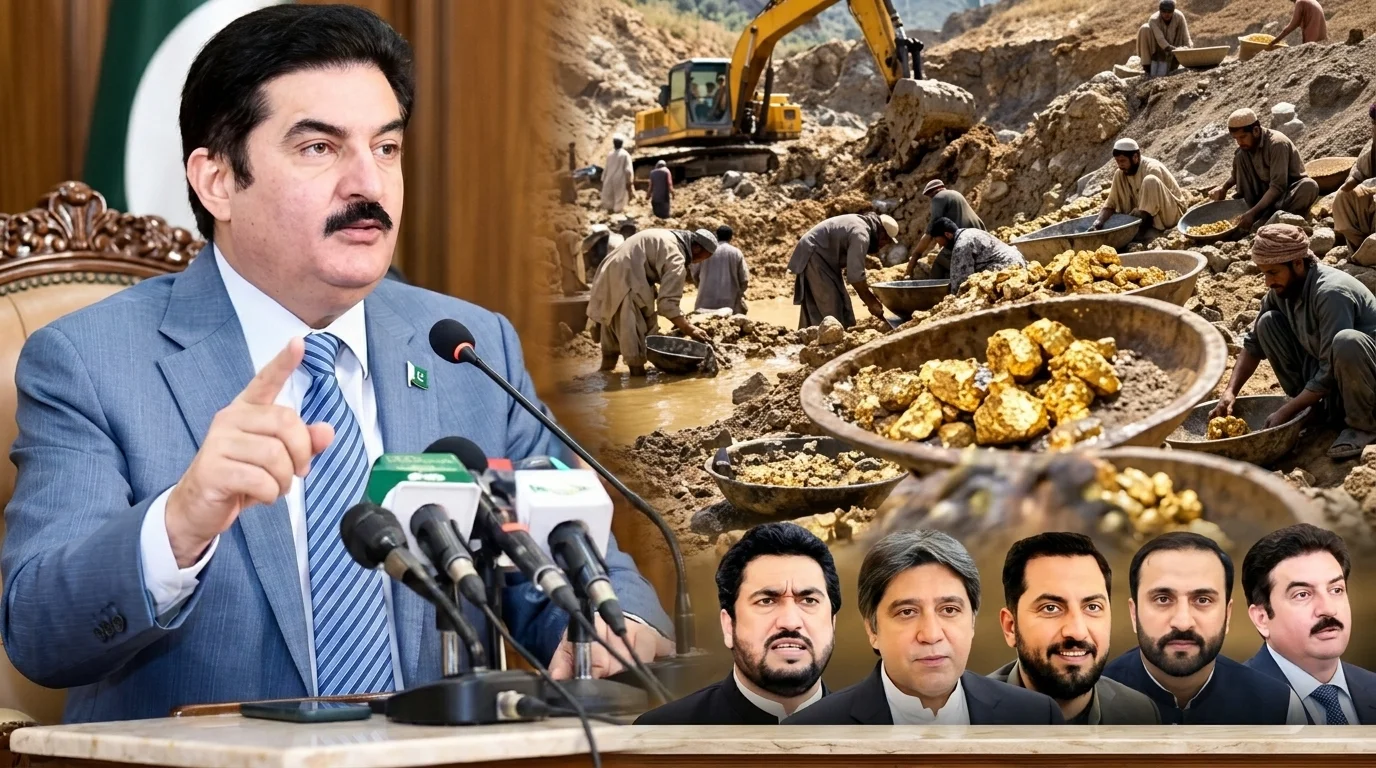
If any doubt remained about where Pakistan actually stands in this architecture, the Kohat disclosures erase it. Governor Kundi revealed that illegal gold mining worth approximately $17.79 million per month was being carried out in Khyber Pakhtunkhwa, with proceeds being used to fund terrorist activities. About 80 percent of the proceeds from illegal mining were going to Afghanistan.
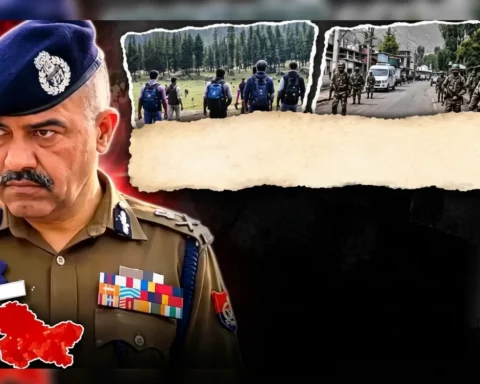
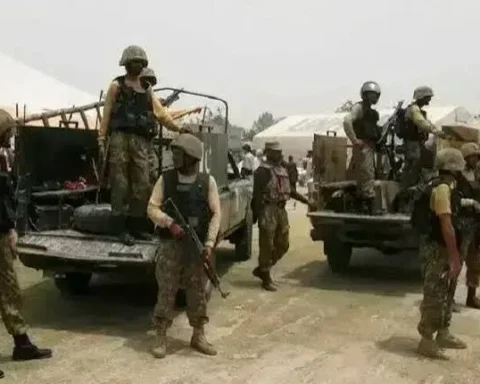
Kohat police had launched a major operation against illegal gold mining by a nexus of Khawarij terrorists and criminals, during which gunmen attacked the police convoy in the Darbukach area. At least 10 police personnel were martyred and 18 terrorists were killed in that attack. Governor Kundi named politicians from multiple parties, PTI, PPP, and JUI F, as alleged participants in the mining mafia. This is not a partisan accusation. It is a structural one: when institutional oversight weakens, criminal networks entrench themselves across political lines, and those networks then finance the Khawarij who attack the very state.
Governor Kundi alleged that a nexus existed between the mining mafia and terrorists, and subsequently announced the cancellation of all gold mining licences in the province, giving contractors one week to vacate mining sites or face confiscation of their machinery. A special task force is being established, named after martyred DSP Haider Zaman, to dismantle these networks permanently.
What Responsible Investigation Requires
The correct approach is what UNODC has long advocated, forensic analysis of drug stamps, packaging, and shipping records to trace consignments to their true origin and identify criminal networks, not assign national blame on the basis of early stage claims. Kenya’s law enforcement deserves genuine credit for a sophisticated, cross border operation. But the work of attribution must follow forensic rigour, not headline urgency.
The Khawarij do not carry national flags. The Southern Route does not respect borders. The same transnational criminal ecosystem that is funding terrorism in Kohat today is flooding East African coastlines tomorrow. Until investigators, and journalists, treat this as a shared threat to be dismantled through evidence rather than a bilateral accusation to be traded, the traffickers will keep moving their product, and the terrorists will keep getting paid.