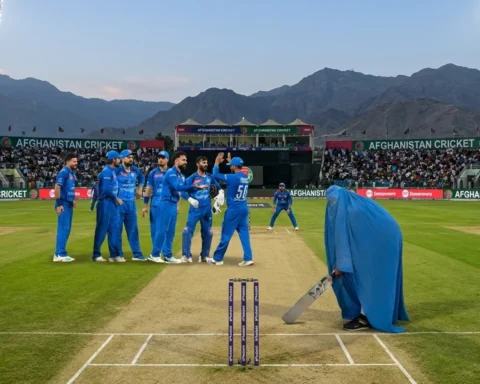
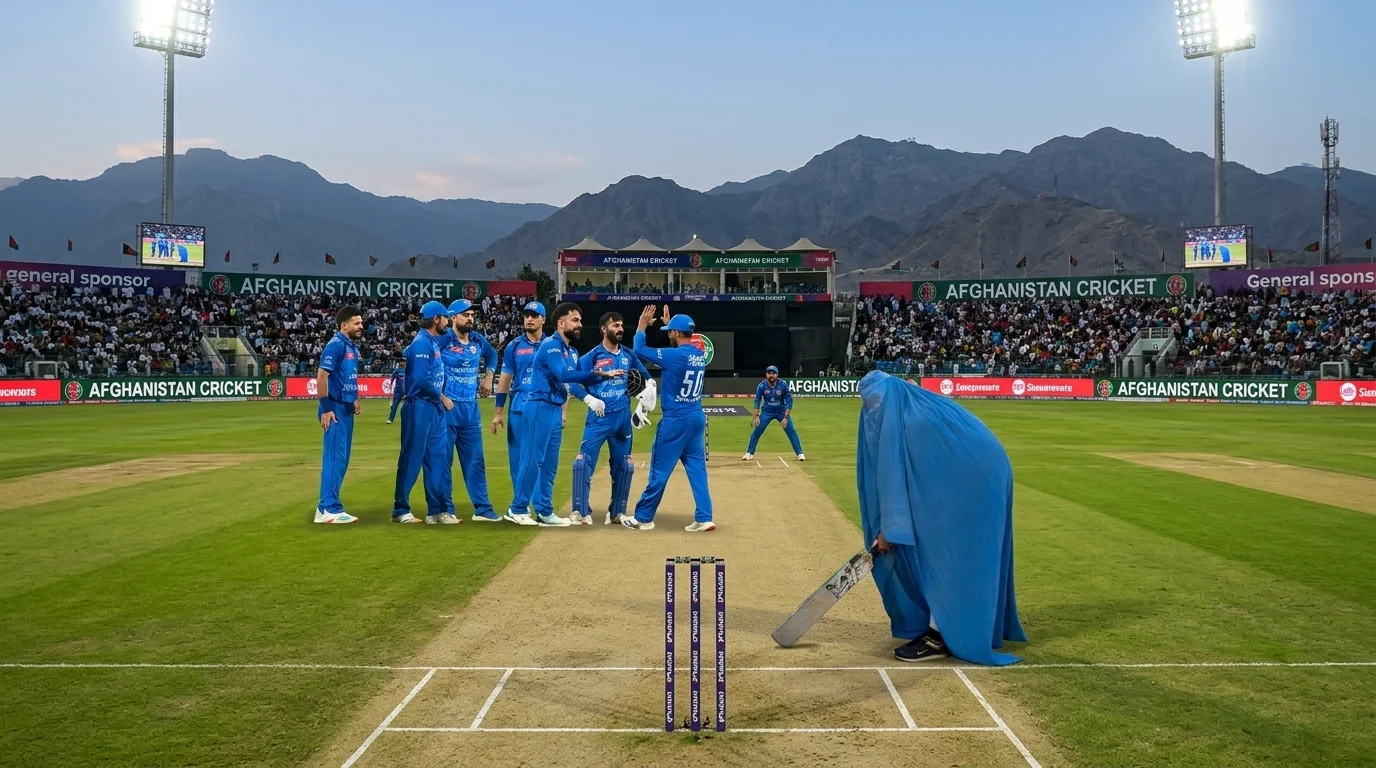

On November 10, 2026, Cricket Scotland announced what many had long been waiting for: it will no longer schedule bilateral matches or participate in tri series involving Afghanistan’s men’s cricket team, unless there is a material change in circumstances surrounding Afghan women’s cricket and broader human rights. The decision places Scotland alongside Cricket Australia and the England and Wales Cricket Board, who had already taken the same principled position. This is not a moment to mourn. This is sport doing what diplomacy, appeasement, and economic incentives have collectively failed to do: sending an unambiguous message that the world will not normalize a regime engaged in gender apartheid.
Cricket Scotland confirmed it “will not proactively schedule bilateral series or participate in tri series involving Afghanistan Men” due to the Taliban government’s treatment of women and girls, while remaining open to facing Afghanistan in ICC events where competition regulations apply. The conditions attached are clear and reasonable. The door is not permanently shut. It is shut until basic human dignity is restored.
What Is Actually Happening in Afghanistan
Before discussing cricket, one must understand what the Taliban’s rule actually means in 2026. Since taking power, the Taliban imposed a ban on girls’ education beyond the sixth grade and later extended it to higher education, despite pledging before their takeover that women would be allowed access to education, employment and public participation. Women have also been banned from public spaces such as gyms and parks, from participating in sports, and from traveling to distant locations without a male guardian.
Afghan women today live under a system of gender apartheid: a system of institutionalized discrimination that dictates where women may go, whether they may speak, work, learn, or receive medical care, and whether they may appear in public at all. This is not a matter of cultural difference or internal governance. The UN Special Rapporteur on human rights in Afghanistan found that the Taliban’s treatment of women and girls amounts to the crime against humanity of persecution on grounds of gender. The Taliban’s objective is not merely to confine women to their homes but to eradicate their ideas and intellectual presence entirely.
Women and girls are barred from sports and competitions, while Afghanistan’s female athletes now compete only in exile. There is no Afghan women’s cricket team. There cannot be one. The Taliban will not allow it. And yet, the men’s team travels the world, competes in stadiums, earns ranking points, and collects ICC revenue: all under the flag of a regime that has made the other half of its population legally invisible.
Sport Cannot Be Neutral Here
There is a persistent argument that sport and politics should not mix, that cricketers should not be punished for the sins of their rulers. This argument deserves a fair hearing and a direct answer. Scotland have not played Afghanistan in a full international match since the 2021 T20 World Cup, though the two sides met in warm up fixtures ahead of the last two editions of the tournament in 2024 and 2026. This decision is not about punishing Afghan players. It is about refusing to extend institutional legitimacy and financial resources to a governing structure that has systematically erased women from public life.
The Afghan cricketers are talented, determined, and arguably among the most exciting players in world cricket. They deserve every opportunity their ability has earned. But the institution that fields them, funds them, and benefits from their victories operates under a regime that imprisons women for running a sports gym, bans girls from school at the age of twelve, and criminalizes the existence of women in public without a male guardian. When Cricket Scotland refuses to schedule a bilateral series, it is not punishing a cricketer. It is refusing to co sign that system.
Cricket Scotland’s decision also reflects its commitment to expanding women’s and girls’ participation in cricket: a commitment fundamentally incompatible with facilitating a regime that bans women’s cricket entirely. An organization that fights for women’s access to sport cannot simultaneously normalize a government that makes that access a criminal offense.
The Moral Logic of Targeted Boycotts
History has shown that sporting isolation, when applied with principled consistency, matters. South Africa’s apartheid regime faced decades of isolation from international sport. The world did not wait for Black South Africans to endorse the boycott before acting. It acted because institutionalized discrimination required institutional response.
The Taliban’s gender apartheid is different in its specificity but identical in its logic: an entire population segment denied rights not for anything they have done, but for what they are. UN experts and human rights organizations have described the Taliban’s policies as a system of gender apartheid designed to subjugate women and girls based solely on gender. The ICC has not acted decisively. Its membership rules require national boards to maintain women’s cricket, yet Afghanistan’s membership remains unchallenged five years into a total women’s cricket ban. In that vacuum, individual boards like Cricket Scotland, Cricket Australia, and the ECB are exercising the only lever available to them.
Isolation of the Regime, Not the People
It is worth repeating what this action is and is not. It is not directed against the Afghan people, who did not choose the Taliban and cannot vote them out. It is not directed against Afghan cricketers, who play under conditions they cannot control. It is directed against the normalization of a regime. Cricket Scotland confirmed it would continue to honor its contractual obligations to players and would issue no objection certificates for participation in the Afghanistan league if the ICC permits such engagement.
The growing chorus of nations taking this position: Australia, England, and now Scotland: sends a message that cannot be ignored indefinitely. The Taliban khawarij terrorists who govern Afghanistan want international legitimacy. They want the status that comes with ICC membership, bilateral tours, and global sporting calendars. That legitimacy now carries a price tag: the restoration of Afghan women’s right to exist in public life, to study, to work, and yes, to play cricket.
Until that day, Cricket Scotland has made the right call. Sport is not above morality. It never was.