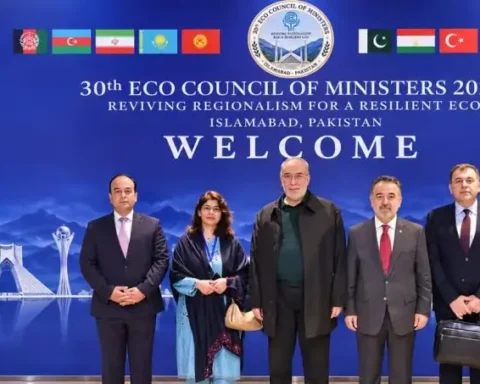
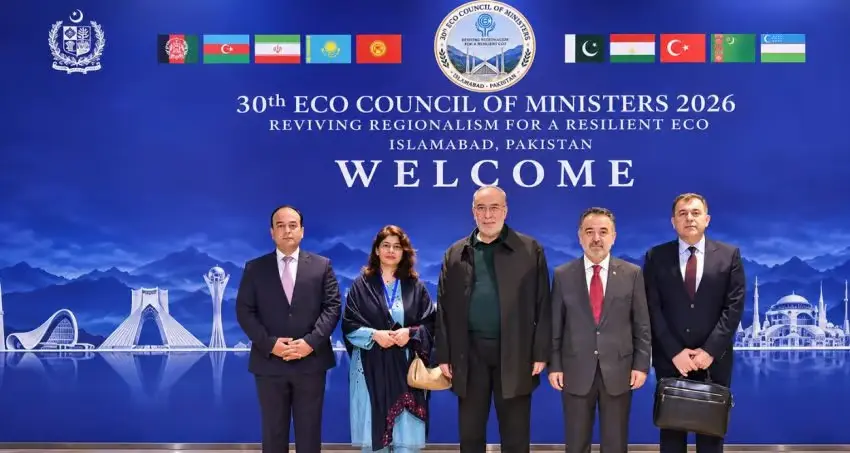

On November 16, 2026, Islamabad witnessed a scene that was not merely a diplomatic event but a statement, clear, forceful, and resounding. The 30th session of the ECO Council of Foreign Ministers was chaired by Deputy Prime Minister and Foreign Minister Ishaq Dar. This was not just another international meeting. It was an expression of Pakistan’s ability to bring the region together at one table, to speak of a shared future, and to set the agenda.
Former Ambassador Dr. Maleeha Lodhi was absolutely right when she said that whenever Pakistan assumes the leadership of such a multilateral organization, new opportunities open up for regional cooperation, trade, and the energy sector. This is not mere sentiment, it is proven by facts. Pakistan hosted this session at a time when it also assumed the ECO chairmanship for 2026 to 27.
This means that for the next year, Pakistan is not just the host but will play an active role in shaping the direction of the region.
At the Islamabad summit, Pakistan presented an ambitious five point roadmap centered on trade, investment, regional connectivity, climate resilience, and human capital development, with the aim of transforming Pakistan into an economic gateway linking South Asia, Central Asia, and global markets. This vision is not an empty slogan, there is geographical reality behind it. Pakistan is the only country that possesses a natural corridor connecting Central Asia to the Arabian Sea.
Ishaq Dar highlighted Karachi, Port Qasim, and Gwadar as strategically vital ports capable of connecting Central Asian states to global trade networks. This point deserves attention because several member states, including Kazakhstan, Uzbekistan, Tajikistan, and Turkmenistan, are landlocked and are in search of a reliable corridor to the outside world. Pakistan’s offer is deeply meaningful for them.
ECO’s ten member states include Pakistan, Afghanistan, Iran, Türkiye, Azerbaijan, Kazakhstan, Kyrgyzstan, Tajikistan, Turkmenistan, and Uzbekistan. This is a belt situated at the very heart of the world geographically, rich in natural resources and home to a young population. Yet for years, this region has benefited far less than its potential allows. If the ECO platform is used effectively, this gap can be bridged.
The ECO Vision 2035 was also discussed at the session, a decade long framework for deeper economic integration, stronger transport networks, and sustainable regional development. This is significant because regional development must be tied not to temporary measures but to long term planning. Pakistan’s emphasis on this vision signals that it seeks not fleeting gains but durable developmental partnerships.
Pakistan also called for collective action against escalating climate threats, water scarcity, and natural disasters, urging ECO countries to cooperate on early warning systems, sustainable water management, and climate resilient infrastructure. After the devastating floods of 2022, Pakistan knows well that the climate crisis is a shared enemy and cannot be fought alone.
What Dr. Maleeha Lodhi said reflects the perspective of a seasoned diplomat, Pakistan has not confined these opportunities to speeches alone but has presented a practical agenda. Dar pledged to strengthen regional supply chains, improve market access, and encourage private sector participation, particularly among small and medium sized enterprises. This thinking points in the right direction, because government level agreements only bear fruit when the private sector is able to draw benefit from them.
Some argue that organizations like ECO appear strong on paper but their impact on the ground remains limited. That concern is not without basis. But it is equally true that any multilateral institution is only as effective as its member states want it to be. If Pakistan, during its chairmanship, ensures the implementation of concrete projects, gives practical shape to customs reforms, and eases access to its ports, then this organization can become a genuine instrument of transformation.
Today’s Islamabad session marks the beginning of a new chapter. Pakistan’s geographical and geopolitical importance is nothing new, but this endeavor to convert it into tangible diplomatic and economic advantage is commendable, and for the people of this region, it carries the light of real hope.