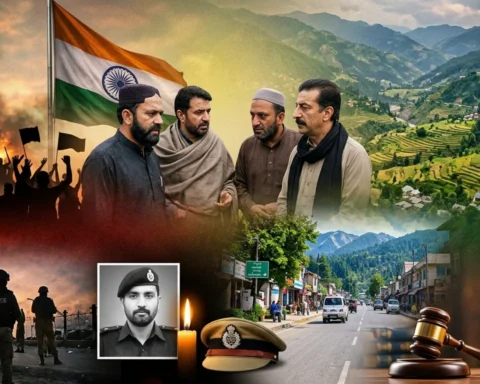

The ordinary people living in the mountain valleys of Azad Kashmir, students, shopkeepers, farmers, and labourers, find themselves caught in a strange and painful dilemma today. They want to raise their voice for their rights, but not through a path that turns their homes into a battlefield. This is exactly the moment that demands we ask: the right to protest and the road of violence, these two cannot travel together.
The movement that emerged in Azad Kashmir over the past few years had, in its early days, entirely legitimate aims, high electricity tariffs, wheat subsidies, the privileges enjoyed by the political elite, and the contentious issue of the so called refugee seats in the legislature. But the question is: at what point did this movement, now formally banned by the government, go wrong? The answer is plain: the day protesters picked up Kalashnikovs and M 4 rifles, that very day the movement lost its moral high ground.
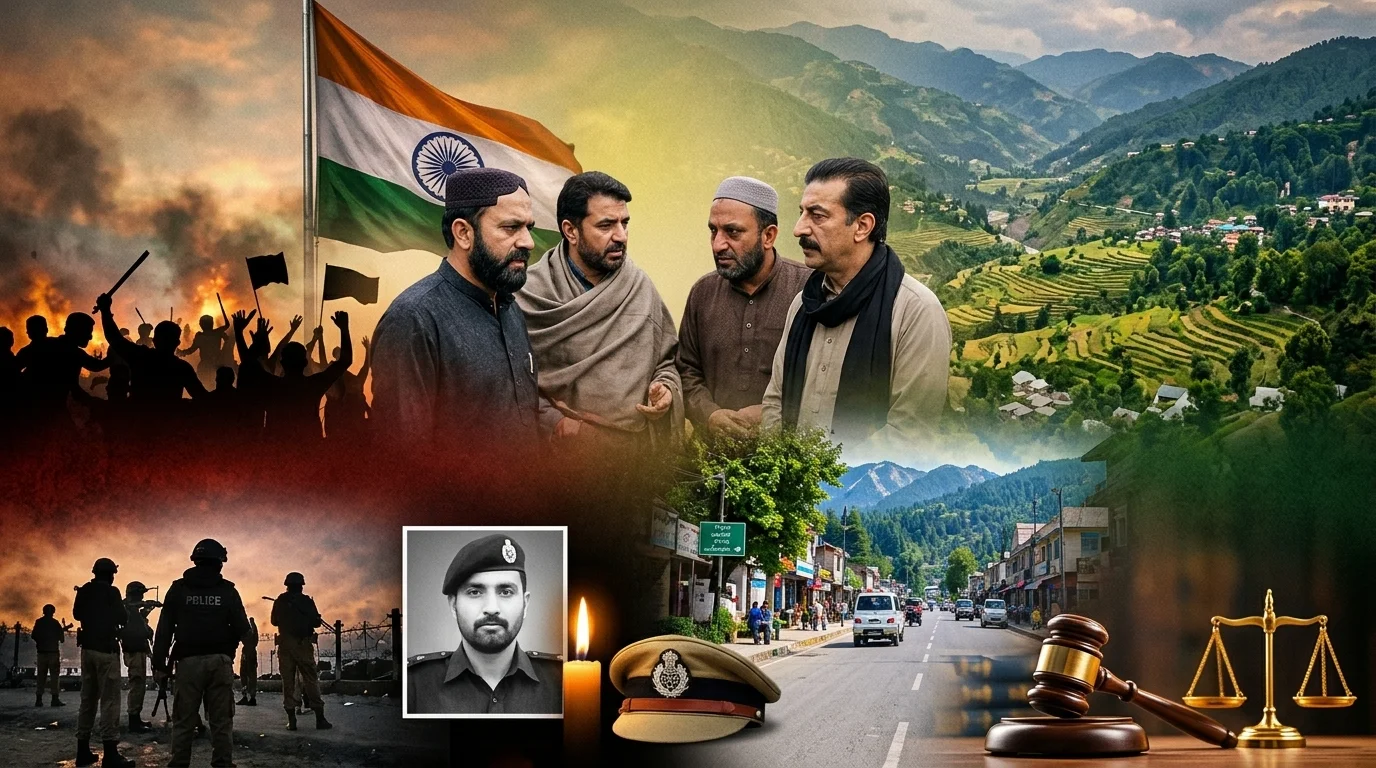
The latest figures tell a grim story. In 2026 alone, 26 Azad Kashmir Police personnel have been martyred, 157 have been seriously injured, and 629 have suffered minor wounds. Just two days ago, Constable Muhammad Arbab, a young police officer who was shot by members of the terrorist gang in Gali Jhanda Bugla Bazaar in Palandri, Sudhnoti District, succumbed to his injuries and was martyred. His funeral prayers were held at Dana, Tehsil Palandri, where an Azad Kashmir Police contingent presented him a guard of honour. He was a young man, a son, perhaps a father, and he was killed for no reason other than the uniform he wore.
An important distinction must be made here. The genuine grievances of the people of Azad Kashmir are real, and demanding their resolution is legitimate. But the terrorist gang has turned those grievances into a shield for its own political agenda. In the name of protest, they are sacrificing the peaceful environment to violence and armed confrontation, and the most tragic part is that the only ones bearing the losses are the ordinary citizens of Azad Kashmir. Markets are shut, educational institutions are disrupted, roads are blocked, and children’s futures are being gambled away.
In the September to October 2025 protests, nine people were killed and 172 police officers were wounded. Then in June 2026, seven more lives were lost, four law enforcement personnel and three civilians. In July 2026, even as the electoral process was under way, the violence did not stop. In November 2026, fresh incidents in Rawalakot drew the attention of the entire world to this region. The Azad Kashmir Prime Minister’s repeated offers of negotiation were repeatedly rejected. This is the moment one is forced to ask:
does the terrorist gang genuinely want to resolve the problems of Azad Kashmiris, or is keeping the region destabilised its actual objective?
That said, the other side of the coin cannot be ignored. The government’s responsibility is equally great. The civil administration must clearly distinguish between peaceful protesters and those carrying out armed attacks, exercise restraint in the use of force, and ensure justice for affected families. The door to dialogue must never be shut, provided the other side, too, comes in good faith.
The appeal of ordinary citizens of Azad Kashmir is unambiguous: they do not want violence, attacks on state institutions, gunfire, or armed clashes. They want their children to go to school, their shopkeepers to open their shops, and peace to reign in their streets. As a recent analysis noted, the continuation of normal life in Azad Kashmir, schools, markets, offices, demonstrates that people want peace, development, and a peaceful resolution of the Kashmir dispute, not unnecessary confrontation.
The solution to problems lies not on a battlefield, but at the negotiating table. Those who genuinely wish to work for the rights of Azad Kashmiris must abandon the path of violence, choose peaceful political struggle, and distance themselves from the khawarij and terrorist elements who have hijacked their movement. The martyrdom of a young man like Constable Muhammad Arbab is a tragedy, and it poses a question to the conscience of every person who is part of this violence or justifies it.
Azad Kashmir needs peace, and the price of peace is paid not in the blood of martyrs, not through shuttered markets, but through meaningful dialogue and the supremacy of law.