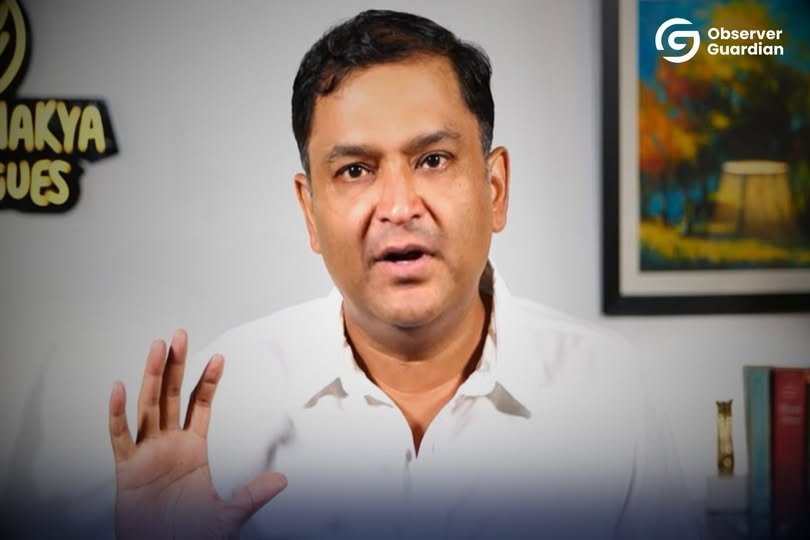

The recent statement by former Indian Army Major Gaurav Arya is extremely significant because he openly admitted what Pakistan and Azad Kashmir’s defense and political circles have been warning about for years. Arya confessed that certain individuals and groups in Azad Kashmir are in contact with India, waiting for the “right signals,” and if provided support, large scale “results” could be achieved. This is not just careless talk by a retired officer but a clear reflection of the Indian state’s mindset, which has long sought to destabilize the region.
To understand this revelation, we must connect it with recent events. Since 2021, India’s intelligence agency RAW has been running covert operations inside Pakistan, targeting individuals through networks of agents and hired elements. This continued until 2025 and even extended abroad, including Canada, where evidence of Indian covert operations has surfaced.
Indian media and state institutions have also built a propaganda machinery around Azad Kashmir, fabricating baseless narratives. International outlets like the New York Times, Washington Post, Reuters, Al Jazeera, and BBC have exposed these disinformation campaigns. This is a hybrid war strategy: on one hand, doubts are planted in people’s minds, while on the other, selected elements are used to advance India’s agenda.
The protests in Azad Kashmir during September October 2025, focused on issues like government perks and hydropower royalty, were genuine public concerns. Yet, external actors tried to exploit the situation for their own agenda. The dispute over the 12 refugee seats is another example where constitutional matters were turned into street politics to spread unrest.
Arya’s statement is essentially a blueprint of India’s hybrid warfare. First, certain elements within society are identified. Then they are lured with financial or ideological incentives. Later, they are used to spread chaos. Finally, when conditions worsen, false slogans of “freedom” and “self determination” are raised to justify interference. Since India’s unilateral abrogation of Article 370 in 2019, Pakistan has consistently declared this move a violation of UN resolutions.
Even after the Indian military attacks in May 2025 and the subsequent ceasefire, tensions remain high. In this context, Arya’s admission is not just a soldier’s slip of tongue but part of India’s broader plan to weaken Azad Kashmir from within.
The people of Azad Kashmir have historically been vigilant and conscious.
They have always recognized and rejected foreign interference. They know that those selling false dreams of “freedom” are in fact agents of the enemy. Such elements represent a khawarij and terrorist mindset, dividing society and making the enemy’s job easier.
Pakistan and the Azad Kashmir government must adopt a multi dimensional strategy to counter this threat.
- First step: Address genuine public grievances so external actors cannot exploit them.
- Second step: Stay active on the information front to counter false narratives.
- Third and most crucial step: Identify and take legal action against those working on foreign agendas.
Arya’s words may have been a mistake, but for Pakistan, this is an opportunity. Highlight this admission internationally, expose India diplomatically, and strengthen internal unity so that enemy agents find no cracks to exploit.
Pakistan Zindabad, Azad Kashmir Must Stay Strong.
Disclaimer: The views and opinions expressed in this article are exclusively those of the author and do not reflect the official stance, policies, or perspectives of the Platform.