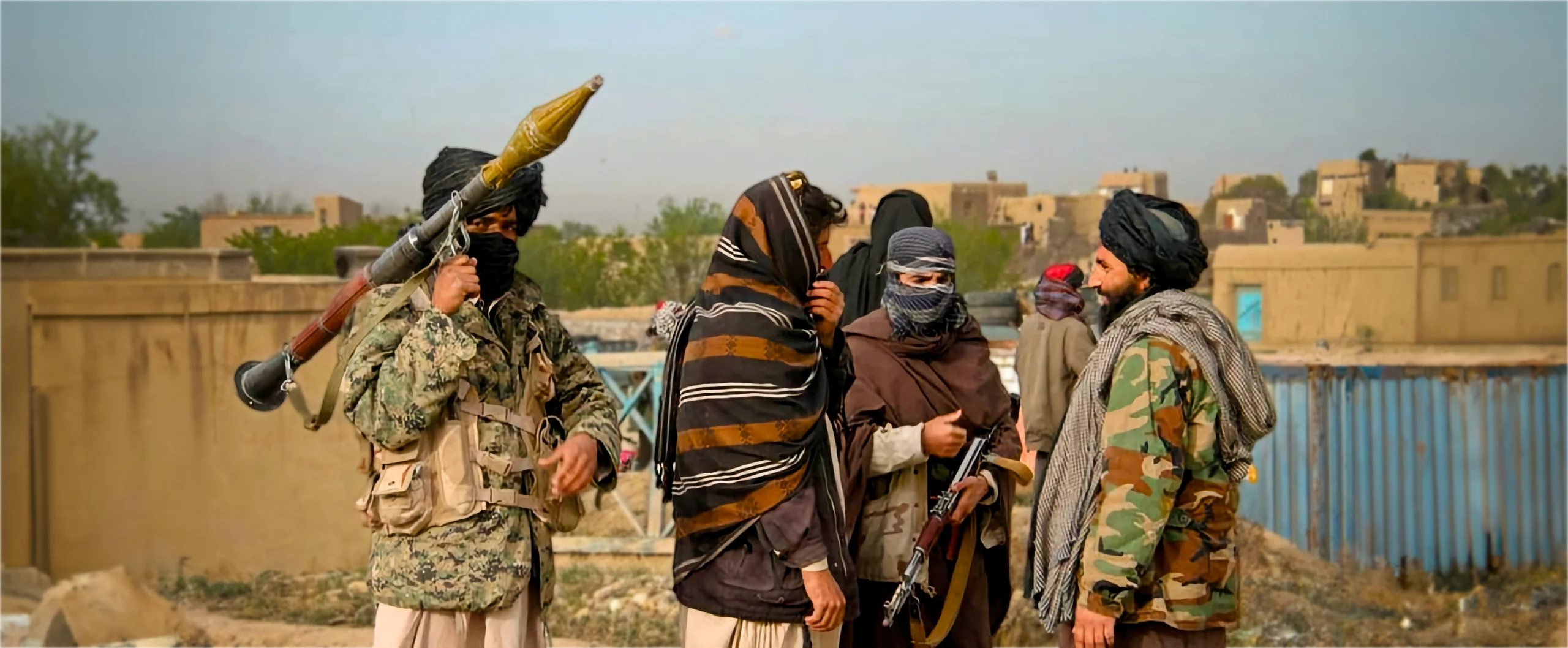

The Tehreek-e-Taliban Pakistan’s effort to portray Pakistan as an un-Islamic or illegitimate state is not a serious constitutional argument; it is a calculated propaganda strategy intended to justify armed rebellion, weaken public trust in national institutions, and create an artificial basis for a parallel system imposed through violence. By questioning the legitimacy of Pakistan’s constitutional order, the TTP seeks to conceal a fundamental contradiction: it claims to defend Islam while employing terrorism, coercion, assassination, extortion, kidnapping and attacks on civilians, methods that violate both Islamic principles and the established laws of the country. Pakistan’s constitutional identity, representative institutions and Islamic legal mechanisms directly challenge the ideological narrative used by the TTP to rationalize its militancy.
Pakistan is not a secular state detached from Islamic principles. It is constitutionally defined as the Islamic Republic of Pakistan, and its legal framework is rooted in the Objectives Resolution, incorporated into the Constitution through Article 2A. The Resolution clearly affirms that sovereignty over the entire universe belongs to Allah Almighty and that the authority entrusted to the state is to be exercised by the people of Pakistan through their elected representatives. This constitutional arrangement rejects both unrestricted authoritarianism and the self-appointed rule of armed groups.
It establishes a system in which Islamic principles, democratic representation, public consent, and constitutional responsibility operate together
The TTP’s claim that Pakistan’s institutions lack Islamic legitimacy deliberately ignores the extensive constitutional mechanisms created to ensure that legislation conforms to the teachings of the Qur’an and Sunnah. The Constitution requires that no law be enacted that is repugnant to Islamic injunctions and directs the state to enable Muslims to organise their lives according to Islam. These are not merely symbolic declarations. They are supported by formal institutions with defined constitutional responsibilities.
The Council of Islamic Ideology advises Parliament and provincial assemblies on whether existing or proposed laws conform to Islamic principles. The Federal Shariat Court is empowered to examine laws and determine whether they are contrary to the injunctions of Islam. Pakistan’s superior judiciary, elected legislatures, religious scholars and constitutional bodies therefore provide peaceful and lawful avenues for discussing, interpreting and implementing Islamic teachings. The existence of disagreement over particular laws or policies does not invalidate the entire state. Constitutional systems are designed to permit reform, judicial review, public debate, and democratic correction without resorting to armed violence.
In contrast, the TTP’s ideological model leaves no meaningful space for public consent, constitutional accountability, political pluralism or peaceful disagreement. Its declarations are enforced not through elections, courts, or public consultation, but through weapons and intimidation. Its militants have repeatedly targeted police officers, soldiers, tribal elders, religious scholars, teachers, political representatives, and ordinary citizens.
An organisation cannot credibly claim to establish justice while denying its victims due process and imposing collective punishment through bombings, assassinations, and fear
The TTP also attempts to delegitimize the Pakistan Army by portraying it as a continuation of a colonial institution. This argument ignores the complete political, legal, and constitutional transformation that occurred after independence in 1947. The armed forces of Pakistan do not serve a foreign imperial authority. They operate under the Constitution, are subject to the command structure established by the state, and function under elected civilian authority. Their constitutional responsibility is to defend Pakistan’s sovereignty, territorial integrity and population against external aggression and internal threats.
Like all national institutions, the armed forces remain subject to constitutional limits, legal scrutiny and public accountability. Criticism of institutional performance is legitimate in a constitutional democracy, but describing the Army as inherently colonial is an ideological distortion intended to provoke hostility against personnel defending citizens from terrorism. The police officers and soldiers killed in attacks are not representatives of a foreign occupation. They are citizens of Pakistan, drawn from the same communities and families that militant organisations claim to represent.
Reports that the TTP operates through 15 departments, four zones, 39 so-called wilayats, military commissions, and judicial structures reveal an attempt to manufacture the appearance of statehood. Yet administrative labels and hierarchical charts cannot transform a terrorist organisation into a legitimate government. Criminal groups throughout history have established chains of command, taxation systems, courts, and territorial divisions.
Such structures demonstrate organisational capacity, not moral, legal, or political legitimacy
A legitimate state derives authority from constitutional law, recognised institutions, territorial responsibility and the consent of its citizens. The TTP, by contrast, sustains itself through coercive taxation, extortion, kidnapping, targeted killings, and violent intimidation. Its so-called courts lack transparency, independent judges, rights of appeal, and public accountability. Its military commissions answer to commanders rather than to an elected legislature or constitutional judiciary. Its territorial terminology is therefore best understood as psychological warfare designed to create an exaggerated impression of control and permanence.
The TTP’s parallel structures also expose its intention to replace Pakistan’s constitutional order rather than merely campaign for religious reform. If its objective were genuinely to promote Islamic values, it could participate in peaceful scholarship, public debate, social welfare, legal advocacy, or democratic politics. Instead, it rejects every constitutional avenue because constitutional participation would require accountability, compromise, and respect for the lives and choices of others.
Armed insurgency allows the group to avoid public scrutiny while presenting violence as a religious obligation
Pakistan’s response must therefore extend beyond military operations. The state should counter TTP propaganda by clearly explaining its Islamic constitutional foundations, strengthening the rule of law, delivering justice, improving governance in vulnerable regions, and addressing legitimate public grievances. Religious scholars, educators, journalists, and community leaders must expose the theological and political contradictions within militant narratives. Citizens should understand that constitutional reform is possible, but no faction has the right to impose its interpretation of religion through force.
No parallel militant structure can replace Pakistan’s constitutional order. Lasting stability and Islamic governance cannot emerge from suicide attacks, extortion networks, or coercive rule. They are built through justice, accountable institutions, lawful authority, and public consent. The TTP’s attempt to delegitimize Pakistan ultimately fails because it offers no credible constitutional, moral or Islamic alternative, only an armed hierarchy seeking to disguise terrorism as governance.