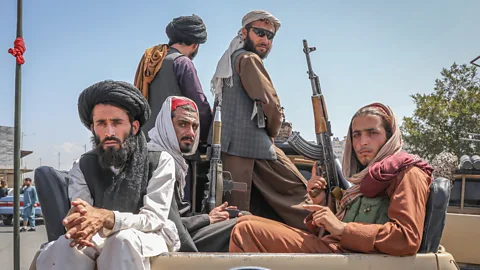
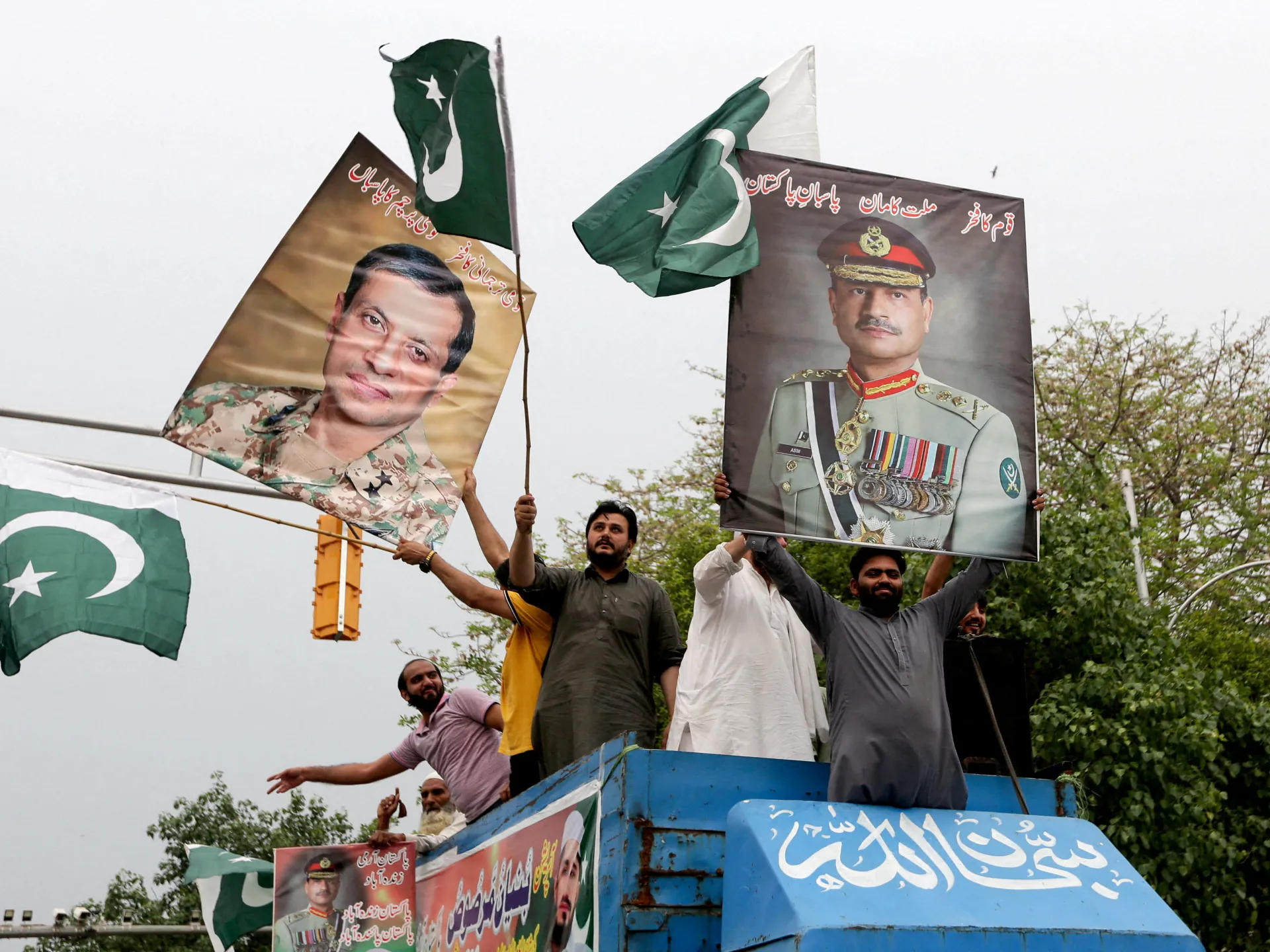

Pakistan’s struggle against terrorism has too often been described in the language of security operations, border management, intelligence failures and militant hideouts. Those factors matter, but they do not fully explain why terrorism keeps returning even after major military victories. According to a South Asia Times study, Pakistan’s fight against terrorism is ultimately a fight against Kharjeeyat, an extremist ideology that has repeatedly regenerated violence despite the state’s battlefield successes. This argument deserves serious attention because it shifts the focus from the terrorist as an armed actor to the worldview that produces him, justifies him and replaces him when he is killed.
The report traces Kharjeeyat to the historical Khawarij, a sect remembered in Islamic history for its rigid absolutism, rebellion against legitimate authority and readiness to declare other Muslims outside the fold of Islam. While today’s terrorist groups operate in modern political and geopolitical conditions, the ideological pattern is familiar: a narrow claim to religious purity, the rejection of lawful authority, the demonisation of society and the use of violence as a sacred obligation. This is why groups such as the TTP and ISKP are not merely security threats.
They are ideological movements that present murder as faith, rebellion as piety and chaos as divine duty
Pakistan has paid an immense price for this distortion. Soldiers, police officers, teachers, children, worshippers, tribal elders, journalists and ordinary citizens have been killed by groups claiming religious justification for acts that violate both Islamic principles and human morality. The attack on schools, mosques, shrines, markets and security posts shows that the terrorist mind does not recognise the sanctity of life, the dignity of society or the legitimacy of the state. It survives by manufacturing a false religious certainty in which every opponent is branded an enemy of Islam and every atrocity is dressed up as sacrifice.
Military action remains necessary. No state can allow armed groups to control territory, intimidate citizens or wage war against its institutions. Pakistan’s security forces have made major sacrifices in dismantling terrorist networks, clearing militant strongholds and restoring the writ of the state in areas once dominated by fear. But the South Asia Times study is right to warn that eliminating terrorists is not the same as defeating terrorism.
A militant killed in an operation may end one immediate threat, but if the ideology that shaped him remains unchallenged, another recruit can take his place
This is the central challenge. Terrorism is not sustained by weapons alone. It is sustained by narratives. It feeds on selective history, manipulated theology, political grievance, social alienation and online propaganda. Groups such as TTP and ISKP exploit anger and confusion, especially among young people, by presenting themselves as defenders of religion while violating its most basic teachings. They simplify complex realities into a brutal binary: believer versus apostate, purity versus corruption, violence versus surrender. Such ideas can travel faster than armed cells, especially in the digital age.
Countering Kharjeeyat, therefore, requires an intellectual and moral response as strong as the military response. Religious scholars, universities, media institutions, schools, families and the state all have a role to play. The public must hear, clearly and repeatedly, that rebellion, takfir, sectarian hatred and attacks on civilians have no legitimacy in Islam. This cannot be left to occasional statements after a tragedy. It must become part of a sustained national effort to reclaim religious discourse from extremists who have weaponised sacred language for political violence.
Education is especially important. Young citizens should be taught not only to reject terrorism emotionally, but to understand how extremist thinking works. They should be able to recognise the signs of radical propaganda: the glorification of death, the dehumanisation of others, the rejection of lawful order and the claim that only one violent group represents true faith.
A society that can identify extremist manipulation is harder to recruit from and harder to terrorise
At the same time, Pakistan must avoid reducing this issue to rhetoric alone. Ideological counterterrorism will fail if it is not matched by justice, governance and economic opportunity. Extremist groups thrive where the state is absent, where courts are slow, where citizens feel abandoned and where young men see no future beyond anger. Fighting Kharjeeyat means closing those spaces too. It means ensuring that citizens in vulnerable regions experience the state not only through checkpoints and operations, but through schools, hospitals, roads, courts, jobs and dignity.
There is also a regional dimension. Militancy does not respect borders, and groups such as TTP and ISKP exploit instability, weak border controls and geopolitical rivalries. Pakistan’s counterterrorism policy must therefore combine internal ideological resilience with external vigilance. But no foreign factor should distract from the home front: the most decisive battle is the battle over legitimacy. Extremists must be denied the ability to present themselves as religious warriors.
They must be exposed as heirs to a destructive tradition of rebellion, intolerance and bloodshed
The South Asia Times study’s most important contribution is its insistence that Pakistan’s war is not only against men with guns, but against an idea that keeps producing them. This distinction matters. A country can win operations and still lose generations if the ideological roots of terrorism remain intact. Pakistan has shown that it can confront militants on the battlefield. The harder task now is to defeat the doctrine that turns citizens into killers. That requires courage from soldiers, clarity from scholars, responsibility from media, seriousness from policymakers and vigilance from society.
Pakistan’s fight against terrorism will be won when Kharjeeyat is understood not as a distant historical label, but as a living extremist mindset that must be challenged wherever it appears. The terrorist may hold a weapon, but the ideology hands it to him. Until that hand is stopped, the violence will keep returning.