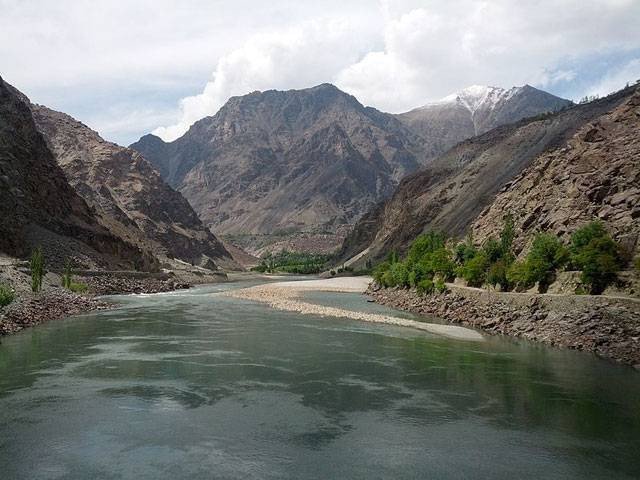

In a world already anxious about climate stress and geopolitical rivalry, the idea of turning rivers into weapons should alarm everyone. The latest Top Risks of 2026 report by Eurasia Group, a major United States-based policy institute and investor advisory firm, does exactly that. It states plainly that India has weaponized water against Pakistan by suspending the Indus Waters Treaty and withholding vital hydrological data. This is not a complaint from Islamabad or a think tank in the Global South. It is an assessment rooted in mainstream United States policy analysis and global investor risk forecasting. That makes it difficult to ignore.
For more than six decades, the Indus Waters Treaty was held up as a rare success story. It survived three wars between India and Pakistan and countless crises. It allowed two nuclear-armed rivals to cooperate on the most basic element of life. That story ended in April 2025, when India suspended the treaty after the Pahalgam terrorist attack and stopped sharing river flow data with Pakistan.
According to Eurasia Group, the decision to keep the treaty in abeyance even after a United States-brokered ceasefire is deliberate. India wants to hold water over Pakistan as a standing threat, a pressure tool that can be tightened or loosened at will
This is what Eurasia Group calls strategic water coercion. Control of upstream flows has been turned into an instrument of power. In the Indus Basin, that power is immense. Over 80 percent of Pakistan’s agriculture depends on the Indus waters. Every crop cycle, every canal, every village that lives off irrigated land is ultimately at the mercy of flows that originate in territory under Indian control. When such control is used as leverage instead of managed through rules, water stops being a shared resource and becomes a weapon.
The threat is not abstract. Eurasia Group warns that India’s upstream manipulation could trigger severe water scarcity in Pakistan, with direct effects on irrigation, livestock, and tens of millions of livelihoods. Without timely flow data and predictable releases, Pakistan cannot plan sowing or harvesting with any confidence. Rabi and Kharif crop decisions turn into blind bets. A delayed or reduced release can hurt wheat, cotton, rice, and sugarcane in different seasons. Even partial disruption of flows can shrink harvests, cut incomes for farming households, and push food prices higher for everyone.
This is why the report frames water weaponization as a direct threat to Pakistan’s human and economic security. Pakistan’s agricultural backbone is not only about farmers. It underpins food supplies to cities, feeds livestock, and supports industries like textiles that earn crucial export revenue. If water flows fall or fluctuate sharply, mills run below capacity, export orders slip, and the state’s ability to earn foreign exchange weakens.
The erosion of agricultural exports and rising food imports would worsen external debt stress in a country that already struggles to keep its balance of payments afloat
The human cost is just as serious. Eurasia Group warns that weaponizing Indus waters could trigger cascading humanitarian risks in Pakistan. Reduced harvests and high food prices mean higher rates of malnutrition, especially among children and women in rural areas. Loss of rural livelihoods pushes migration to already stressed cities, creating informal settlements, unemployment, and social tension. As water becomes more scarce or more unpredictable, water-borne disease and sanitation problems also grow. The ripple effects spread from the canal to the clinic, from the field to the factory.
What makes this situation even more dangerous is the strategic context. India and Pakistan remain nuclear rivals. In such a setting, water coercion is not simply a slow bleed. It raises the stakes of every future crisis. If Islamabad believes that New Delhi can hurt its food supply or its rural economy by turning a tap, then pressure in any conflict is multiplied. The temptation to respond early and forcefully, before the damage becomes unbearable, increases. Water becomes a silent escalator of risk, built into the structure of the relationship.
Eurasia Group’s analysis also matters because of who is saying it and for whom. The report is written for global investors and policy makers who usually speak in the language of markets and credit, not dams and canals. When such an audience is told that India’s suspension of the Indus Waters Treaty and withdrawal of hydrological data threaten Pakistan’s agriculture, food security, and millions of livelihoods, it changes the conversation.
Pakistan’s water vulnerability is no longer a distant complaint. It shows up as a systemic risk that can affect regional stability, supply chains, and investment decisions
For Pakistan, the message is double-edged. On the one hand, it validates long-standing concerns that an upstream neighbor is using shared rivers for strategic pressure. On the other hand, it highlights how exposed Pakistan is because of its own weaknesses. A country where the majority of the population depends on Indus-fed agriculture cannot afford waste, poor irrigation practices, or endless delay in modernizing water management. Domestic reform is essential. But Eurasia Group is clear that internal mismanagement does not excuse external coercion. Turning shared rivers into tools of pressure is a step that crosses a moral and strategic line.
The international community cannot treat this as a niche bilateral dispute. Water agreements were designed to be among the most stable parts of the global order. If a landmark arrangement like the Indus Waters Treaty can be put in cold storage and used as a bargaining chip, the message to other regions is worrying. It invites similar behavior along other shared rivers in Asia, Africa, and Latin America. That is why Pakistan and its partners should press for a stronger global norm that water cannot be used as a weapon, especially between nuclear-armed states.
Eurasia Group’s warning is, in effect, a call to act before the next crisis. Pakistan needs to combine diplomacy, legal tools, and alliances with better domestic management to reduce its exposure. India needs to be reminded that its image as a responsible power in a climate-stressed world is not compatible with turning rivers into instruments of fear. If the Indus Basin becomes a battlefield by other means, no one in South Asia will truly be safe. Water should bind the region together. Its weaponization is a danger that the region and the wider world ignore at their own risk.