
Israel’s rejection of the latest Gaza peace road map has exposed a fundamental problem that has haunted efforts to end the conflict for years. Peace cannot advance when one party treats negotiated obligations as optional while demanding absolute compliance from everyone else. Prime Minister Benjamin Netanyahu’s declaration that Israel does not accept the 15-point document, coupled with his insistence that Israeli forces will not withdraw until Hamas is fully disarmed, has therefore raised concerns far beyond Gaza. The dispute is no longer simply about sequencing military steps. It is about whether an internationally supported political process can survive when one of its central participants refuses the framework designed to move that process forward. Netanyahu has publicly maintained that Israeli withdrawal will not begin before what he describes as genuine and complete Hamas disarmament.
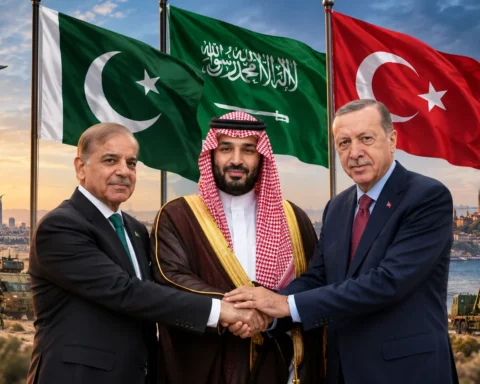
The response from the region has been unusually coordinated. On August 16, the foreign ministers of Indonesia, Egypt, Jordan, Pakistan, Qatar, Saudi Arabia, Türkiye and the United Arab Emirates jointly condemned Israel’s declared rejection of the road map and its opposition to Palestinian statehood. Their statement described the Israeli position as a direct repudiation of President Donald Trump’s Comprehensive Plan to End the Gaza Conflict, which was endorsed by UN Security Council Resolution 2803.
The eight governments argued that rejecting the road map jeopardizes its implementation and undermines collective attempts to secure a just and lasting peace
That criticism deserves serious attention because the road map is not simply another diplomatic declaration filled with aspirations but lacking mechanisms. It attempts to confront some of the hardest practical questions surrounding Gaza. Under the framework, the decommissioning of weapons is intended to proceed alongside phased Israeli withdrawal. An International Stabilization Force would enter areas vacated by Israeli troops, while the National Committee for the Administration of Gaza would gradually assume civilian authority. Reconstruction would follow within a broader transitional structure. Reuters reported that the framework connects Israeli withdrawal with the disarming of armed factions and provides for the international force to support security, Palestinian police training and humanitarian operations.
This sequencing matters. Israel has legitimate security concerns regarding weapons, tunnels and the possibility of renewed attacks. No durable political settlement can simply ignore those concerns. But security cannot become a formula for indefinite military presence. If complete disarmament must happen before the first meaningful withdrawal, while the other side fears surrendering its leverage without guarantees of withdrawal, the process becomes trapped before it begins. The road map was designed precisely to overcome that dilemma through phased and verified reciprocal steps.
Board of Peace envoy Nickolay Mladenov has described the intended process as proceeding sector by sector, with Israeli forces withdrawing from areas once they are verified as effectively free of weapons
The diplomatic significance becomes even greater because Palestinian factions have accepted the road map, according to the joint statement issued by the eight countries. The document emerged from extensive mediation involving Egypt, Qatar, Türkiye, the United States, the High Representative for Gaza and the Board of Peace. The ministers therefore argue that Israel’s refusal now places responsibility on Israel for obstructing efforts to bring peace not only to Gaza but to the wider Occupied Palestinian Territory. Hamas has endorsed the road map, although disagreements remain regarding the scope and timing of disarmament, especially over light weapons. Those differences require negotiation, but negotiation is impossible if the framework itself is rejected.
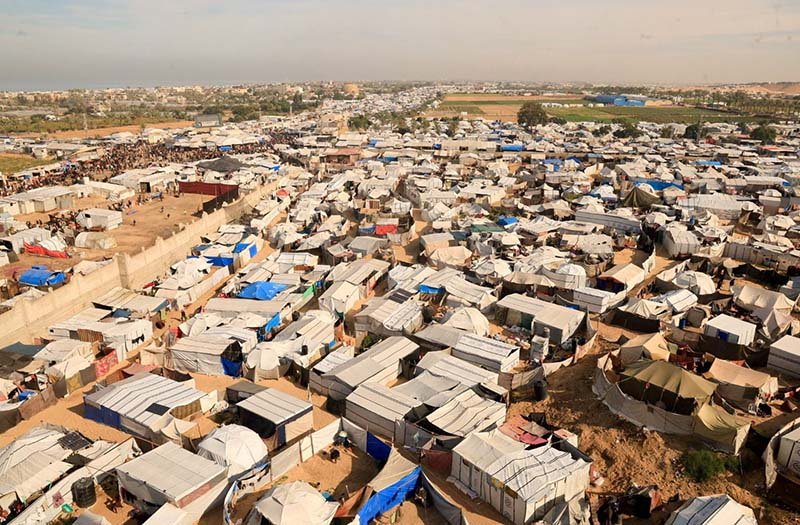
There is also a humanitarian reality that cannot be separated from diplomatic calculations. Gaza’s future is being debated while millions of Palestinians continue to live amid enormous destruction, displacement and uncertainty. Reconstruction remains tied to political and security arrangements that have yet to be implemented. Israeli forces continue to control large parts of Gaza, while the proposed international stabilization mechanism has not yet been fully deployed. Every additional period of political paralysis therefore carries consequences beyond conference rooms. It delays rebuilding, governance, economic recovery and the restoration of ordinary civilian life.
The eight-country statement consequently goes beyond criticism. It calls for sustained American engagement to secure implementation of the Comprehensive Plan and prevent further obstruction. It also states that Israel bears direct responsibility for consequences arising from continued rejection, delay or non-compliance, including deterioration on the ground and disruption of attempts to end the war. That message places Washington in a particularly important position.
A peace initiative carrying the name and diplomatic investment of an American president cannot retain credibility if its central provisions are repeatedly renegotiated under unilateral pressure
Perhaps the deeper dispute, however, concerns what comes after Gaza’s immediate security arrangements. Israel’s rejection of Palestinian statehood cuts directly into the political foundation needed for lasting peace. The foreign ministers of the eight countries categorically rejected attempts to foreclose Palestinian statehood and reaffirmed support for an independent and sovereign Palestinian state based on the 1967 lines, with East Jerusalem as its capital. Their argument reflects a basic reality. Gaza cannot be stabilized indefinitely through security management alone. Without a political horizon that addresses Palestinian self-determination, sovereignty and dignity, every ceasefire risks becoming little more than an interval between confrontations.
The present moment therefore demands more than diplomatic statements. Israel should engage with the road map as a negotiating framework rather than dismissing it outright. Palestinian factions must fulfil credible, verifiable security commitments. Mediators must ensure that withdrawal and disarmament proceed reciprocally rather than allowing either side to impose impossible preconditions. Above all, international diplomacy must reconnect Gaza’s immediate stabilization with the larger Palestinian question. Peace requires security for Israelis, but it also requires freedom, sovereignty and political rights for Palestinians. Any formula that protects one while indefinitely postponing the other will remain unstable.
The Gaza road map is certainly not perfect, and difficult negotiations will be unavoidable. Yet diplomacy rarely begins with perfect arrangements. It begins with a framework that adversaries are prepared to test through reciprocal commitments. Rejecting such a framework before implementation risks returning Gaza to the familiar cycle of military confrontation, humanitarian catastrophe and failed diplomacy. The eight nations opposing Israel’s position are therefore defending more than a particular document. They are defending the principle that negotiated peace must involve obligations for all sides, and that neither security nor lasting regional stability can be built by permanently denying Palestinians a viable political future.