
There is a time for political combat and a time for national conscience. Pakistan, right now, is living through a moment that demands the latter, and it is precisely at such moments that irresponsible political rhetoric does its most lasting damage.
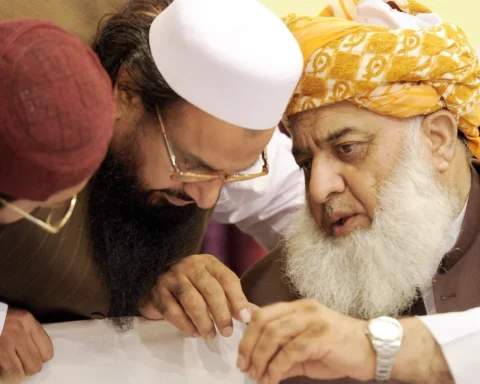
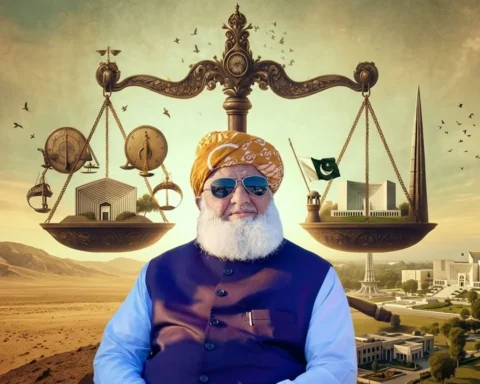
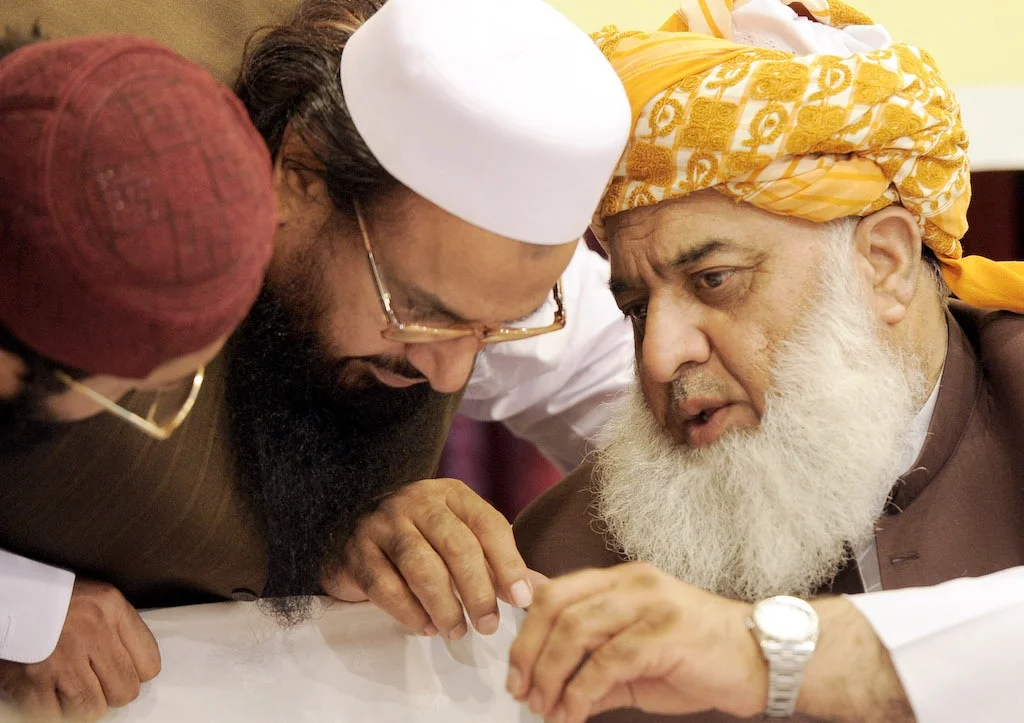
The recent remarks by JUI F chief Maulana Fazlur Rehman, delivered at a public gathering in Kasur, have triggered a storm that goes far beyond a routine political controversy. When a senior political leader publicly reduces the sacrifice of soldiers to the transactional logic of salary and employment, the nation has every right to respond, not with anger alone, but with the full weight of facts.
And the facts are sobering.
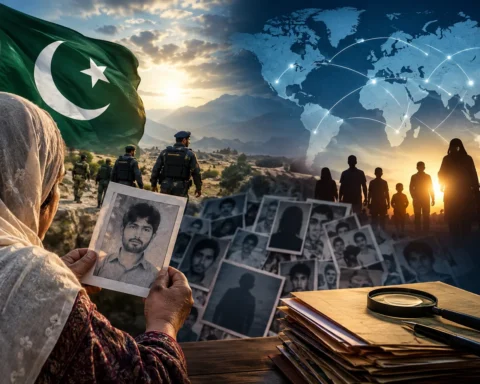
According to the Pakistan Institute for Conflict and Security Studies (PICSS), July 2026 became the deadliest month of the year, with 112 security personnel among 205 people killed, while over 401 khawarij and terrorists were eliminated. Security personnel deaths in Balochistan alone surged by a staggering 933 percent in a single month, from six in June to 62 in July. In total, the first seven months of 2026 recorded 2,786 deaths linked to terrorist violence and counter terrorism operations. The average monthly martyrdom of security personnel has climbed from 56 in 2025 to 62 in 2026.
These are not statistics. These are sons, fathers, brothers. Each number is a family whose world collapsed in a moment.
Meanwhile, the Inter Services Public Relations (ISPR) reported that Pakistan’s defence forces have conducted over 40,000 intelligence based operations over the past five years, averaging 194 operations every single day. In 2026 alone, by July’s end, 303 Pakistan Army soldiers and 194 law enforcement officials had given their lives. This is not a force sitting comfortably behind a paycheck. This is an institution bleeding for a country still finding its feet.
It is against this backdrop that Maulana Fazlur Rehman’s remarks must be judged, not through the lens of political rivalry, not through the filter of who is in power and who is not, but through the lens of what this nation is actually going through.
Maulana sahib is not a newcomer to politics. He is among the most experienced voices in Pakistani public life, with decades of parliamentary presence and a deep understanding of how states function and how wars are waged. His own party and supporters have suffered the terrible violence of terrorism. That lived experience should have sharpened, not dulled, his appreciation for the human cost of this ongoing war against khawarij and terrorists.
What makes the situation more troubling is the broader pattern it reflects, a tendency among some political figures to weaponize national security discourse when it serves immediate political purposes, and to quietly step back when it does not. The security challenge in Khyber Pakhtunkhwa and Balochistan is real, deep, and worsening. A 34 percent rise in terrorism was recorded across 2025, with over 95 percent of attacks concentrated in these two provinces. Counter terrorism operations are being intensified precisely because the threat demands it.
In Balochistan, political leadership across the spectrum, including opposition parties, has understood this reality. Despite genuine political differences, there has been a conscious effort to maintain a united front on matters of national security. The opposition leader, the BNP Menjal parliamentary group, and other parties have recognised that peace is a prerequisite for everything else, development, economic stability, and the basic dignity of ordinary citizens. This is responsible politics. This is what mature democratic behaviour looks like under fire.
Contrast this with a political posture that questions the state’s counter terrorism strategy, refuses cooperation with civil defence arrangements, and publicly undermines military institutions, all while the khawarij and terrorist groups responsible for mass civilian deaths continue to operate. Such a posture does not strengthen democracy. It provides oxygen to those who want to see the state fail.
The government’s response, including the Prime Minister’s continued offer of dialogue, represents the right approach. Political disagreements must find their resolution in parliament, in courts, and in the democratic arena. No one is asking political leaders to abandon criticism. Accountability of the executive is a constitutional right and a democratic necessity. But there is a vast difference between holding a government accountable for policy failures and publicly delegitimising the very institutions that stand between ordinary Pakistanis and the violence that killed over 2,700 people in the first seven months of this year alone.
Maulana Fazlur Rehman’s political legacy deserves better than this. A man of his standing, representing communities that have borne enormous suffering at the hands of terrorists, should be among the loudest and most consistent voices demanding that the state be given every political and moral support to finish this fight. Instead, the remarks at Kasur have handed critics a gift and left families of martyrs with a fresh wound.
Pakistan’s war against khawarij and terrorism is not a political football. It is not a tool to gain leverage, to embarrass a government, or to signal alignment with a segment of the electorate. It is a life and death struggle being waged by young men and women in uniform, on mountains, in valleys, in cities, who ask for nothing in return except that their country stand with them.
Political differences are the heartbeat of democracy. But national security is the spine. Bend it too far and everything collapses, including the very political freedoms that allow Maulana sahib, or anyone else, to speak freely at all.
The numbers don’t lie. The sacrifices are real. And the nation deserves leadership that rises to meet this moment, not one that turns its pain into political ammunition.