
Pakistan’s finance ministry has good news this year, and it keeps repeating it. Reserves are up. Inflation is down. The IMF keeps approving reviews. Read the headlines and you would think Islamabad has turned a corner. Look closer, and the picture gets more complicated and more interesting, because it says something about what “stability” actually means for a country like Pakistan.
The Numbers Behind the Headlines
In May, the IMF’s Executive Board completed the third review of Pakistan’s Extended Fund Facility and the second review of its Resilience and Sustainability Facility, releasing roughly $1.3 billion. The Fund credited Islamabad with maintaining stability despite what it called shocks from the Middle East war. Foreign exchange reserves climbed to $16 billion by the end of 2025, up from $14.5 billion six months earlier.
That is a real improvement. It is also Pakistan’s 25th IMF program since 1958. The Fund’s own conditions this time include broadening the tax base, reforming state-owned enterprises and fixing an energy sector that keeps losing money. These are not new demands. Pakistan has heard versions of them from the IMF for three decades.
Remittances: A Lifeline With a Catch
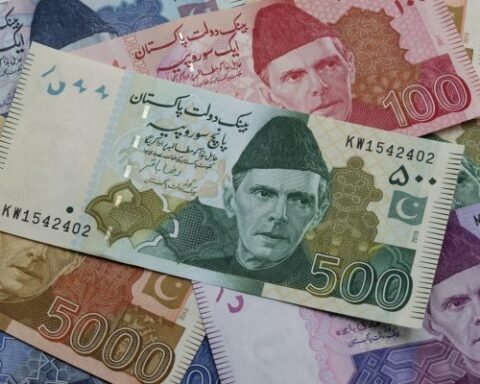
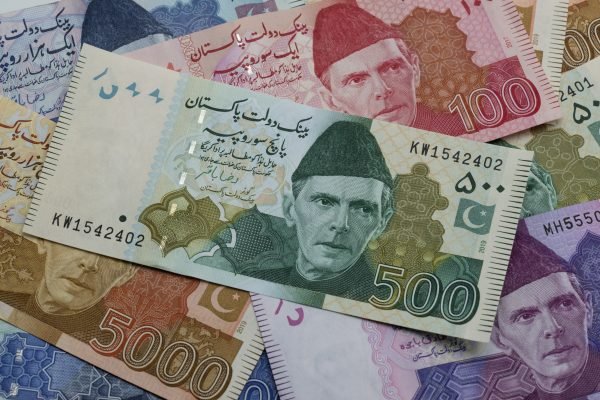
The other pillar holding up Pakistan’s external account is not government policy at all. It is overseas Pakistanis. Workers abroad sent home a record $41.6 billion in remittances during fiscal year 2026, the highest annual inflow in the country’s history and, for the first time, more than Pakistan earned from all its merchandise exports combined. In May alone, remittances hit an all-time monthly high of $4.25 billion, driven by Eid transfers from Saudi Arabia, the UAE and the Gulf.
Even Pakistan’s own financial press is uneasy about celebrating too hard. A Business Recorder editorial put it bluntly: remittances have nearly doubled in seven years while exports have “struggled to escape a narrow range,” exposing what it called a profound imbalance in the country’s external account. An economy where a taxi driver in Dubai or a nurse in Riyadh is doing more for the balance of payments than the domestic manufacturing sector is not a resilient economy. It is a dependent one, just dependent on its own diaspora instead of a lender.
What This Looks Like From Islamabad
For ordinary Pakistanis, this isn’t an abstract debate about macroeconomic indicators. It’s the difference between a government that can plan five years ahead and one that is negotiating its next disbursement every few months.
Pakistani officials will tell you, correctly, that the country has been unlucky as much as mismanaged: floods that displaced millions, a regional war on its western border, and now the fallout from the 2026 Iran conflict next door, all landing on an economy that had little room to absorb shocks. That context matters. But it does not change the underlying arithmetic. A government that relies on remittances to cover an export gap, and on IMF disbursements to cover a fiscal gap, has outsourced two of the three levers a state normally pulls to manage its own economy.
The China-Pakistan Economic Corridor was supposed to be the answer to the export half of that equation, a chance to build the manufacturing and energy base that could eventually compete with, not depend on, cheap Gulf labor migration. A decade in, an Institute for Security and Development Policy factsheet finds the corridor’s second phase is only now pivoting toward special economic zones and the kind of value-added production that could shift that balance. That pivot is years behind schedule.
The Path to Real Autonomy
None of this means Pakistan’s recent stabilization is fake. Reserves that were nearly depleted in 2023 are rebuilding. Inflation that hit 38% is now contained. Those are genuine achievements, and they matter to a population that lived through the alternative.
But stability bought with remittances and reform conditions is rented, not owned. The real test of Pakistan’s economic diplomacy in the years ahead is not whether it can keep passing IMF reviews and it has done that before and still ended up back at the Fund’s door. It is whether it can convert this breathing room into an export base and a tax system that no longer needs either lender.