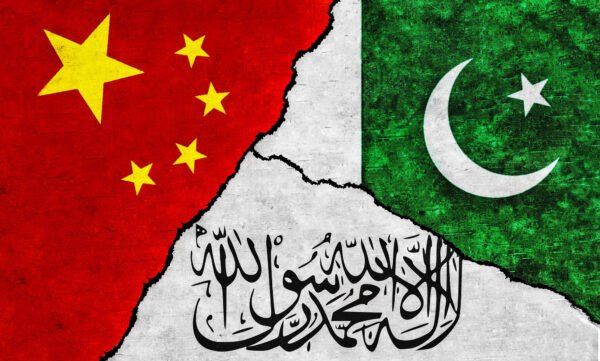

South Asia’s smaller states have grown used to watching the region’s larger dramas from the wings, India and China across the Himalayas, India and Pakistan across Kashmir. This year, a new front opened that deserves Colombo’s attention for what it reveals about the limits of great-power diplomacy, even when that power is Beijing. Since February, Pakistan and Afghanistan have fought what Islamabad’s own defence ministry called “open war”, the worst fighting between the two since the Taliban returned to power in 2021. China has spent the months since trying to broker peace between them. The results say as much about the boundaries of Chinese influence as they do about the conflict itself, a lesson worth studying in a region where several small states, Sri Lanka included, have staked their economic futures on Beijing’s goodwill.
Pakistan’s case
Islamabad’s frustration did not emerge overnight. Pakistani officials point to more than 660 security personnel and 580 civilians killed in 2025 alone in attacks attributed to Tehreek-e-Taliban Pakistan (TTP), a toll that has continued into this year with incidents such as the Bajaur checkpoint bombing in February and a raid on a Karachi paramilitary base in June that prompted fresh strikes on Afghan border provinces. The Pakistani position, articulated repeatedly by its foreign ministry, is that the Afghan Taliban will not act against a group it regards as an ideological sibling, forcing Islamabad into unilateral strikes it insists are acts of self-defence rather than aggression.
That position has come at real cost to Pakistan’s international standing. A March strike on a Kabul drug rehabilitation centre killed 269 civilians, a toll serious enough that Amnesty International has called for it to be investigated as a possible war crime. Islamabad has paired its military campaign with closed borders and the deportation of close to a million Afghan refugees, moves widely criticised by rights groups but which reflect, from Pakistan’s vantage point, a security establishment convinced that patience has been exhausted and that only sustained pressure: military, diplomatic, and economic will force change in Kabul’s calculus.
Beijing steps in, carefully
China’s response has been measured rather than muscular. Foreign Minister Wang Yi has held repeated phone calls with counterparts in both capitals, urging restraint and dialogue over force, while special envoy Yue Xiaoyong has conducted shuttle diplomacy between Islamabad and Kabul, including low-profile talks hosted in Urumqi since April. Pakistani officials have credited a direct message from President Xi Jinping with helping secure the fragile calm that has held, imperfectly, since March.
China’s motives are not altruistic; they are structural. Chinese nationals and CPEC infrastructure have themselves been targeted by the TTP and Baloch militant groups, and Beijing worries about the East Turkestan Islamic Movement finding safe harbour along the Afghan frontier. But China also needs Kabul’s cooperation to ever extend CPEC into Afghanistan, a long-held ambition that predates the current crisis. That dual dependency explains why Beijing has refused to apportion blame publicly, insisting instead that both sides resolve differences through talks rather than force, a posture of studied neutrality that has kept China’s channels open with both governments, but has also left some observers questioning how much real leverage Beijing actually holds over either.
Why this matters beyond South Asia’s mainland
For Sri Lanka, the episode is instructive on two counts. First, it is a reminder that Chinese diplomatic capital, however substantial, is not infinite or unconditional; Beijing calibrates its interventions according to its own competing stakes, not the priorities of the parties seeking its help. Second, it illustrates a pattern smaller states across the region would do well to internalise: great powers broker calm far more readily than they broker justice. China has succeeded in reducing the intensity of fighting along the 2,600km Afghanistan-Pakistan frontier. It has not, and may not be able to, deliver the dismantling of militant sanctuaries that Pakistan considers the only acceptable outcome.
Colombo, like Islamabad, has learned to court Beijing’s investment and diplomatic backing while retaining its own room for manoeuvre, a balancing act that has become something of a regional habit from Kathmandu to Malé. The Pakistan-Afghanistan crisis offers a case study in what that balancing act looks like under real strain: useful, stabilising, but ultimately bounded by the mediator’s own interests. As South Asia’s smaller states continue to weigh their relationships with both Beijing and New Delhi, that distinction between a broker who can calm a conflict and one who can resolve it is not an academic one. It is the difference, this year, between a ceasefire and a settlement.