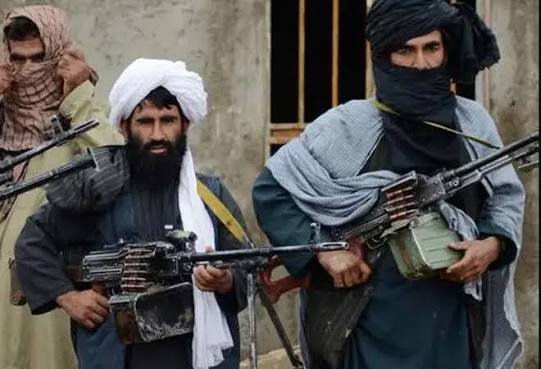

Zabihullah Mujahid’s latest interview with Al Arabiya English was clearly intended to project confidence. Instead, it highlighted the widening gap between the Taliban’s public messaging and the realities surrounding Afghanistan. Mujahid warned that any Pakistani military action inside Afghanistan would receive a “crushing response,” rejected allegations that Afghan territory is being used by militants against Pakistan, and described the TTP and Baloch militant problem as essentially Pakistan’s internal affair. At the same time, he called for dialogue and welcomed a possible Saudi role in easing tensions.
Afghanistan, like Pakistan, has a legitimate interest in protecting its sovereignty. But sovereignty also creates responsibilities. A government cannot demand absolute respect for its borders while dismissing credible allegations that armed groups are exploiting territory under its control to attack a neighbour. Pakistan’s own security failures, extremist recruitment and domestic militant networks are undeniably part of the problem. But acknowledging that reality does not automatically erase the cross-border dimension.
The United Nations’ assessments make this point particularly difficult to ignore. A February 2026 report of the UN Analytical Support and Sanctions Monitoring Team said regional countries remained concerned about terrorist groups in Afghanistan and that no member state supported the de facto authorities’ assertion that no terrorist groups were present there. More specifically, the report stated that the TTP had been accorded “greater liberty and support” by the de facto authorities and linked this environment with increased attacks against Pakistan. The Taliban has rejected these findings, but the issue can hardly be reduced to Islamabad making accusations against Kabul.
This also raises uncomfortable questions about commitments made before the Taliban returned to Kabul. Under the 2020 Doha Agreement, the Taliban undertook to prevent groups or individuals, including Al-Qaeda, from using Afghan territory to threaten the United States and its allies. International diplomacy subsequently emphasized the broader principle that Afghan soil should not be used by terrorist organisations to threaten other countries. If Kabul wants its assurances to carry weight, they require verifiable action, meaningful intelligence cooperation and visible disruption of militant networks. Simply declaring terrorism to be Pakistan’s internal problem does not answer the evidence.
Mujahid’s military rhetoric is equally unhelpful. Pakistan and Afghanistan have already experienced serious border tensions, strikes and retaliation. The lesson should not be that either side needs louder threats. Escalation between two neighbouring countries connected by communities, trade routes and overlapping security challenges can become costly very quickly. Pakistan describes its operations as responses to militant threats, while the Taliban portrays cross-border strikes as violations of Afghan sovereignty. Those competing positions should be judged through evidence and international law, not slogans. Talk of a “crushing response” also sits awkwardly beside Mujahid’s simultaneous call for dialogue and stronger intelligence-sharing mechanisms.
The Taliban’s attempt to project an uncomplicated governance success story faces other contradictions as well. The United Nations has acknowledged that the reduction in nationwide conflict since 2021 has produced some security benefits. That should not be ignored. Yet the same UN assessment says continuing terrorism concerns and restrictions on women and girls remain major obstacles to Afghanistan’s recovery and international reintegration. In September 2026, the UN Secretary-General again expressed deep concern over policies affecting women’s education, employment and participation in public life. UNAMA has also documented detentions of journalists and concerns about restrictions on media freedom.
Economic realities are similarly mixed. The World Bank reported in May that Afghanistan’s economy was showing resilience, with real GDP estimated to have grown by 4.8 percent, but warned that living standards were falling. Population pressures, returning Afghans, weak investment, food insecurity and declining per-capita income continue to weigh heavily on ordinary households. Meanwhile, Transparency International gives Afghanistan a score of just 16 out of 100 on its latest Corruption Perceptions Index, placing it 169th among 182 countries. These indicators do not establish every accusation directed at Taliban officials, but they certainly challenge any attempt to present governance as beyond serious scrutiny.
The contradiction becomes even sharper when religion is invoked to defend restrictions on women. Afghanistan remains the only country where girls and women are effectively excluded from secondary and higher education nationwide. This position is hardly an uncontested interpretation of Islam. The Organisation of Islamic Cooperation has repeatedly called for girls’ education to be restored, while its member states have argued that restrictions on education and employment damage the image of Islam rather than defend it.
The deeper issue, therefore, is credibility. The Taliban seeks the standing and protections associated with sovereign government while facing persistent international concerns over militants operating from Afghan territory. It presents itself as a source of stability while restrictions on women, journalists and civic life continue to draw criticism. Durable legitimacy cannot be manufactured through interviews, slogans or forceful declarations. It requires accountable institutions, transparency and measurable performance.
Pakistan, meanwhile, must continue addressing the domestic drivers of militancy through policing, intelligence, border management and political stability. That responsibility cannot simply be outsourced to Kabul. But Afghanistan’s rulers cannot outsource their responsibilities either by describing every cross-border security threat as somebody else’s internal problem.
The way forward is not theatrical threats from either side. It is verifiable counterterrorism action, structured intelligence cooperation, credible border mechanisms and serious diplomacy. Ultimately, the Taliban’s credibility will be judged not by how forcefully its spokesperson speaks, but by realities on the ground: whether militant networks are constrained, commitments are honoured, Afghans gain greater rights and opportunity, and Afghanistan contributes to regional stability rather than recurring insecurity.