
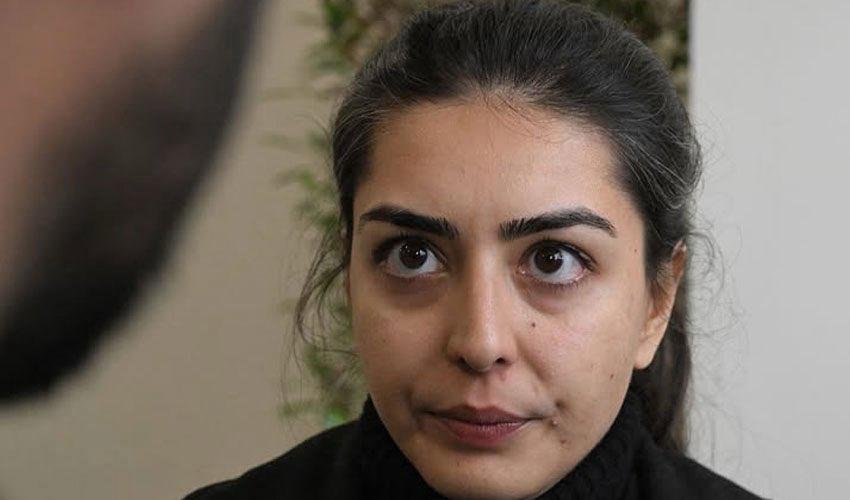

Shireen Mazari’s reaction to the latest Supreme Court proceedings involving her daughter, Imaan Mazari, invites a larger question about political consistency in Pakistan. On September 17, the Supreme Court suspended the 17-year sentences awarded to Imaan Mazari and her husband, Hadi Ali Chattha, in a case concerning social media posts and granted them bail pending further adjudication by the Islamabad High Court. Shireen Mazari welcomed the development, telling Reuters that she was “grateful to the Supreme Court for finally delivering justice.” The relief was significant, but it was interim relief rather than a final acquittal.
There is nothing unusual about a mother welcoming legal relief for her daughter. Nor should anyone be criticised merely for exercising the constitutional right to approach a superior court. The uncomfortable question arises because of the striking contrast with Shireen Mazari’s own language about the Supreme Court when its decisions went against her political camp. In April 2022, after the Supreme Court set aside the deputy speaker’s ruling and restored the National Assembly, Mazari publicly described the decision as a “judicial coup.”
She argued at the time that the court had interfered with parliamentary supremacy and sharply questioned the legitimacy of its intervention
That contrast deserves attention because institutional credibility cannot logically depend on whether the latest judgment benefits one’s political family, party or ideological allies. A court cannot reasonably be treated as an instrument of judicial subversion on Monday and celebrated as the final guardian of justice on Friday merely because the identity of the beneficiary has changed. Politicians and activists are entirely entitled to criticise judicial reasoning. Courts are not beyond scrutiny. Judgments may be challenged, reviewed and subjected to vigorous public debate. But criticism acquires credibility only when the standard being applied remains broadly consistent.
The same principle should apply to the present case. Imaan Mazari and Hadi Chattha were sentenced by an Islamabad sessions court in January to 17 years’ imprisonment on multiple charges under the Prevention of Electronic Crimes Act. They denied the allegations, while rights organisations and UN experts raised concerns about aspects of the proceedings. Their lawyers pursued remedies before the Islamabad High Court and Supreme Court. The IHC proceedings had faced delays, including a September 8 hearing that was adjourned after the prosecution representative was unavailable.
The Supreme Court subsequently suspended the sentences and granted bail until the IHC decides the matter
Those procedural facts matter. The Supreme Court did not finally declare the convictions unlawful, nor did it erase the case. It provided interim relief while the underlying legal proceedings continued. Indeed, hours later, Imaan Mazari and Hadi Chattha were sent to judicial remand in a separate case after an anti-terrorism court rejected a police request for physical remand. Presenting the Supreme Court order either as complete vindication or as proof of judicial wrongdoing would therefore go beyond what the ruling itself established.
There is nevertheless a legitimate institutional issue beneath the political argument. Pakistan’s justice system suffers from delays, uneven access and a serious public confidence deficit. The World Justice Project’s 2025 Rule of Law Index ranked Pakistan 130th out of 143 jurisdictions overall, not 139th as some social-media commentary has claimed. Pakistan stood 129th in civil justice and 101st in criminal justice. The same assessment identified delays and concerns about improper influence among the broader challenges affecting justice systems, including Pakistan’s. These figures should encourage institutional reform rather than become ammunition for attacking particular judges whenever a decision proves politically inconvenient.
This is also why perceptions of unequal access must be addressed carefully. When politically connected lawyers, activists or public figures obtain urgent hearings, ordinary litigants who wait years for cases to move naturally ask whether the system responds equally to everyone. That concern should not be converted automatically into an accusation that a particular judge acted improperly. There must be evidence before such a conclusion is drawn.
But courts themselves have an interest in ensuring that case-management practices are transparent enough to show that urgency is determined by legal circumstances rather than status
Political actors carry an equal responsibility. If judicial independence is valuable, it remains valuable when a judgment hurts one’s interests. If due process matters, it must also matter for opponents. If delays are unacceptable, they should be unacceptable whether the litigant is a celebrated activist or an unknown citizen appearing before a district court. Selective constitutionalism ultimately damages everyone because every political faction eventually finds itself outside government and in need of the same institutions it once dismissed.
Shireen Mazari’s differing reactions in 2022 and 2026 therefore illustrate something larger than one family or one case. Pakistan’s democratic culture will remain fragile while institutions are judged primarily through the prism of political outcomes. Courts should certainly be scrutinised, but scrutiny should rest on law, procedure and evidence. Politicians should challenge judgments where necessary, but they should apply standards they would be willing to defend when the political tables turn.
Justice cannot sustainably mean “justice” when the verdict favors us and “judicial conspiracy” when it does not. The court is the same institution, the Constitution remains the same framework, and the principle of equal justice cannot change with the identity of the litigant. The real measure of commitment to the rule of law begins precisely when the decision is one we do not like.