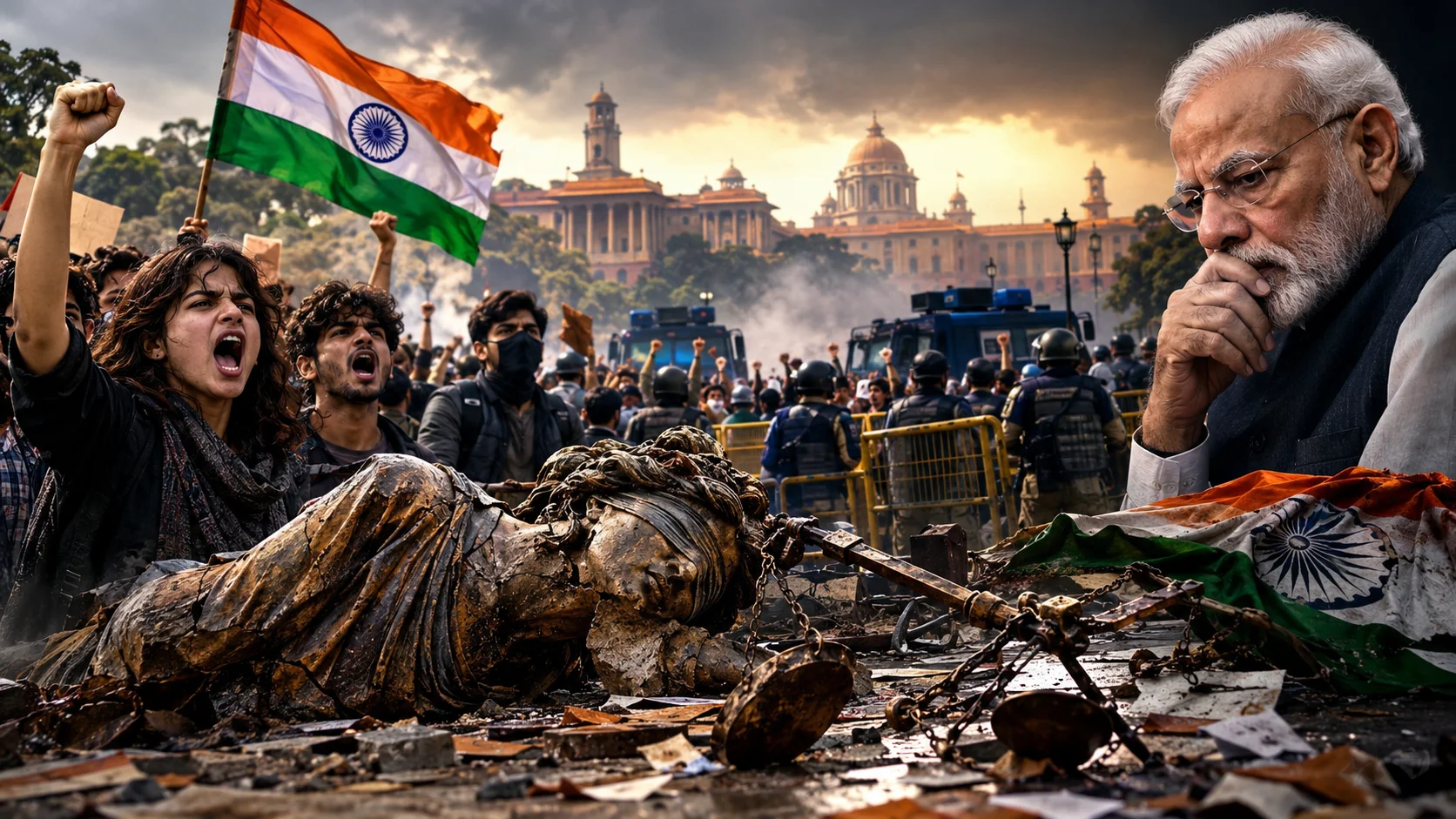

There is a particular cruelty in watching a nation dismantle its own founding promise, not dramatically, not with a single definitive rupture, but slowly, methodically, feather by feather. That is what is happening to India today. And the numbers, the protests, the barricades, and the silence of the man at the top all confirm it.
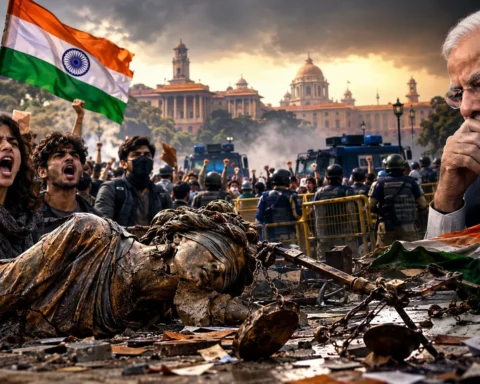
This October, Indian democracy resembles a plucked chicken, stripped of its plumage as protesters who call themselves “cockroaches” swarm the streets. The metaphor is almost too apt. These are not fringe voices. These are young Indians, students, ordinary citizens, who have simply stopped pretending that everything is fine.
What triggered this particular wave? The answer reveals everything about how power is being consolidated in New Delhi. A nationwide voter revision that started last year removed over 130 million names, more than the population of Japan, from voter rolls, including 28 million listed as deceased, 63 million as relocated, and 30 million who simply could not be traced. Critics, opposition leaders, and now even internal Election Commission voices have raised the alarm. Sporadic protests erupted across India after The Indian Express reported that the Election Commissioner’s own two deputies had raised serious internal concerns about the voter list revision process, registration procedures, and digital systems.
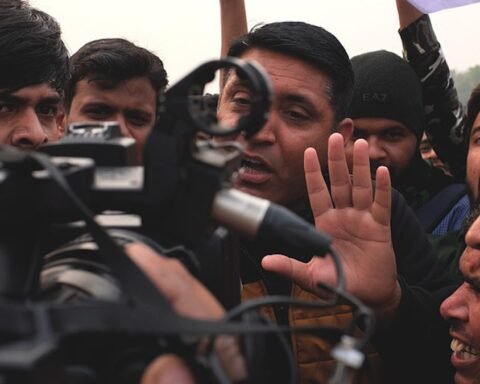
The government’s response? Authorities deployed a sweeping security crackdown across New Delhi and detained thousands of protesters as India’s youth
Cockroach movement sought to intensify a nationwide campaign.
Thousands of police officers were stationed across the city, mobile internet services were shut down, dozens of urban railway stations were closed, and loudspeakers warned that gatherings of five or more people were banned in parts of New Delhi, sweeping security restrictions rarely seen in the capital.
Let that sink in. In the world’s self declared largest democracy, a gathering of five people became illegal to stop young citizens from demanding accountability over their right to vote.
Following Saturday’s protests, authorities launched a sweeping security crackdown, detaining more than 2,000 protesters, including several opposition lawmakers. The Cockroach Janta Party’s founder was detained before he could even disembark from a flight. The protests are widely seen as a reprise of CJP’s mass mobilisation in July, which led to the education minister stepping down over an examination scandal, a rare but telling concession that these movements carry real weight.
This did not arrive suddenly. The V Dem Electoral Democracy Index now ranks India 106th, with a score of 0.38, the lowest since Indira Gandhi’s Emergency rule of 1975, when the constitution itself was suspended. Freedom House scores India at a historic low of 62 out of 100. These are not the assessments of hostile foreign powers; these are the methodical conclusions of political scientists tracking the erosion of institutional checks, judicial independence, press freedom, and minority protections. Under Modi, problems have accumulated like barnacles on the side of a ship, and criminal behaviour has become the organising principle of the ruling party.
The economic picture compounds the political rot. Youth unemployment reached 16.2% by mid 2026, a devastating figure for a country that stakes its global ambitions on a demographic dividend. Millions of young Indians were told that Hindutva would deliver prosperity along with pride. They are still waiting. Meanwhile, the Starlink regulatory standoff brought an unexpected commentator into the picture: Elon Musk publicly questioning whether a top industrialist was effectively India’s “real boss”, a moment that crystallised what many already suspected about the relationship between state power and crony capitalism.
The suffering of minorities is not incidental, it is structural. The Citizenship Amendment Act discriminates on religious grounds. “Bulldozer justice” has demolished Muslim homes and businesses without due process, celebrated as governance by its architects. And in Manipur, an ethnic bloodbath unfolded over two years with 260 to 306 confirmed deaths, over 360 churches destroyed, and between 43,000 and 60,000 people still displaced, while the Prime Minister maintained a public silence that felt less like statesmanship and more like tacit endorsement. Anti minority hate speech events logged 1,318 incidents in 2025 alone, with 98% targeting Muslims. These are not statistics. These are people’s lives, communities, futures.
Kashmir remains the clearest symbol of what Hindutva governance means in practice. The unilateral revocation of Article 370 was followed by military lockdowns, communication blackouts, and the systematic silencing of Kashmiri political voices, an entire people stripped of their constitutional status overnight and told to be grateful for it.
A lot of feather plucking went on for twelve years before Modi found himself cornered, retreating behind barricades, facing the wrath of students for whom the slow erosion of democracy has left little to lose and even less to fear.
The youth protests have yet to coalesce into a coherent political alternative, and that is an honest limitation. Street pressure alone rarely dismantles entrenched power structures without organised political channels to carry it forward. But what the Cockroach movement has already achieved matters enormously: it has shattered the culture of fear, broken a long standing taboo against openly challenging Modi, and demonstrated convincingly that this government’s carefully constructed image of invincibility is fiction.
The fractures are real: economic frustration, electoral manipulation, minority persecution, crony capitalism shielding the few at the cost of the many, and a generation with nothing left to lose taking to the streets.
The “cockroaches” have laid bare the hollowed out democracy that India holds up to the world as exemplary.
History does not announce its turning points in advance. It reveals them in retrospect. When future scholars examine 2026, they will likely identify this October, youth detained at airports, internet shut down, five person gatherings banned in the capital, as the moment India’s democratic mask finally slipped too far to pull back into place.
The question is no longer whether Modi’s model is fracturing. The question is what emerges from the rubble.