
AI is not taking over the jobs of human resource management; it is instead, transforming this field it into something greater. The future of human resource management lies predominantly in human led organizations where technology evil contribute to enhancing people’s capabilities.
Similarly, Artificial intelligence (AI) is no longer a dream of the future. It is a present day reality that is currently transforming almost sectors, especially enterprise operations, and corporate competitiveness, and is meant to improve overall well being prosperity. This technological revolution has a significant impact on almost every aspect of human endeavors, and human resource management (HRM). The future will involve leveraging technology to amplify human capabilities and complement it.
The use of artificial intelligence (AI) in recruitment and selection
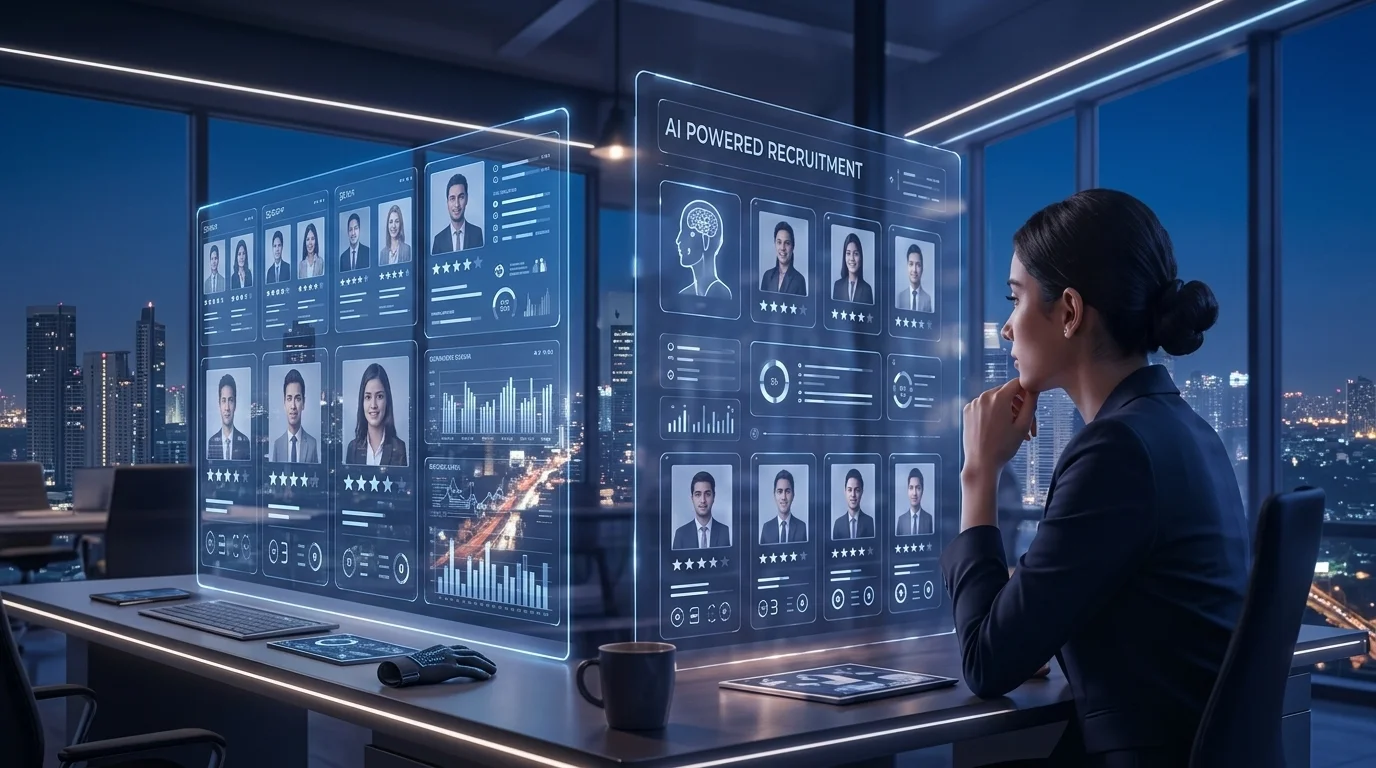
The sphere of recruitment and selection is among the primary areas where AI has already made a remarkable
impact. Various AI technologies are currently being used in this field, including catboats that help with candidate screening, interview scheduling, and even determining the best fit candidates based on specific skills and other factors. These systems are incredibly efficient, allowing recruiters to perform their duties significantly faster. It also reduces the amount of tedious paperwork involved in traditional recruitment methods.
On the other hand, predictive recruitment software is capable of analyzing data to identify the candidates most likely to be successful in a particular organization. This is essential in an era where companies are competing to attract the best talent and recruiters need to make the best choices when filling to line skilled professionals. It is worth noting, however, that while these recruitment methods are undeniably powerful, they can also be incredibly challenging since they involve advanced levels of technology and data analytics. Moreover, the software is only as good as the information it is fed, with which means that it can end up being biased if it is fed with flawed data.
The future of human resource management will involve using AI in recruitment to help get the best talent possible while avoiding the potential pitfalls that come with the technology.
In addition to recruitment and selection, artificial intelligence is being used in
“The Future of HR won’t be about choosing between humans or machines. It will be about combining the best of both.”
various other areas of human resource management. In the future, organizations will be retention, and even performance management strategies. For instance, there are already
Chabots that are capable of analyzing customer behavior and responding to their needs on behalf of businesses. Similarly, corporations can use such technologies to support their employees by engaging them in conversations and offering assistance whenever required. This can take the form of a self service portal that offers answers to the most frequently asked questions about the company. Additionally, learning technologies can be used to recommend training and development opportunities ideal for individual employees. It is evident that this approach will be crucial in the future since it allows the employees to be in charge while also supporting them. Therefore, it is safe to assume that the future of human resource management in the age of AI is all about speed and precision. Technology will play a transformative role in this field, enabling it to meet the evolving needs of the modern workplace.
AI and the Evolving Role of HR Professionals Essay
With the increased use of artificial intelligence in the workplace, the role of human resource professionals will significantly change. Historically, the work of HR professionals has been largely administrative, including employee records management, recruitment and screening processes, interviews, and answering employee queries. However, with the advent of AI and its ability to perform various tasks, including those that are repetitive, transactional, or require decision making, the role of HR professionals will transform. They will be able to focus on more strategic and sensitive areas that are not easily automated.
“The goal is not to replace human judgment, but to enhance it with intelligence tools that empower both organization and people.”
Some of the areas that will benefit from the use of AI in human resource management include workforce planning, where professionals can use the technology to make informed recommendations. For instance, in workforce planning, an organization can utilize artificial intelligence to read and interpret data and come up with recommendations on the type of staff that a firm may need in the future. Such an approach will be beneficial to business owners because it will enable them to remain ahead of the curve and be future ready. Another way in which artificial intelligence can be used in human resource management is to help with retention. Most organizations stand to lose a lot if they fail to retain their employees, especially in cases where the individuals being laid off are highly skilled workers. Thus, it is significant to understand the reasons why employees are inclined to quit and how their departure can be prevented.
With artificial intelligence, this information can be easily analyzed from exit surveys, retention data, and employee engagement surveys.
However, a fundamental handicap in technologies such as AI is in their lack of genuine understanding of the real world comprehension and a critical decision making with a generative common sense. It is because human lives cannot be predicted, and decisions made based on algorithms can have adverse effects, for instance, on an individual’s career, wealth, and well being. Some of the decisions that should not be left to artificial intelligence include those relating to negotiations, leadership, and managing employee relations. While algorithms can make recommendations, it is the responsibility of HR professionals to understand the context in which the suggestions are made.
Another concern with regard to the role of HR professionals and artificial intelligence is the need for reskilling. This is because as the former acquires new skills, the latter has to learn as well.
For instance, HR professionals in the future will need to have technical skills in order to work alongside technologies such as AI. The skills will be required in data science, digital business, AI, analytics, and technology management. At the same time, however, HR professionals will continue to require social skills, such as negotiating, managing, communicating, and empathizing. Therefore, it is safe to assume that future HR professionals will need to be both human and tech savvy.