

The picture of governance that has emerged from the land of Khyber Pakhtunkhwa is not only alarming but also freshens up questions that had long been buried under the dust of official records. According to a Dawn report dated October 22, 2026, over 400 employees in Swat returned to their offices after years of alleged absenteeism, 13 employees were dismissed, a government residence was vacated, and action was initiated against the allegedly politically motivated postings of 22 patwaris. These events are not mere statistics. They are a confession of a system that had been riding on the backs of the public for years.
After the imposition of Governor’s Rule and emergency in Khyber Pakhtunkhwa, the fundamental question is whether security and governance will genuinely improve, because the transfer of authority is merely an administrative step. The real test has only just begun.
The people of Khyber Pakhtunkhwa had grown weary of hearing slogans of change. Every election brought promises, every rally promised revolution, and every accusation was met with cries of conspiracy. But when the records show employees absent from government offices for months on end, when patwaris are posted through political connections, and when government residences are illegally occupied, the claim of “change” rings hollow. Despite loud claims of merit based appointments in Khyber Pakhtunkhwa, serious contradictions persisted in the transfer and posting system in practice, where senior officers were sidelined while relatively junior officers were placed in key and high ranking positions.
The question is not whether Governor’s Rule came or not. The question is: when employees drawing salaries from the taxes paid through the blood and sweat of the public simply vanish, where does accountability go? Who bears the responsibility? And if anyone dares to ask, the response is to call it political victimization. Government departments are not anyone’s personal estate. They are a public trust.
Following the imposition of Governor’s Rule, departmental action began at the KP Housing Authority, where complaints alleged that over one hundred million rupees were being disbursed every month in the name of bogus or ghost employees. This is just one example. If the entire file were opened, who knows what else would surface.
The PPP Secretary General said that the former Chief Minister’s entire focus remained on securing the release of his party’s founding chairman, and governance was neglected. This became the very reason Governor’s Rule became necessary in the province. When a Chief Minister’s priorities are rallies and protests, and governance falls by the wayside, the result is exactly what Swat’s files have revealed.
According to provincial police records, 122 police personnel were martyred and 175 were injured in the first half of 2026, far exceeding the 63 martyred and 84 injured in the same period the previous year. Terrorism related violence had already claimed the lives of 319 security personnel and 251 civilians. These figures tell a stark story: while the government was consumed by protest politics, a devastating price was being paid in blood.
The people of Swat, Shangla, Kohat, and Chitral welcomed Governor’s Rule, saying the province had finally been freed from a government believed to be facilitating terrorists, under whose watch thirteen years of unrest had continued.
Now the time has come for the promises that have been made to be fulfilled. The Prime Minister has formed a ten member committee to improve governance in Khyber Pakhtunkhwa, tasked with providing policy guidelines for the province. Forming committees is easy. Delivering results is the hard part. And this is precisely the juncture where the new administration must prove itself.
The Governor of Khyber Pakhtunkhwa has made clear that the capacity of police and the Counter Terrorism Department will be enhanced, and transparency will be brought to the sectors of education, health, justice, and beyond. If these intentions translate into action on the ground, history will remember them. If not, they will join the long list of unfulfilled promises where countless earlier claims of “change” already reside.
Parliament has approved Governor’s Rule and the emergency for a period of two months, with the federal minister stating that these measures were taken to eliminate terrorists and protect the people. Two months is a short window, but a start has been made. The return of 400 employees to offices in Swat, the vacation of a government residence, and action against illegal postings of patwaris are early but significant steps.
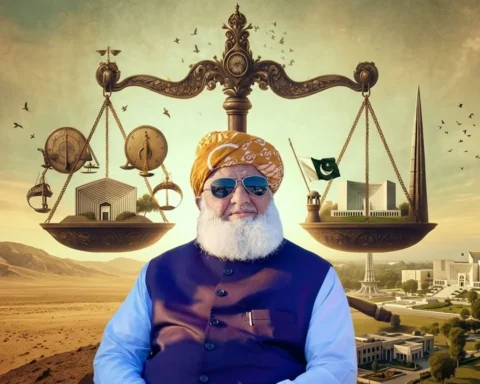
Governor’s Rule must be judged by results and the timely restoration of elected government, not by speeches and announcements. This principle should apply to every government, the last one, the current one, and the one yet to come. The scales of accountability must not tip to one side alone. Otherwise, they are not scales at all, merely a performance.
The people of Khyber Pakhtunkhwa have paid a heavy price. Instability devastated their lives, mismanagement robbed them of their rights, and political priorities blocked their development. What the province needs now is governance defined by merit, transparency, and public servants actually sitting at their desks, not reappearing after years of absence to remind us just how broken the system had become.