Something significant happened this week in the long, grinding struggle for Afghanistan’s future. The Afghanistan United Front (AUF), led by former Afghan National Army Lieutenant General Sami Sadat, announced it has surpassed 100 operations against the Taliban regime, conducting seven attacks across six provinces in a single 24 hour window. Numbers rarely tell the whole story, but this one deserves attention.
Cast your mind back to August 1, 2026. Sadat appeared in military uniform beneath the tricolour flag of the former Afghan Republic and announced the formal launch of coordinated armed operations. Many analysts were sceptical. Could an outfit headquartered in Virginia, led by an exile, actually sustain a meaningful campaign inside Afghanistan? Just three months later, 100 operations across 19 provinces have offered a partial answer. This is no longer a symbolic gesture. It is an organised, geographically dispersed military campaign.
The operational tempo alone tells a story. By September 11, AUF had conducted 54 operations claiming more than 128 Taliban members killed or wounded. By early October, that figure had grown to 68 operations across 19 provinces, with 102 Taliban killed and 45 wounded. And now the campaign has crossed the 100 operation milestone. The pace is accelerating, not slowing. That matters.
But let us be honest about what 100 operations actually represents, and what it does not. Afghanistan’s resistance landscape is deeply fragmented. Multiple groups, including the National Resistance Front, the Afghanistan Freedom Front, the National Independence Front, and newer outfits, are all operating separately, with different constituencies, patrons and political ambitions. The Long War Journal noted in September that the AUF’s operations were predominantly ambushes and targeted assassinations of lone Taliban members, significant as pressure tactics, but not yet the kind of sustained territorial challenge that would shake Taliban control at the institutional level.
Analysts from the Lowy Institute have put it plainly: Afghanistan does not have a unified armed resistance so much as a collection of armed groups operating under ambitious leaders with divergent aims. That fragmentation is the resistance’s central weakness, and no milestone, however impressive, resolves it overnight.
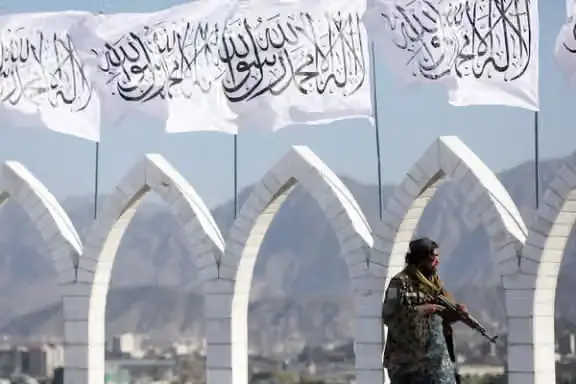
Nevertheless, the strategic significance of what AUF and the broader resistance movement is achieving should not be dismissed. What these operations are doing, above all else, is demolishing the Taliban’s most important propaganda claim: that they have restored security and stability to Afghanistan after decades of conflict. More than five years after their return to power, the Taliban regime still cannot monopolise violence or eliminate armed opposition across the country. Resistance groups claimed 119 attacks in 26 of Afghanistan’s 34 provinces through 2026. That geography undermines the Taliban’s narrative at a fundamental level.
The AUF’s Pashtun identity adds a particularly important dimension. For years, the Taliban framed all resistance as a narrow Tajik phenomenon, rooted in the Panjshir valley and the north. Sami Sadat is Pashtun. His front’s social base is predominantly Pashtun. When the resistance begins operating in Kandahar, Helmand and other traditional Taliban heartlands, that framing collapses. A fatwa issued by a group of Afghan Islamic clerics questioning the
Taliban’s religious legitimacy, published in support of AUF’s campaign, further erodes the ideological scaffolding the regime has leaned on.
The Taliban’s crisis is not purely military. It is political and moral in character. Five years of repressive rule have generated a legitimacy crisis that no amount of coercive control can fully paper over. Afghan researchers Abbas Farasoo and Nematullah Bizhan have noted that while the Taliban still controls territory and state institutions, the political failure has not yet translated into a crisis of power within the regime itself. The cracks, however, are visible. Internal leadership feuds between isolationist hardliners in Kandahar and relative pragmatists in Kabul have intensified. Leaked audio indicating internal warnings of collapse from discord has circulated widely. The regime that once projected monolithic confidence increasingly projects anxiety.
Meanwhile, the human cost of Taliban misrule continues to mount. According to UN estimates, approximately 21.9 million Afghans, roughly 45 percent of the population, require humanitarian assistance in 2026. The Taliban lacks the resources to address hunger, unemployment and the livelihood crisis, remaining dependent on foreign assistance while simultaneously alienating the international community through its draconian policies on women’s education and public life. This is not the profile of a regime consolidating power. It is the profile of a regime consuming itself.
For the AUF specifically, the road ahead is demanding. Sustaining a campaign from the diaspora requires resources, internal discipline and, critically, the ability to build genuine roots within Afghan communities rather than remaining a formation of exiles striking from beyond the border. Sadat has been clear that his forces are not seeking foreign troops, but are asking for support from the international community. The group’s office in the United States, combined with Sadat’s trusted relationships with Western military institutions, suggests some form of tacit backing, though its extent remains unconfirmed.
What the AUF’s hundred operations ultimately demonstrate is something simpler and more important than any tactical count. They demonstrate persistence. They demonstrate that five years of Taliban brutality have not extinguished the will of Afghans to resist. They demonstrate that the regime’s claim to have ended Afghanistan’s wars was always a fiction. And they demonstrate that the international community’s inclination to treat the Taliban as a fait accompli worthy of eventual recognition requires urgent reassessment.
Afghanistan’s story is not over. The Taliban’s iron grip is cracking, slowly, unevenly, without any guarantee of what comes next. But it is cracking nonetheless. A hundred operations is not victory. It is a reminder that the people of Afghanistan have not accepted their fate, and that they are not willing to.