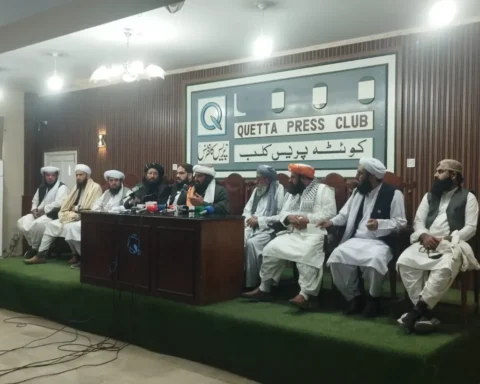
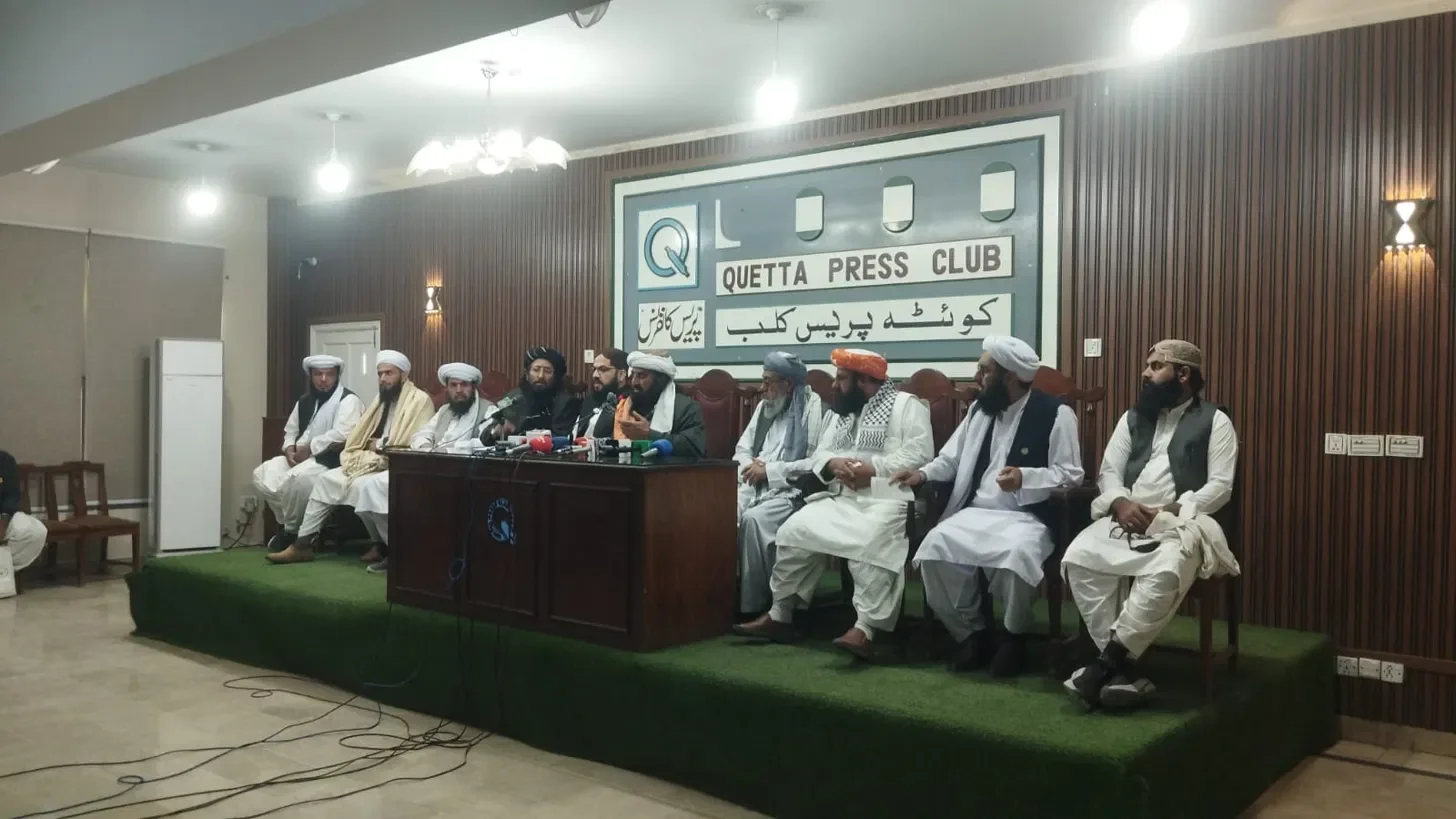

That photograph from the Quetta Press Club says a great deal. Dozens of scholars, seminary administrators and religious leaders are seated in a single row, and the message is one: madrasas are not the property of any political party. The joint declaration by over a hundred ulema of Balochistan is not merely a news event. It is the beginning of a question that had long been suppressed beneath the surface of our religious and political landscape.
The question is direct and unambiguous: are religious madrasas genuinely independent educational institutions, or have they become an effective instrument in the hands of a political force?
The Old Relationship Between Madrasas and Politics
The relationship between madrasas and politics in Pakistan is not new. Experts believe that the madrasa registration issue has been used by certain religious political parties to consolidate their control over these institutions, strengthen their political constituency, and resist state regulation. This is a serious charge, and evidence for it exists.
JUI F has long drawn strong political support in Pashtun areas of Khyber Pakhtunkhwa and Balochistan through its madrasa network. This network is not merely a collection of religious schools. It is a vast institutional structure connected to the lives of millions of students, thousands of teachers and countless families. When this structure is mobilised for political purposes, students unknowingly become part of someone else’s political game.
The press conference at Quetta Press Club in November 2026 is a direct response to this situation. Leaders like Dr. Hafiz Allaudin Sarang and Qari Mehrullah stated in plain words that madrasa students would not be allowed to become anyone’s political “fodder.” The phrase is bitter, but it conceals a painful truth.
The Registration Dispute and Its Politics
In May 2026, JUI F’s provincial leadership issued a stern ultimatum to the Balochistan government over the Madaris Bill, making clear that the matter of seminaries was a “red line” for them. JUI F members in the provincial assembly warned that if action against seminaries did not stop, they would “bring down the government.”
This is a clear example of political pressure, but the question is whether the genuine interests of madrasa students were actually part of that pressure. According to UNICEF figures, approximately 26.2 million children in Pakistan remain out of school, giving the country the world’s second largest out of school population. The gap between madrasa education and modern knowledge has also affected the economic futures of these children.
Political parties speak of protecting madrasas, but are they equally active in providing madrasa students access to computers, modern sciences and employment opportunities? That is the question our political and religious leaders will have to answer.
The Scholars’ Voice and Its Significance
This vast madrasa network is organised under five major federations, representing the Deobandi, Barelvi, Ahl e Hadith, Jamaat e Islami affiliated and Shia schools of thought. This diversity is itself proof that no single political party can claim to represent all madrasas.
The gathering of over a hundred ulema at the Quetta press conference is a living portrait of that diversity. Among them were individuals affiliated with JUI F and leaders from Jamiat Nazriati as well. This unity signals that voices are rising from within the madrasa world itself, voices opposed to political exploitation.
Rather than dismissing these voices, it is necessary to hear them. Disagreement within religious circles is not a weakness. It is a sign of intellectual health.
What Is the Real Question?
The debate is not whether Fazlur Rehman or any other leader is good or bad. The debate is about what the actual role of religious madrasas ought to be.
Madrasas are centres of Quranic and Sunnah instruction, preservation of scholarly tradition and moral formation. The practice of using them to supply manpower for political rallies, bring students to protest sit ins, or serve as leverage at negotiating tables needed to be challenged, and that challenge is now coming from within the religious community itself.
The real debate between the state and madrasas is about granting these institutions genuine autonomy while also ensuring they do not become a vehicle for any group’s or party’s vested interests.
The Way Forward
The Quetta press conference is a beginning, not an end. The next step should be for ulema of all schools of thought to collectively establish a shared forum, one that addresses the genuine educational and administrative challenges of madrasas, separated from political allegiance. Giving madrasa students access to modern sciences, vocational training and economic opportunity is not the responsibility of any one party. It is a duty the entire nation bears.
The state too must play its part: it must stop viewing madrasas as a “threat” and start treating them as an educational reality, building a relationship of trust with them rather than suspicion.
The scholars of Balochistan have raised a question. Now the entire nation must search for the answer together, because madrasas truly belong to no one. They are a shared inheritance of us all.