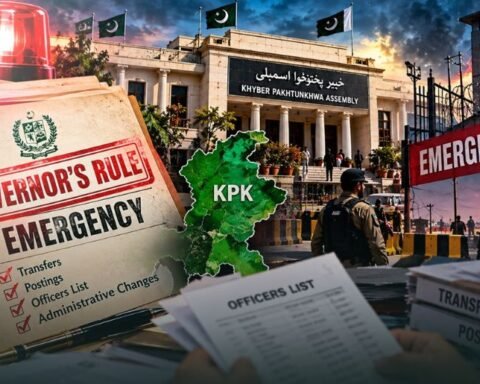
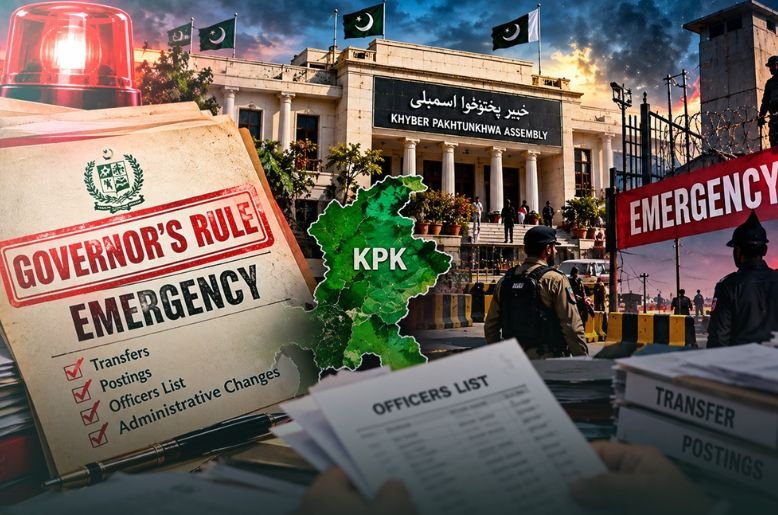

Khyber Pakhtunkhwa entered an extraordinary constitutional phase on October 11, 2026, when President Asif Ali Zardari, acting on the advice of Prime Minister Shehbaz Sharif, approved emergency measures and governor’s rule under Articles 232 and 234 of the Constitution. The federal government says the intervention became necessary because worsening terrorism, administrative weaknesses and an increasingly dysfunctional relationship between Islamabad and the provincial leadership had created a security situation that could no longer be managed through routine political arrangements. PTI, meanwhile, has rejected the action as undemocratic and politically motivated.
Whatever one’s political position, the central question should not be reduced to a dispute between the federal government and PTI. It concerns something more consequential. Can an elected provincial administration continue functioning normally when terrorism is escalating, security coordination is breaking down and law enforcement institutions are operating under severe pressure?
Equally important, when does federal intervention intended to restore security begin to threaten provincial autonomy and democratic representation?
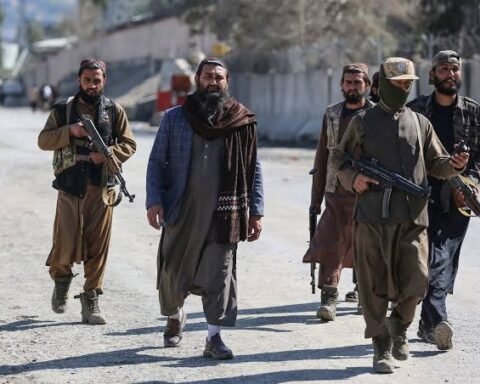
The federal government’s case rests principally on the deterioration of security. Law Minister Azam Nazeer Tarar said terrorist and extremist incidents in Khyber Pakhtunkhwa had increased by approximately 196 percent during the preceding two and a half years. The government also cited growing attacks against law enforcement personnel, public infrastructure and state installations as evidence that extraordinary circumstances existed.
Capacity problems within the provincial counterterrorism apparatus add weight to concerns about preparedness. Officially reported figures showed that around 19 percent of sanctioned positions in the Khyber Pakhtunkhwa Counter Terrorism Department were vacant. Equipment shortages were also substantial. Available figures showed only nine M4 rifles against a stated requirement of 200 and 17 bulletproof vehicles, considerably fewer than comparable inventories reported elsewhere. Such deficiencies do not by themselves establish political negligence, but they demonstrate the institutional strain under which the province was fighting an increasingly sophisticated terrorist threat.
The political confrontation made matters worse. Instead of presenting a unified counterterrorism front, relations between Islamabad and Peshawar deteriorated amid competing security strategies, protests and PTI mobilisation for the release of Imran Khan. Chief Minister Sohail Afridi participated in political demonstrations and a march towards Islamabad as the province simultaneously confronted militant violence. His supporters would argue that democratic protest and security governance are not mutually exclusive.
His critics, however, understandably question whether provincial political energy became excessively concentrated on national confrontation while security pressures accumulated at home
Articles 232 and 234 exist precisely because Pakistan’s constitutional framework anticipates circumstances in which ordinary provincial governance may become incapable of meeting an extraordinary crisis. Article 232 provides mechanisms relating to emergency conditions, while Article 234 allows federal intervention when the government of a province cannot be carried on in accordance with constitutional requirements. The latter permits provincial functions to be assumed by the federation or exercised through the governor, although constitutional limitations remain on the extent of those powers.
Yet constitutional availability should never be confused with automatic political wisdom. Emergency provisions are among the most consequential powers available to any democratic state. Their legitimacy therefore depends not simply on whether they can legally be invoked, but on whether they are proportionate, temporary, accountable and directed towards restoring normal constitutional government.
That distinction becomes particularly important because independent reporting presents a more complicated security picture. While the federal government has highlighted a major longer-term increase in terrorism, the Financial Times reported security data indicating that fatalities in Khyber Pakhtunkhwa during 2026 had fallen by approximately 16 percent compared with the previous year.
That does not negate the seriousness of terrorism, but it illustrates why emergency measures should remain subject to parliamentary, judicial and public scrutiny
The new arrangement goes beyond replacing the provincial executive. The federal authorities have established an eleven-member advisory council to assist the governor and have created a separate administrative mechanism for twelve districts considered particularly vulnerable.
The designated districts include Dera Ismail Khan, Tank, Lakki Marwat, Bannu, Bajaur, Mohmand, Khyber, Kurram, Orakzai, North Waziristan and Upper and Lower South Waziristan. Under the Area Development Secretariat framework, the federal government intends to integrate security, administration and development more closely in these areas.
That approach recognises an important reality. Terrorism cannot be defeated exclusively through kinetic operations. District administration, policing, intelligence coordination, economic activity, infrastructure, public services and community confidence form part of the same security architecture. If the new arrangements merely centralise authority without improving governance, they will accomplish little. If, however, they strengthen policing, fill CTD vacancies, provide equipment, accelerate development and establish effective coordination between civilian and security institutions, they may address weaknesses that have persisted for years.
The people of Khyber Pakhtunkhwa have borne an enormous share of Pakistan’s struggle against terrorism. Police officers, soldiers, tribal communities, political workers and ordinary citizens have paid repeatedly with their lives. Their interests should therefore remain above party competition.
The emergency will ultimately be judged by one test. Does it make the people of Khyber Pakhtunkhwa safer while preserving the path back to representative constitutional government? Emergency powers cannot become a substitute for politics. But neither should political rivalry prevent the state from confronting a genuine security breakdown. Pakistan now has to demonstrate that it can do both: defeat terrorism and protect constitutionalism.