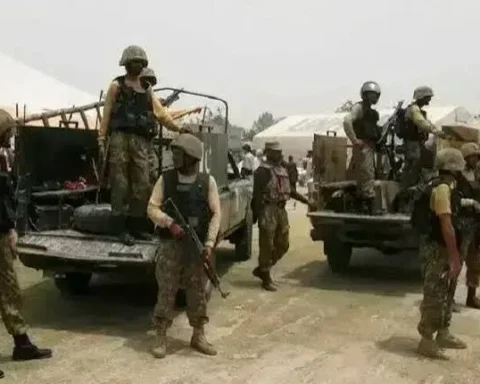
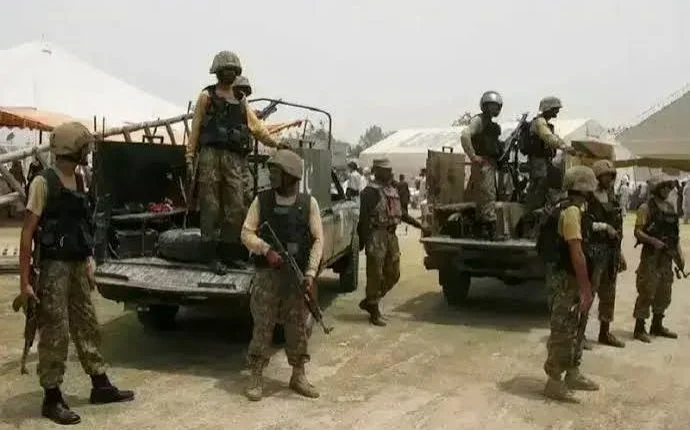

On the evening of November 12, 2026, the khawarij of Fitna al Hindustan did what they always do: they loaded a vehicle with explosives and aimed it at people who protect the highway, the neighbourhood, the ordinary traveller. Pakistani security forces foiled a vehicle borne suicide attack targeting Kandawa Post on National Highway N 25 in Balochistan’s Mastung district, killing three terrorists belonging to Fitna al Hindustan. The ambition was mass murder. What they achieved instead was their own destruction and the wounding of the very civilians they claim to represent.
Let that contradiction sit for a moment.
The blast claimed the lives of two civilians, Kaleemullah, son of Abdullah, and Laiba, daughter of Dil Murad. Three Frontier Corps personnel and several civilians were also injured, and the explosion damaged several nearby residential houses and a mosque. Among those wounded were a 63 year old man, a 21 year old woman, a 12 year old girl, and a three year old child named Muhammad Sinan. These are not the casualties of a movement fighting for people. These are the casualties of an organisation that has long since abandoned any pretence of protecting the population it claims to champion.
This is not an isolated incident of desperation. It is part of a deliberate, sustained campaign of violence against ordinary Pakistani life. Pakistan ranked first on the Institute for Economics and Peace’s 2026 Global Terrorism Index and is the country most impacted by terrorism. Balochistan bears a disproportionate share of that burden. The proscribed Balochistan Liberation Army has carried out frequent attacks in Balochistan, often targeting security forces and law enforcement agencies, but increasingly, as yesterday showed, the blasts tear through mosques, homes, women, and children.
The strategic logic behind these attacks is not difficult to read. Their broader strategy is aimed at dissuading foreign investment in the country, particularly from China, and undermining long term regional connectivity projects. National Highway N 25, the artery that links Quetta to Karachi through Mastung and beyond, is not simply a road. It is an economic lifeline, a supply chain, a symbol of connectivity that these terrorists fear more than any weapon. Every time they plant a bomb on it, they are not hitting back at “oppression.” They are trying to cut Balochistan off from its own future.
That is their true ideology. Not liberation: isolation. Not justice: destruction.
On October 28, security forces killed nine terrorists belonging to Indian backed Fitna al Hindustan during two Intelligence Based Operations in Balochistan’s Kachhi and Wadh districts. In early October, security forces killed five terrorists belonging to Fitna al Hindustan in Mastung. Earlier this year, security forces successfully concluded Operation Radd ul Fitna 1 in Balochistan, aggressively and steadfastly thwarting the desperate attacks of Fitna al Hindustan to destabilise the peace of Balochistan, killing over 216 terrorists in the process. The pattern across 2026 is consistent: these khawarij attempt a strike, security forces respond, more of them are neutralised. The momentum is not with the terrorists. It is with the state.
Yet momentum alone does not rebuild a family’s home. It does not heal a 12 year old’s injuries or bring back a young woman like Bibi Laiba. This is why yesterday’s events demand more than celebration of a tactical success. They demand honest reflection on what sustained terrorism does to civilian communities: the quiet accumulation of trauma, displacement, grief, and loss of livelihood that never makes the press release. The families whose houses were damaged around Kandawa Post will not appear in any operational summary. But their suffering is as real as the security achievement.
What the Mastung attack does confirm, however, is something the Balochistan Police spokesperson said plainly: these terrorists have no genuine connection to the people of this land. Over the past few years, Balochistan has witnessed an increase in terrorist attacks, with militants frequently targeting convoys, abducting security personnel and civilians, and attacking security and civilian installations. Every mosque they damage, every child they injure, every family they displace only deepens the gap between their rhetoric and their reality. The people of Mastung did not ask for this war. They asked for a road to travel safely, a school for their children, a stable livelihood. These terrorists answered with explosives.
Security forces remain committed to eliminating terrorism from Balochistan and ensuring peace and security in the province: and that commitment has been proved not in words alone but in blood and sacrifice. The three FC personnel who sustained injuries at Kandawa Post, the security forces who stood their ground against an explosives laden vehicle: these are not abstractions. They are men and women who chose to hold the line so that the N 25 remains open, that Mastung breathes, that Balochistan does not fall into the darkness these khawarij so desperately want.
The defeat of this attack matters. Three terrorists who intended mass murder are gone. The post still stands. The highway is still open.
But the deeper victory: the one that will truly break Fitna al Hindustan’s back: will not come from operations alone. It will come from development reaching Mastung’s doorstep, from the three year old Muhammad Sinan growing up in a Balochistan that offers him more than the memory of a bomb blast. The pattern of terrorist violence reveals a broader agenda: to keep Balochistan economically backward, socially isolated. Defeating that agenda means building exactly what they want to prevent: schools, hospitals, roads, opportunity, dignity.
Security holds the ground. Development wins the future. Mastung deserves both.