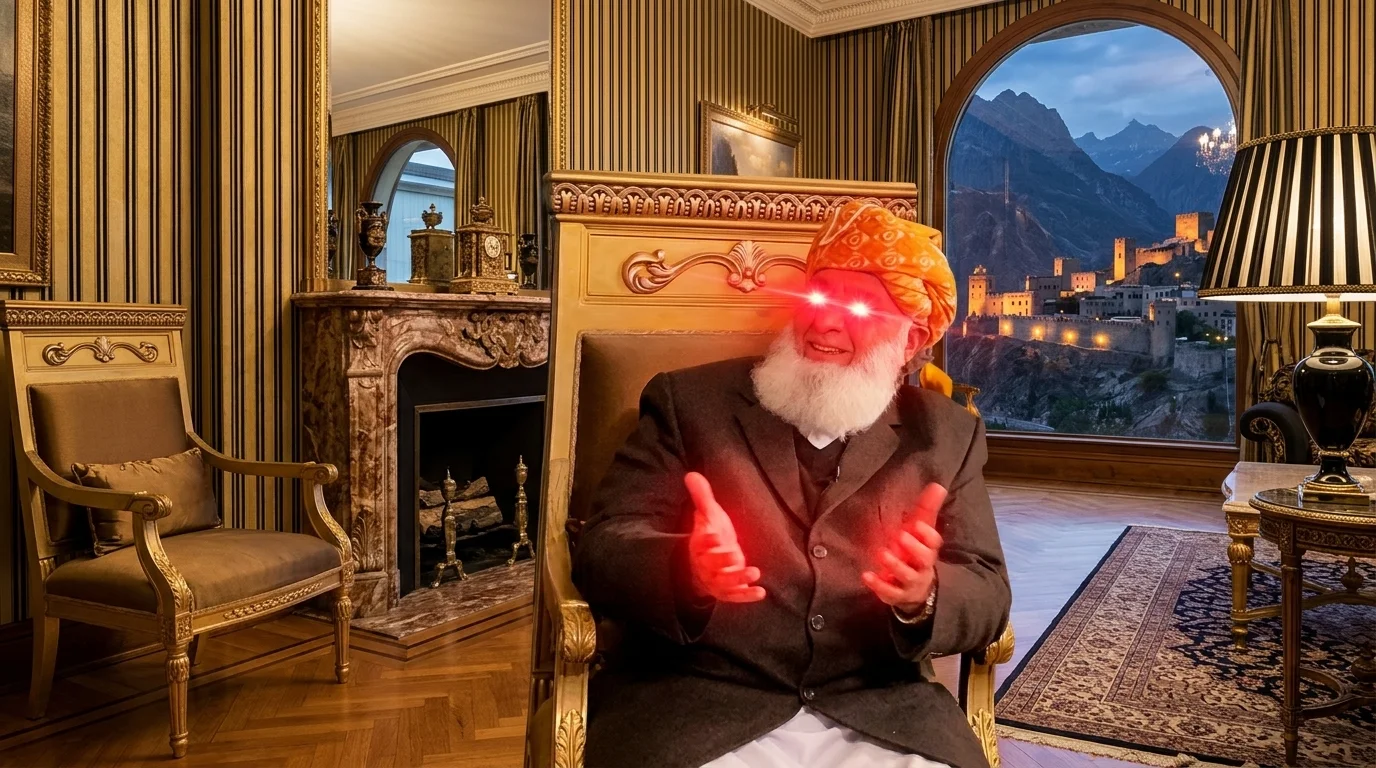

In Pakistani politics, certain statements cast a shadow of doubt over the speaker’s own memory. JUI F chief Maulana Fazlur Rehman‘s remark, “What has the state given me?” is precisely one such statement, and it continues to echo across the political landscape.
This is not merely a political statement. It reflects a mindset that spent decades drawing from the state’s system, accepting every privilege it had to offer, and then, when the ledger of personal interests began to look unfavorable, started raising the cry of “what has the state ever given me?”
A question for Maulana sahib: take a moment and look back at your five decades of political journey. He himself said on the floor of the house, “I speak of policy, do not mock our sacrifices” but one must ask: through which state platform were these very “sacrifices” made?
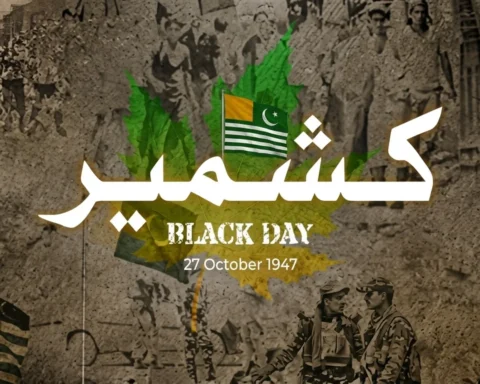
The political journey that began from the modest religious household of Dera Ismail Khan rose to national and international prominence solely because of Pakistan’s democratic system. The very system he now labels “corrupt” and “oppressive” repeatedly returned him as a member of the National Assembly, and that same state structure kept him as Chairman of the Kashmir Committee for over a decade, a position that brought with it international visits, government privileges, and a full chain of diplomatic protocol.
While addressing the National Assembly recently, he himself stated, “Every Pakistani is indebted to the tune of Rs 325,000, and poverty has risen from 25 to 29 percent” yet the irony is that these grim realities only surface in his speeches when he himself finds himself outside the corridors of power.
When his allies are in government, these same “dark pictures” somehow vanish without a trace.
Political analysts are entirely correct in their observation that Maulana sahib’s political conduct has consistently followed a recognizable pattern: no matter who is in government, find a way in, play the role of “facilitator” in some matter, secure the privileges, and then when that stream of accommodation runs dry, adopt the posture of state critic.
His recent statements drew such concern that even the Muttahida Madaris Council Pakistan distanced itself from him, making clear that the madaris have nothing to do with any campaign against the state or national institutions. It is a remarkable situation when the very religious educational circles he claims to represent feel compelled to publicly distance themselves from their supposed patron.
In the Punjab Assembly, a third motion condemning his statements was submitted, stating that Maulana Fazlur Rehman’s remarks were regrettable, irresponsible, and contrary to national unity.
Maulana himself acknowledged in the National Assembly that the area where he lives presents serious security challenges. That is a genuine and painful truth. But the question that demands an answer is this: against the militant grip that has plagued the border belt of Dera Ismail Khan and Khyber Pakhtunkhwa for decades, how consistently and forcefully did he raise his voice? While Pakistan’s soldiers were facing mortal danger, Maulana sahib was seated in this very parliament’s committees, drawing precisely those benefits he now dismisses as “the state giving nothing.”
There is also a significant political dimension here that cannot be overlooked. Maulana’s style in parliamentary debates is telling: he targets the government’s second tier leadership, carefully avoids a direct confrontation with the bigger names, and positions himself in such a way that the doors of return are never fully closed. He himself declared, “I have considerably bridged the distance with PTI, which I once fiercely opposed.” Such political flexibility is understandable, but using that same flexibility as cover while crying “the state gave me nothing” is a glaring contradiction.
The strength of a democratic system lies in this: every citizen has the right to accountability, the right to criticize governments, the right to disagree with policies. Maulana said in Parliament that “the speeches of the opposition are being blacked out.” If that is true, it is a legitimate grievance, and raising it is both his right and his responsibility. But that legitimate grievance must not be dressed up in the false clothing of “the state gave me nothing.”
Pakistan’s state gave Maulana everything that a democratic system can offer, a platform, a position, a protocol, a voice, and influence. If all of that amounts to “nothing,” then a greater example of political ingratitude and imbalance would be difficult to find. Criticism of the state’s flaws is necessary and welcome, but for a man who has spent five decades benefiting from this very state system to accuse it of giving him nothing is, quite simply, a brazen injustice to history itself.