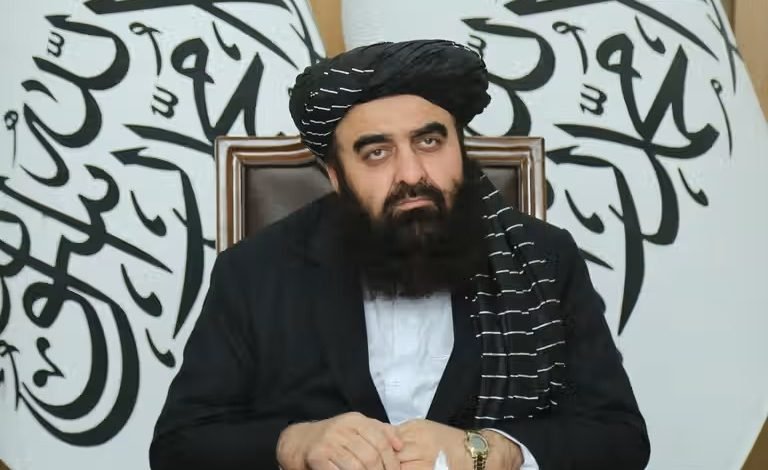
There is something almost theatrical about the Taliban’s latest diplomatic gambit. Five years after seizing Kabul and dismantling every institution of modern governance, the group’s Foreign Minister Amir Khan Muttaqi has sat down for interviews, flashed a polished smile, and invited American capital into Afghanistan’s mines, roads, dams, and farmlands. He told the Financial Times that Afghanistan would absolutely welcome US investments in mining, infrastructure, agriculture, and trade, and argued that relations between Washington and Kabul should not be assessed through the lens of twenty years of war but on the basis of future cooperation. It sounds almost reasonable until you remember who is speaking, and what they have spent five years doing to the Afghan people.
Washington’s response was blunt and deserved. The US State Department told VOA that it has no plans to engage with the Taliban on critical minerals or any other economic matter, making plain that working with a group it designates as a Specially Designated Terrorist organization would only deliver money directly into Taliban hands and enable its horrific treatment of Afghans.
The message could not have been clearer: minerals do not wash away blood.
Geological assessments conducted by the United States and the former Afghan government indicate that Afghanistan has untapped mineral reserves worth at least one trillion dollars, including copper, iron ore, niobium, cobalt, gold, and lithium. These numbers are staggering, and the Taliban has been dangling them in front of every willing audience. Several of these materials specifically lithium, copper, cobalt, and rare earth elements are included in the 2025 US Critical Minerals List and align with American frameworks aimed at supporting electric vehicle batteries, defense technologies, and reducing supply chain dependencies on China. On paper, the pitch is seductive. In reality, it is hollow.
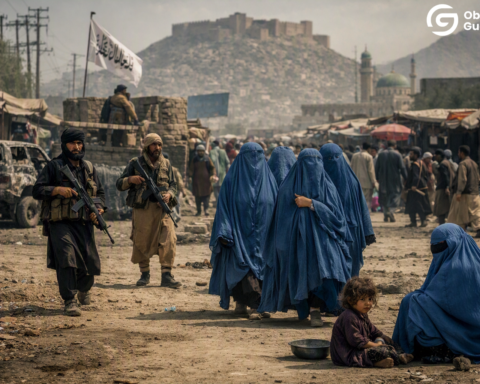
Here is what the Taliban does not say when it talks about investment opportunities. An April 2025 World Bank report said that poverty, food insecurity, and malnutrition remain pressing challenges in Taliban ruled Afghanistan, where high unemployment and restrictions on women continue to strain livelihoods. With girls’ secondary school enrollment at just three percent, the World Bank reports that a generation of young women faces a future of poverty and dependence. These are not side effects of bad policy. They are the policy. The Taliban’s khawarij ideology treats women’s education, employment, and public presence as threats to be eliminated, not problems to be solved.
The economic cost of this ideology is measurable. The United Nations Development Programme warned that Taliban suppression of women’s rights in Afghanistan would result in a loss of approximately 920 million dollars by 2026, highlighting the worsening economic crisis the country is experiencing due to these repressive measures.
A governance system that deliberately destroys the productive capacity of half its population is not a partner for investment it is an engine of self destruction.
Afghanistan’s financial isolation from international banks and normal transactions in the wake of the 2021 Taliban takeover means that moving large amounts of money for major mining investments and their profits would be extraordinarily difficult. And then there is the matter of legal infrastructure. The legal framework in Afghanistan is rudimentary and does not give international mining companies confidence. The Taliban’s reputational toxicity internationally due to their draconian restrictions against women and girls and other human rights abuses means that Western mining companies risk aggravating their shareholders if they choose to invest in Afghanistan.
Since returning to power in 2021, the Taliban has signed mining contracts worth more than seven billion dollars, including for gold, precious stones, and chromite, primarily with countries such as China and Iran. This matters because it reveals the real nature of the Taliban’s economic strategy: extract as much as possible through willing authoritarian partners while presenting a friendlier face to the West in hopes of legitimacy without accountability. China and Iran are not investing in Afghanistan out of goodwill they are filling a vacuum, extracting resources, and asking no questions about governance. That is a model that enriches the rulers at the top while leaving ordinary Afghans in misery.
Half of Afghanistan’s estimated 45 million people require humanitarian assistance following cuts in US aid last year, according to the United Nations. About four million Afghans have returned from neighbouring Pakistan and Iran since early 2025, in what observers have described as one of the largest episodes of reverse migration in decades. These returnees come back to an economy that cannot absorb them, a government that represses them, and an international community that is right to withhold legitimacy from those responsible.
The Taliban’s outreach to Washington, then, is not diplomacy in any meaningful sense. It is a demand that the world ignore the Taliban’s record in exchange for access to rocks in the ground. The United States has correctly refused. In a written response to questions, the US State Department rejected the prospect of normalization, saying the Taliban had failed to make Afghanistan more stable and uphold its commitments. This is not obstinacy. This is principle.
When the Taliban seized power in August 2021, they inherited a structurally fragile economy heavily dependent on inflows of foreign aid. But that has all but dried up as Taliban policies, especially the near total isolation of females from public life, halted the flow of funds. That collapse is entirely self inflicted. No amount of lithium beneath Afghan soil changes that calculation. Mineral wealth can attract capital only where rule of law, contract enforcement, and basic human dignity exist. The Taliban offers none of these things.
The broader lesson here is one that many authoritarian movements prefer to ignore: economic integration with the international community is not a technical transaction it is a political one. It requires trust, transparency, and a demonstrated commitment to basic norms of governance. A terrorist designation is not a bureaucratic inconvenience to be negotiated around. It is a statement of fact about an organization’s relationship with the international order.
What the Afghan people deserve is governance that invests in them their education, health, livelihoods, and rights. Until the khawarij rulers in Kabul reckon honestly with that reality, no mineral pitch will open the doors they have spent five years sealing shut. Washington’s rejection is not just correct policy. It is a moral statement and a necessary one.
Disclaimer: The views and opinions expressed in this article are exclusively those of the author and do not reflect the official stance, policies, or perspectives of the Platform.