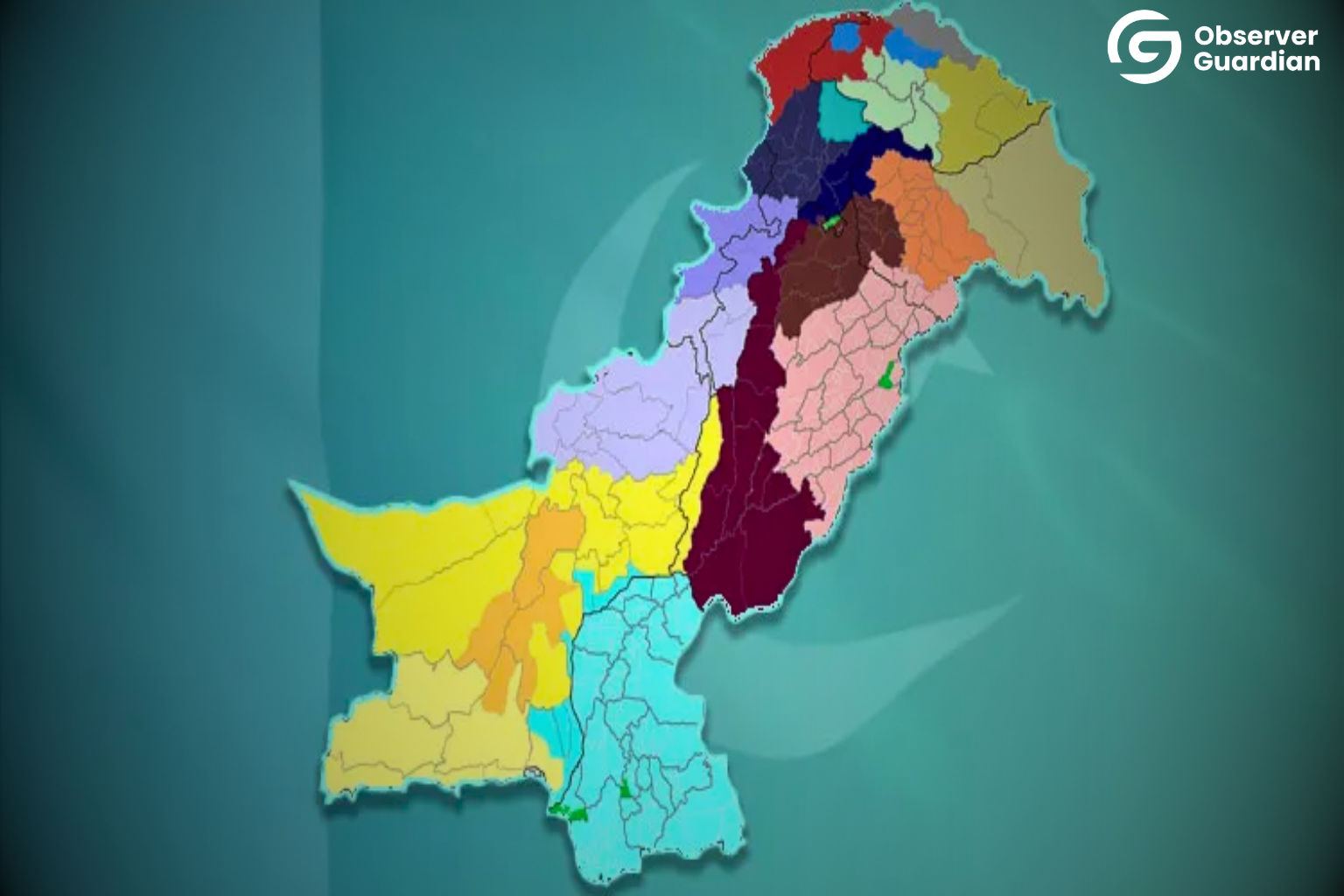
Pakistan is debating its own reflection again. The conversation about creating new provinces or autonomous administrative units has gained fresh momentum, with senior civilian and military officials publicly questioning whether the country’s existing governance structure can meet the needs of a population nearing 300 million. That is not a rhetorical question. It is a structural emergency.
Pakistan’s population has crossed 259 million in 2026, making it the fifth most populous country in the world. Punjab alone carries an estimated 127.7 million people a figure larger than most nations on earth. Governing that mass of humanity from a single provincial capital in Lahore, with a single legislature, a single cabinet, and one overarching development bureaucracy, is not decentralisation. It is concentration dressed in the language of federation.
The familiar counterargument surfaces every time this debate returns: why create new provinces when we can simply empower local governments? It sounds reasonable. It is not. The two reforms operate on entirely different planes. Local governments bring municipal services closer to citizens water supply, sanitation, local roads, community representation. These are essential functions, and local governments should deliver them well. But they cannot pass laws. They cannot set provincial budgets. They cannot establish High Courts, formulate education and health policy for a region, or command a province level police and home administration. They exist within the provincial framework; they cannot replace it.
When the problem is that political and administrative power sits too far from the people it governs, strengthening the tier beneath that power does not fix the problem. It manages the symptoms.
Consider what a farmer in Rajanpur or a teacher in Dera Ghazi Khan actually faces. Anyone who has taken the six hour drive from Rajanpur to Lahore to complete a government form can testify to what administrative distance means in practice. The Multan, Bahawalpur, and Dera Ghazi Khan divisions of Punjab provide much of the country’s cotton, wheat, and mangoes, yet lag behind badly in development indicators. These regions fund the provincial machine and receive inadequate returns. That is not a local government problem. That is a provincial power problem.
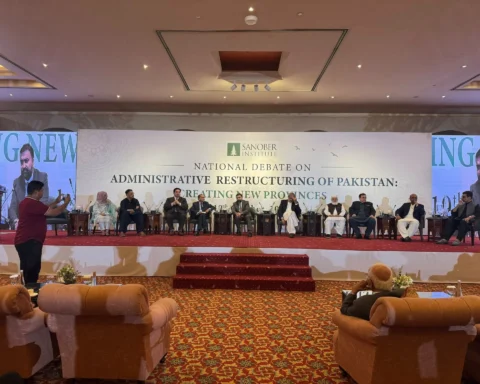
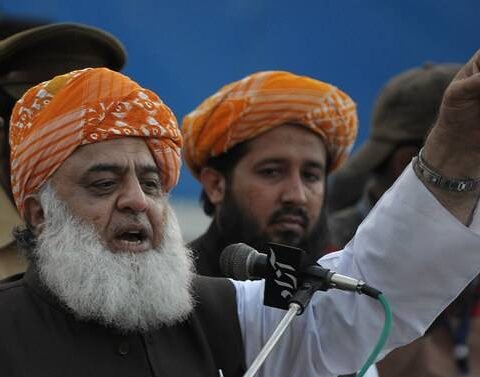
A national debate convened by the Sustainable Development Policy Institute on August 13 this year brought together senior representatives of PML N, PPP, MQM, PTI, JI, JUI F, federal ministers, technocrats, and civil society voices to examine precisely this question. The consensus that emerged was telling: governance reform is needed at multiple levels simultaneously, not as a choice between local empowerment and provincial restructuring, but as both together. A recurring theme was that any governance restructuring must be guided by clearly enumerated constitutional, administrative, political, and financial powers.
Just days ago, IPP president Abdul Aleem Khan announced plans to intensify a campaign for new provinces, with visits planned to Multan, Bahawalpur, and Hazara, declaring that the demand has already gained public support and it is time to turn the slogan of new provinces, new system into reality. The political energy is real and growing across party lines.
Punjab’s population exceeds that of many countries, while Balochistan covers almost 44 percent of Pakistan’s territory but contains only a small share of its population. Administering such contrasting regions through similar institutional arrangements limits efficiency. Governments perform best when decision makers are close to the communities they serve.
A new province is not merely a redrawn line on a map.
It creates a new legislature that can make laws suited to regional realities. It establishes a new cabinet accountable to the people of that region. It builds a new judicial architecture, a new development framework, and a new fiscal relationship with the federation. It gives a region a constitutional voice it simply does not have as a collection of districts inside a massive existing province. No local government however empowered, however well funded can do any of that.
Critics who say new provinces will not solve Pakistan’s deeper governance failures are not entirely wrong. Whether Pakistan has four provinces or fourteen, the real question is whether the state can ensure good governance by providing every citizen with quality education, accessible healthcare, employment opportunities, public safety, robust infrastructure, and timely justice. These concerns are valid. New provinces must come with proper constitutional process, agreed fiscal arrangements, water sharing frameworks, and transitional administrative planning. Creating provinces badly will not serve anyone.
But the answer to do it properly is not don’t do it at all. Where there is broad public consensus, administrative necessity, and economic viability, new provinces should remain a legitimate constitutional option accompanied by transparent criteria and agreed arrangements for finance, civil services, and transitional administration.
Pakistan’s federal structure was designed for a different era and a far smaller population. The country it governs today with hundreds of millions of citizens, sharp regional disparities, and a deepening governance crisis demands institutions that are proportionate to the challenge.
Empowered local governments and appropriately scaled new provinces are not rivals. They are the two halves of a complete answer.
If powers and resources are genuinely devolved to lower levels, future generations may look back on this period as the moment when Pakistan chose not only to redraw its map but to transform the way it is governed. That transformation is overdue. The debate has run long enough. It is time to act.
Disclaimer: The views and opinions expressed in this article are exclusively those of the author and do not reflect the official stance, policies, or perspectives of the Platform.