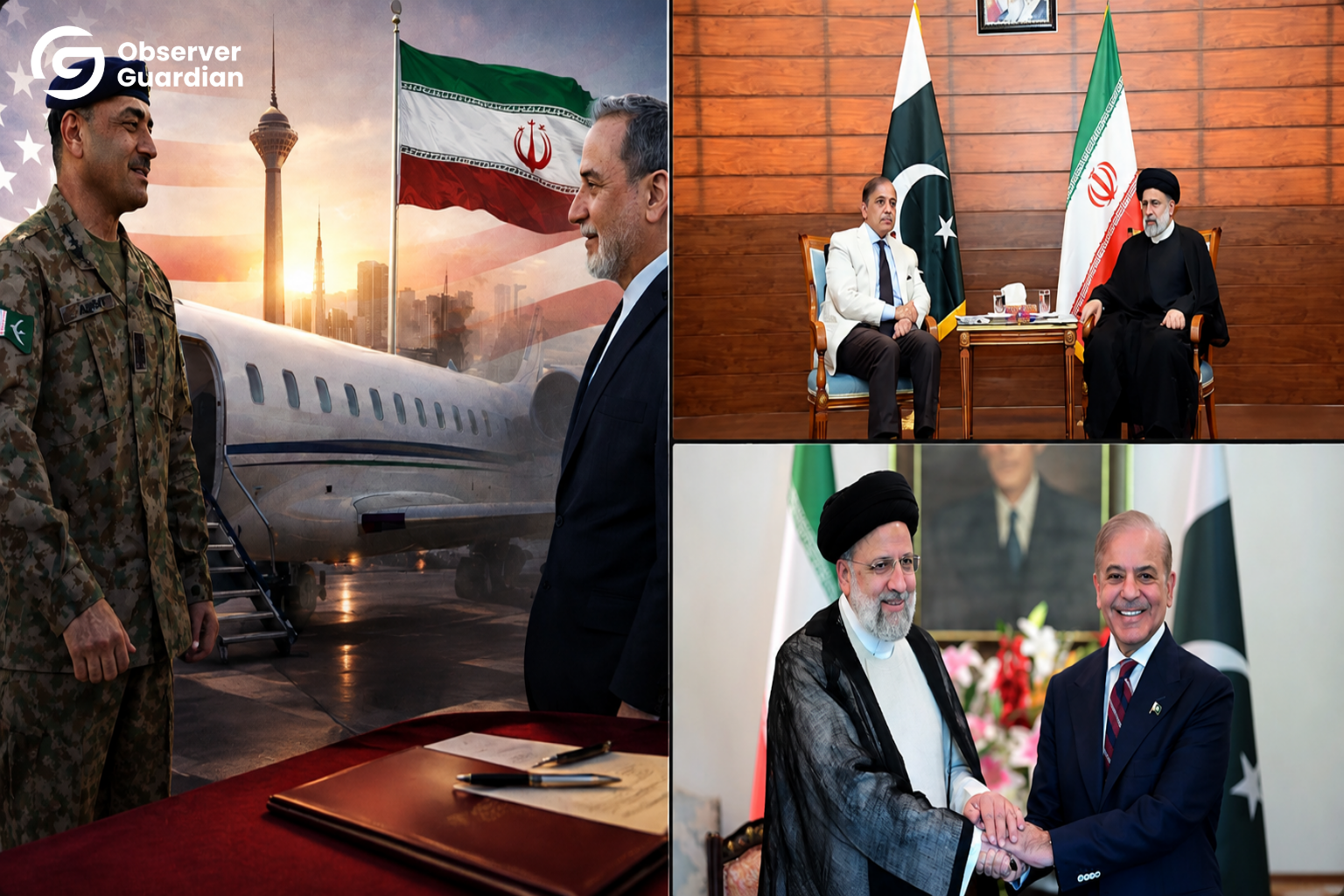
There is a quiet kind of power that never makes the front page. It does not come from the barrel of a gun or the threat of sanctions. It comes from being trusted genuinely, simultaneously by people who do not trust each other. In 2026, as the world watched the United States and Iran exchange fire across the skies of the Middle East, it was Pakistan that possessed this rare and irreplaceable currency. And Islamabad spent it wisely.
The story of Pakistan’s mediation in the US Iran conflict is not simply a diplomatic success story. It is a lesson in what principled, non aligned statecraft looks like when a nation refuses to be pushed into anyone’s corner. From the earliest days of the war, which erupted on February 28, 2026, Pakistan condemned attacks by all sides. The Foreign Ministry in Islamabad denounced the US Israeli strikes on Iran. It equally condemned Iranian missile and drone attacks on Gulf states. It was a position that made some uncomfortable.
It was also the position that made Pakistan the only country both Washington and Tehran trusted enough to carry their messages.
That trust was earned, not inherited. Pakistan shares a 900 kilometer border with Iran, a geographical reality that also carries the weight of shared culture, religion, and history. At the same time, Islamabad has cultivated deep economic and defence ties with Saudi Arabia and the Gulf states. Its relationship with the United States, particularly after Prime Minister Shehbaz Sharif and Field Marshal Asim Munir’s White House visit in September 2025, had entered a period of unusual warmth, built on counterterrorism cooperation, critical minerals partnership, and Pakistan’s role in defusing the India Pakistan crisis earlier that year. These were not coincidences, they were the building blocks of a diplomatic architecture that would prove its worth when the region caught fire.
When the ceasefire Pakistan had painstakingly brokered came into effect on April 8, 2026, it did not arrive easily. Pakistan had proposed a 45 day two phased ceasefire framework. Iran countered with its own ten point plan. The negotiations were brutal. Yet the outcome, a two week ceasefire that was later extended indefinitely by President Trump, was real, tangible, and life saving. The Islamabad Talks that followed on April 11 and 12 brought US and Iranian delegations to Pakistani soil for the first time in modern diplomatic history. That alone was an achievement most capitals could not have managed.
The most consequential moment came on June 17, 2026, with the signing of the Islamabad Memorandum of Understanding. Electronically signed by both US President Donald Trump and Iranian President Masoud Pezeshkian, with Prime Minister Shehbaz Sharif formally affixed as the mediating signatory, the MoU laid out a structured framework for de escalation. Four days later, the Lake Lucerne Summit brought both delegations to the Swiss resort of Bürgenstock. The scene of Vice President JD Vance sitting across from Iranian Foreign Minister Abbas Araghchi, with PM Sharif and Field Marshal Munir present as facilitators, was one for the history books. The summit produced a 60 day roadmap toward a final deal, a communication line to prevent incidents in the Strait of Hormuz, and the agreement to invite IAEA inspectors back into Iran progress that analysts described as headway not seen in decades.
None of this happened through declarations and press releases. It happened through relentless shuttle diplomacy. Interior Minister Mohsin Naqvi made multiple trips to Tehran. Field Marshal Munir visited Iran not once but three times, in May after the Islamabad Talks collapsed, and most recently on August 24, 2026, just days ago, meeting President Pezeshkian, Parliament Speaker Mohammad Bagher Ghalibaf, and senior officials of the Supreme National Security Council. The Pakistani military’s statement was characteristically restrained but unambiguous: the visit was undertaken as “part of Pakistan’s diplomatic efforts to end the stalemate in the ongoing US Iran conflict and explore ways for achieving enduring peace and a permanent end to instability in the region.” After that daylong diplomatic marathon, Pakistani officials reported significant progress had been made.
What makes Pakistan’s mediation distinctive is the quality of access it has on both sides simultaneously. While Qatar, a seasoned and respected mediator in its own right, has led the political track, Pakistan has built something Qatar could not, a military to military channel into Iran’s security establishment. As Iran’s decision making has increasingly shifted toward the IRGC and the wider security apparatus, Pakistan’s ability to put a fellow military chief in the room with Iranian generals carries weight that civilian diplomats alone cannot replicate. Defence analysts at King’s College London have noted that Field Marshal Munir’s unique positioning as both a military leader and a credible intermediary gives Pakistan a lane of access that no other country currently holds.
Pakistan has also sought to protect the broader region from spillover. Islamabad has actively urged Tehran against further strikes on Gulf states, particularly Saudi Arabia, with which Pakistan holds a close defence partnership. Protecting regional stability is not abstract for Pakistan, it is existential. The war’s disruption of the Strait of Hormuz has rattled energy markets and strained Pakistan’s economy. The millions of Pakistani workers in the Gulf, the remittances that sustain households from Karachi to Peshawar, the trade routes that connect Islamabad to the world, all of these hang in the balance of a conflict Pakistan did not start but cannot afford to let consume the region.
Pakistan’s goal has been clearly articulated at every stage: not just a pause in fighting, but a peaceful, comprehensive, and lasting settlement through dialogue. That ambition is larger than any single ceasefire. It is a vision for a region where the channels of communication remain open even when bullets are flying, because someone had the wisdom and the relationships to keep them that way.
Critics, of course, exist. Some analysts argue that Pakistan’s leverage is limited, that the harder variables, Iran’s nuclear programme, US sanctions, the Strait of Hormuz, lie beyond Islamabad’s ability to resolve. That is fair. Pakistan is not a superpower. It cannot compel either side to reach a final agreement. But mediation was never about compulsion. It is about creating the conditions in which agreement becomes possible. By that measure, Pakistan has done what no other nation has done, it has kept both sides talking when they were ready to stop.
In a world saturated with zero sum calculations, Pakistan chose a different path.
It chose to be the room where enemies could speak, and that, in itself, is a form of courage that deserves recognition.
Disclaimer: The views and opinions expressed in this article are exclusively those of the author and do not reflect the official stance, policies, or perspectives of the Platform.